OFSR/Journal
Entry 07
Robb Report: How these
Japanese artisans make some of
the world’s best snowboards.
Introduction
Robb Report visited the Kōjō and followed one board through the whole build.
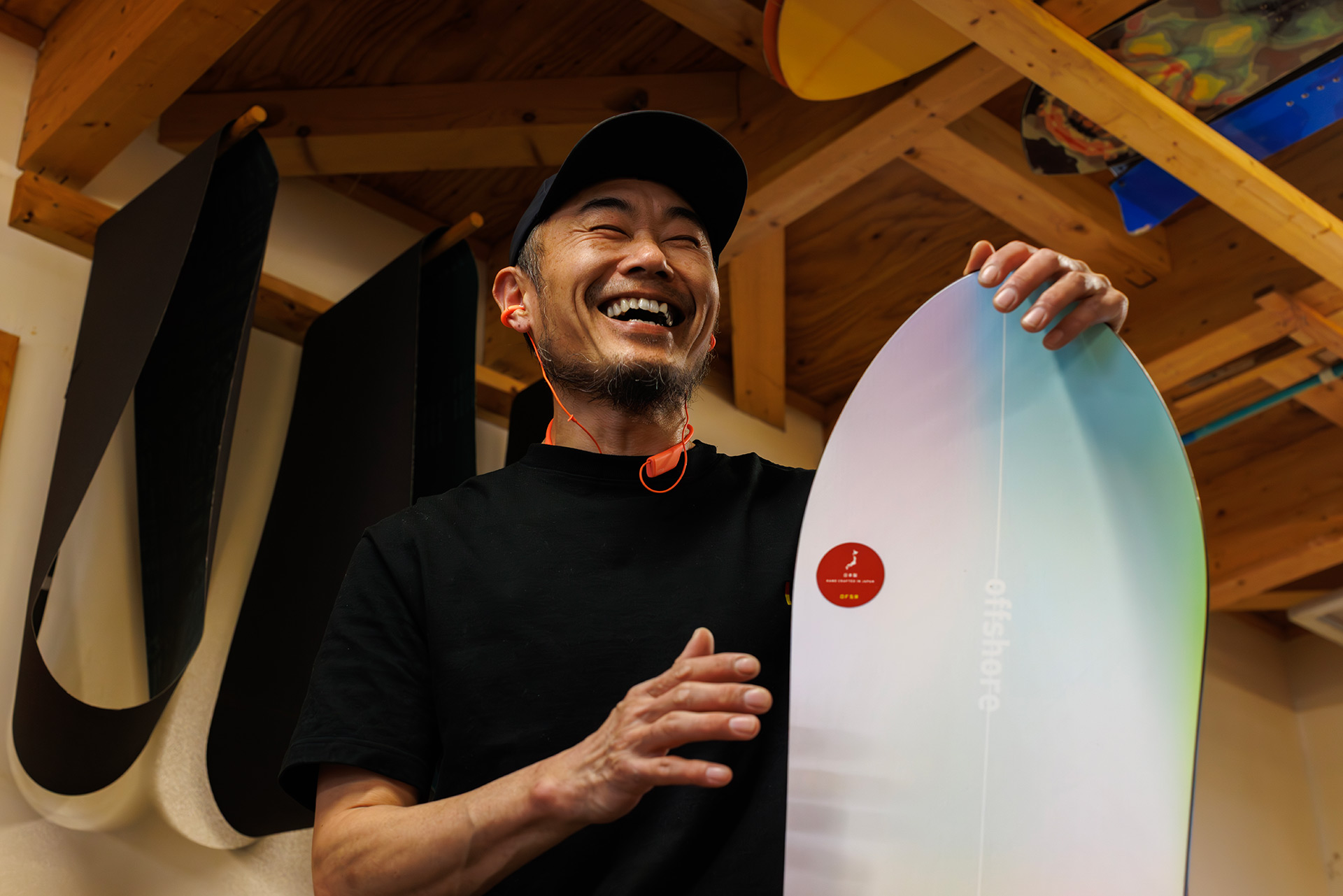
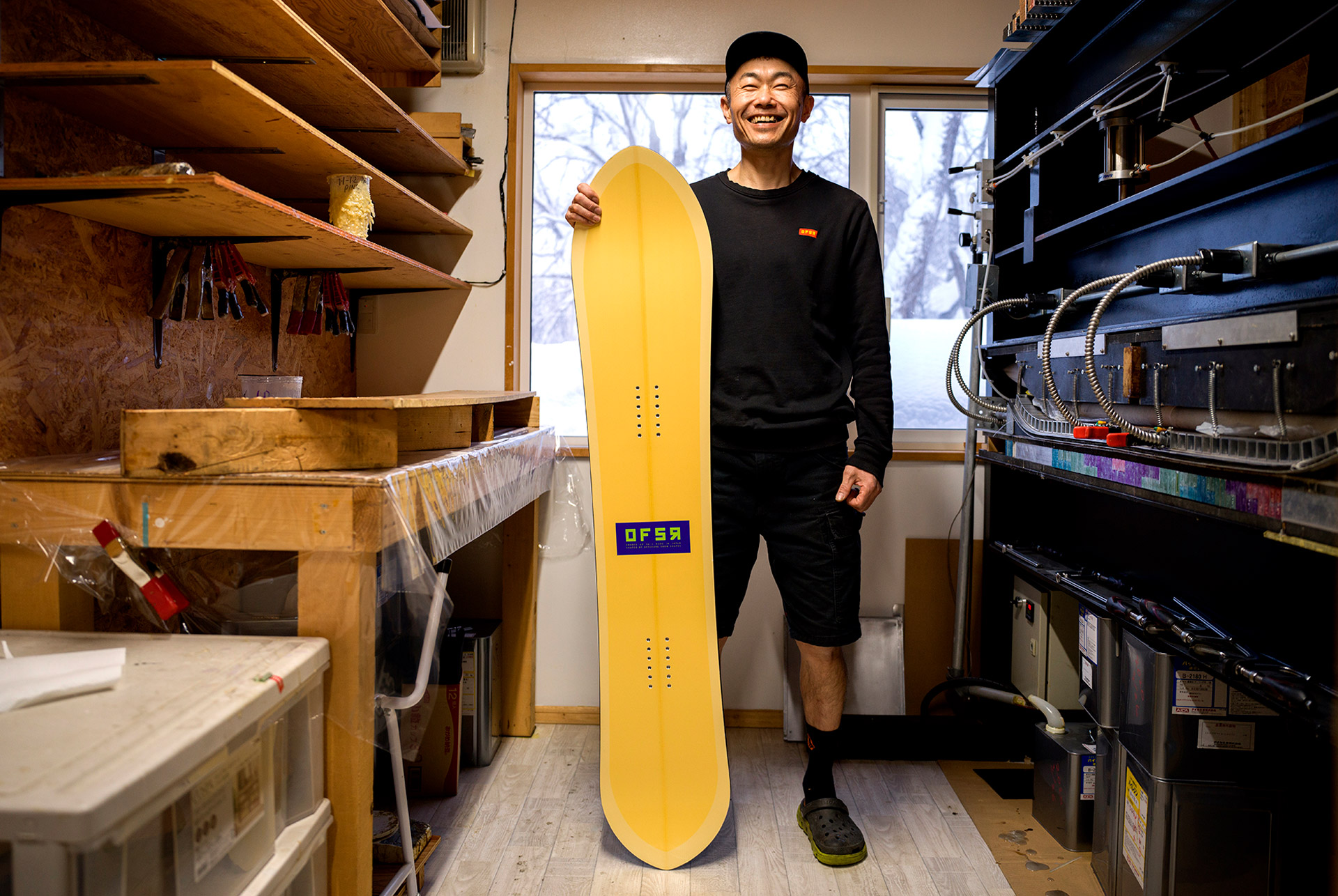
In 2023, writer Tim Hornyak and photographer Aaron Jamieson came to our workshop in Moiwa.
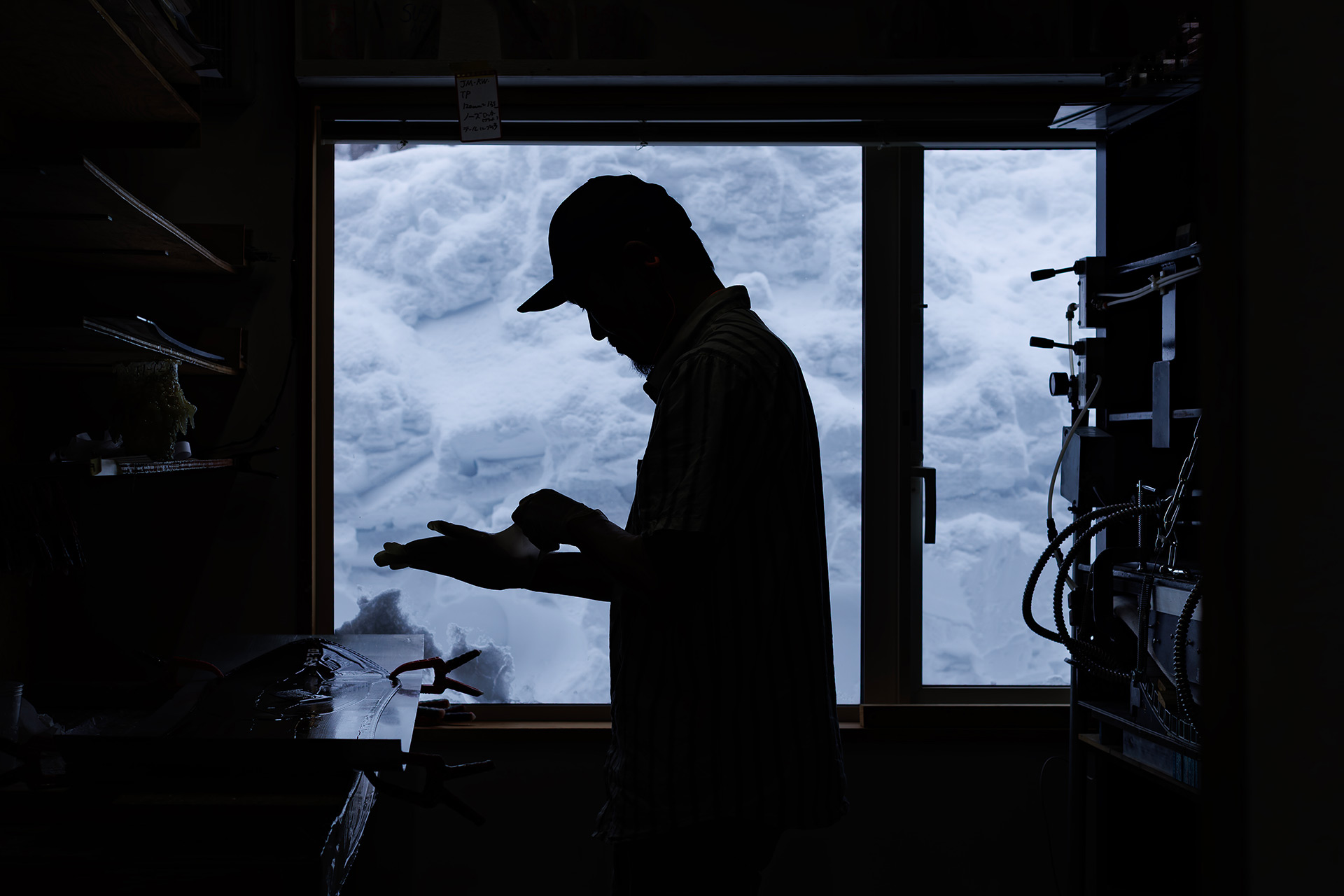
They watched a board come together the way Offshore does it. One step at a time, most of them by hand, none of them rushed.
The story ran as nine steps. Here they are, in our own words, with Aaron’s photographs from the shoot.
01 / The prep
The prep.
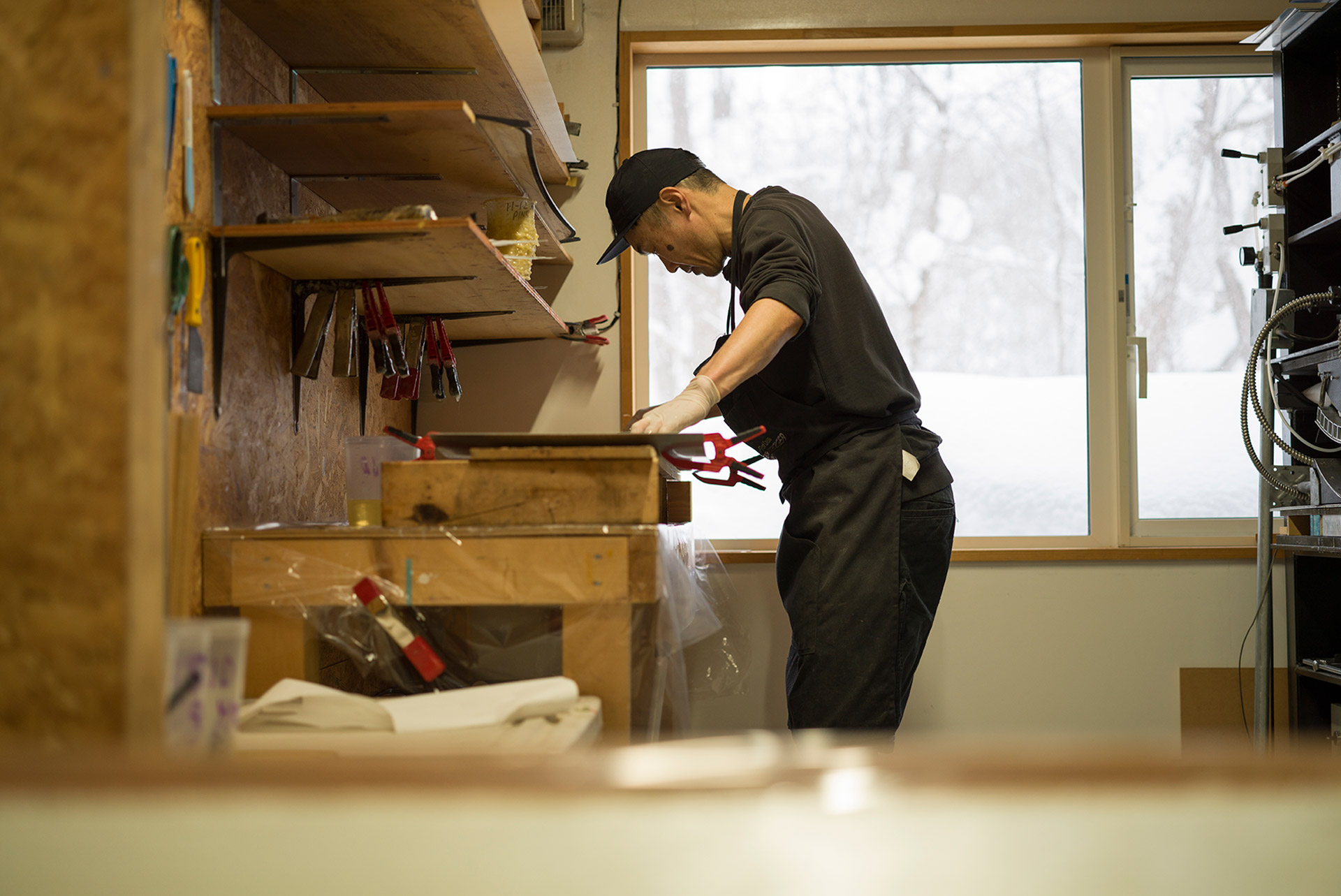
Every board starts as a sheet of sintered base material, cut to shape on the CNC.
Then the steel edge goes on. High-grade German steel, bent around the nose and tail by hand.
Tight curves, acute angles, no jig that can do it for you.
It is one of the hardest steps in the build. It is also the first.
02 / The core
The core.
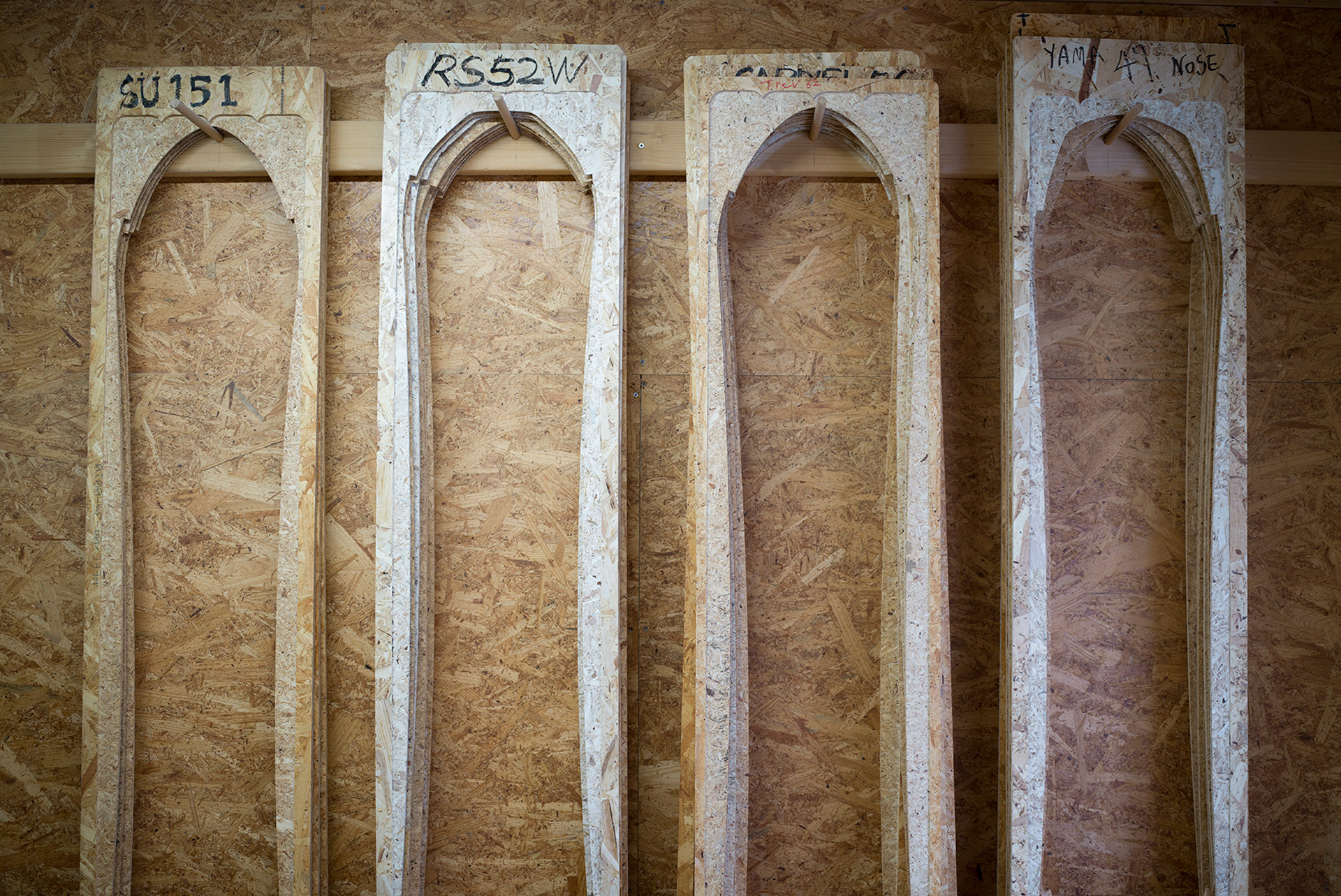
The core is paulownia and mountain ash, laminated vertically. Light where it can be, strong where it must be.
It is cut slightly smaller than the finished board, leaving room for the sidewall between the wood and the steel.
Flexibility and longevity are not a trade-off. You build for both.
Since Robb Report visited, this part of the process has evolved. Today, we pour urethane sidewalls directly into channels routed around the core.
03 / The print
The print.
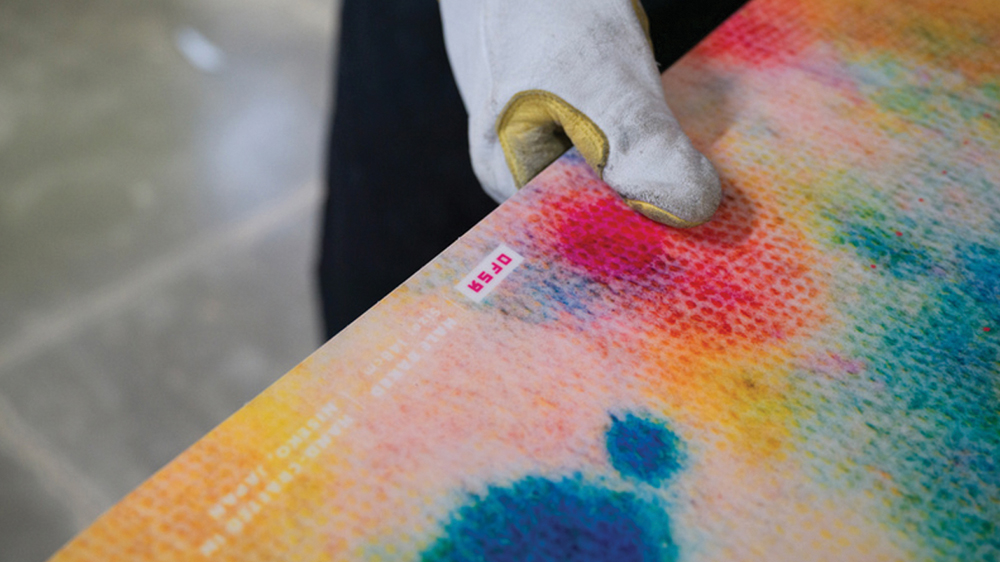
Graphics are designed digitally, then sublimation printed in-house and heat-pressed into the topsheet at 160°C.
The inks turn to gas under heat and bond into the sheet itself. Like a tattoo, not a sticker.
Small changes in the weather change the colour. You learn to read the room.
04 / The layup
The layup.
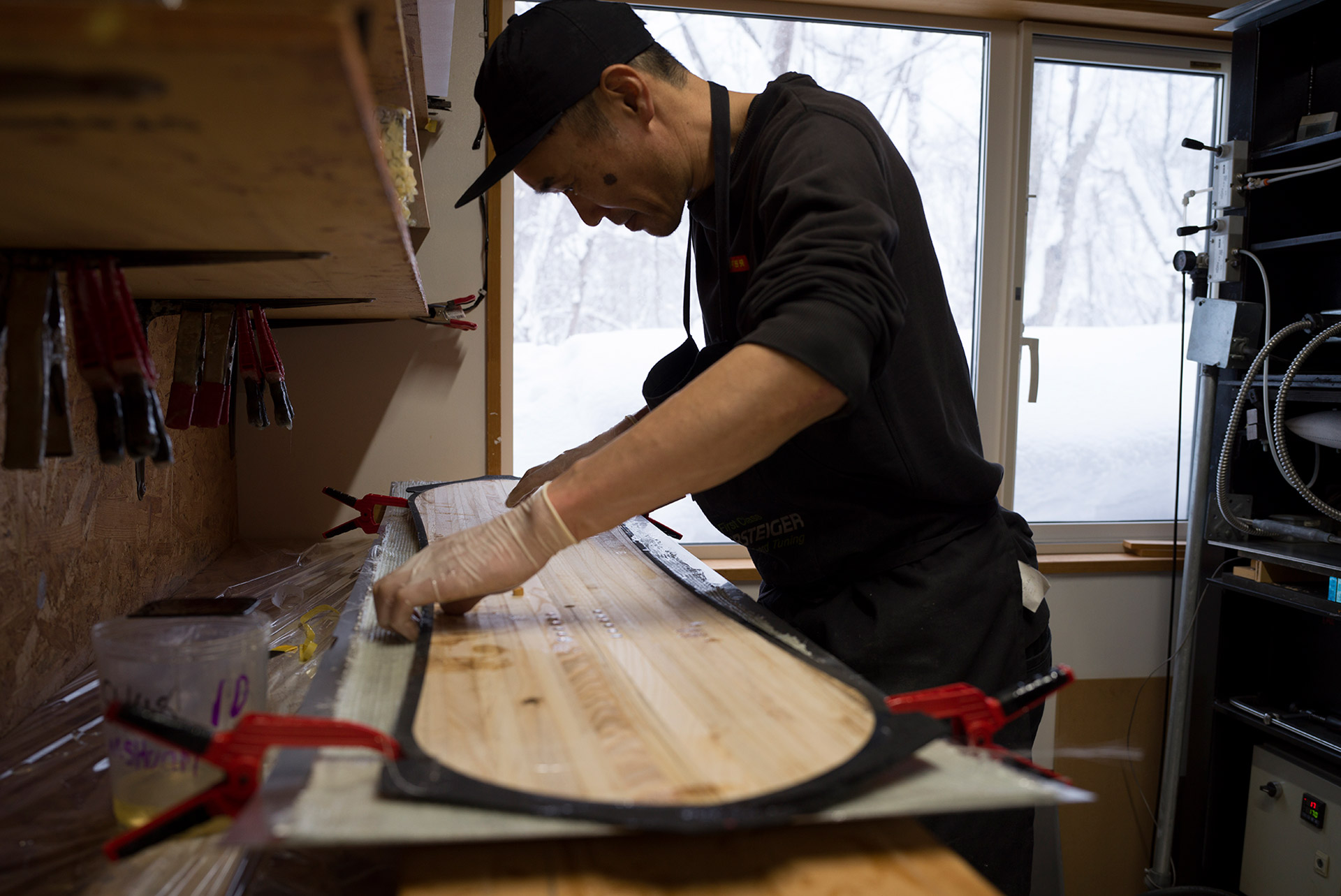
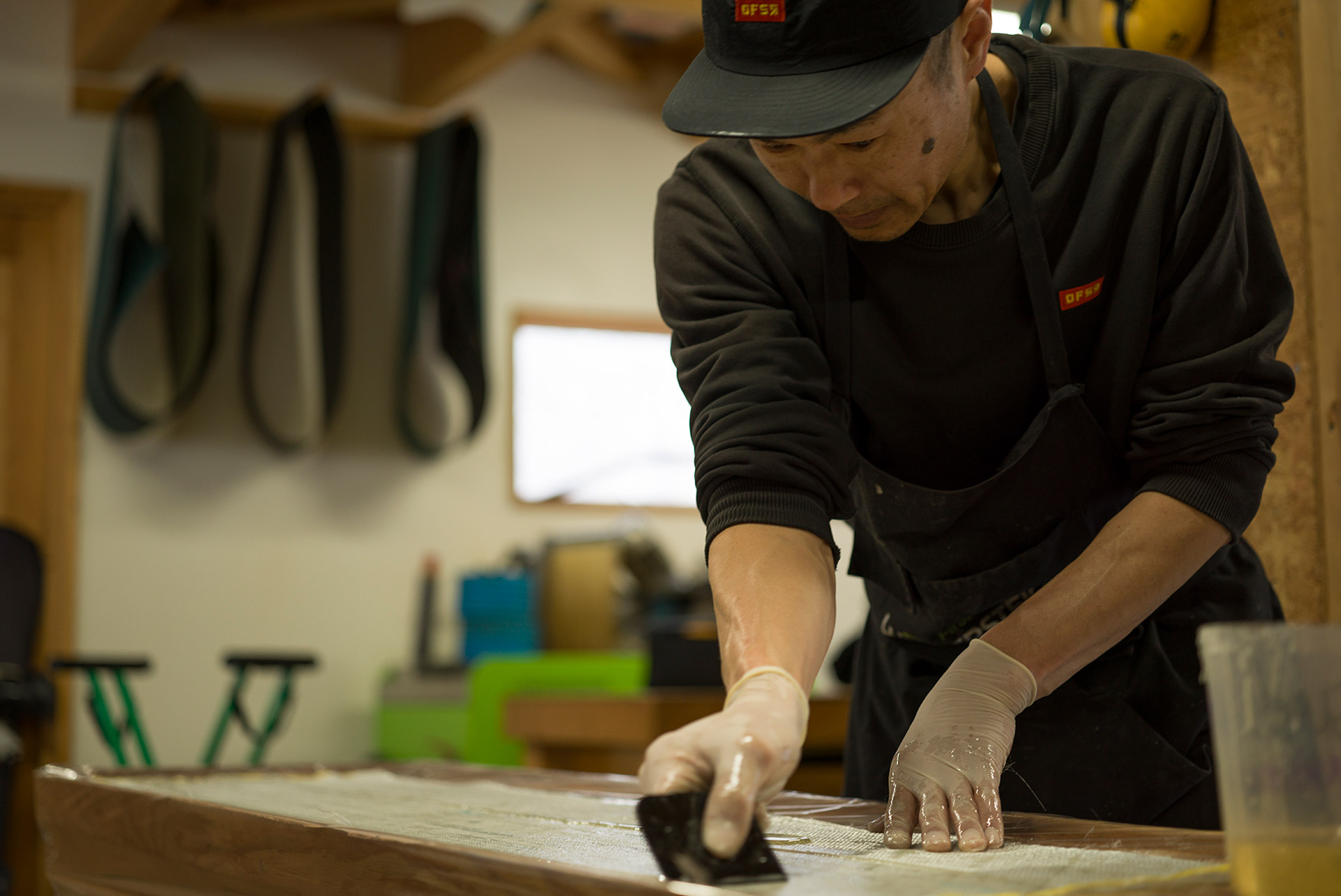
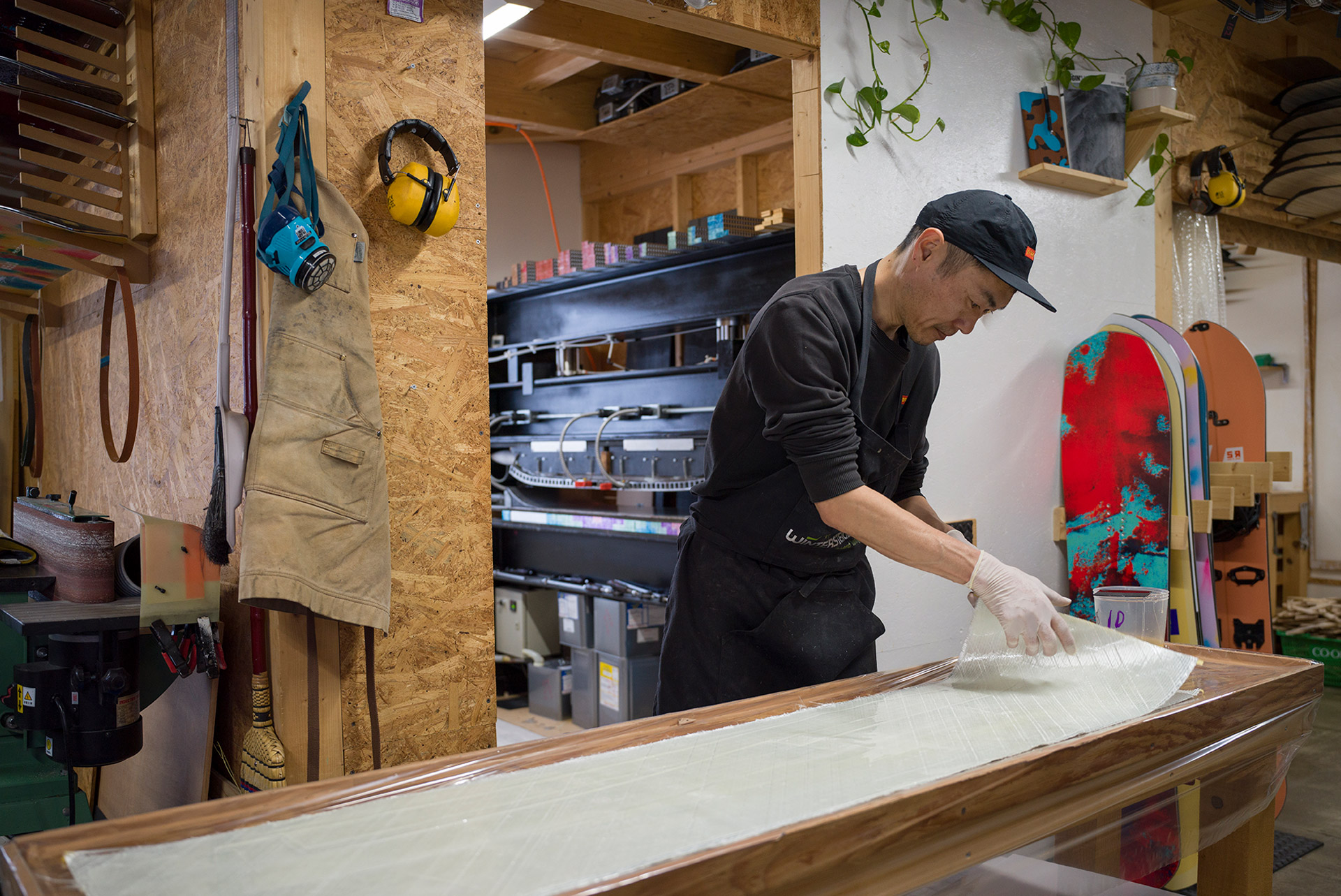
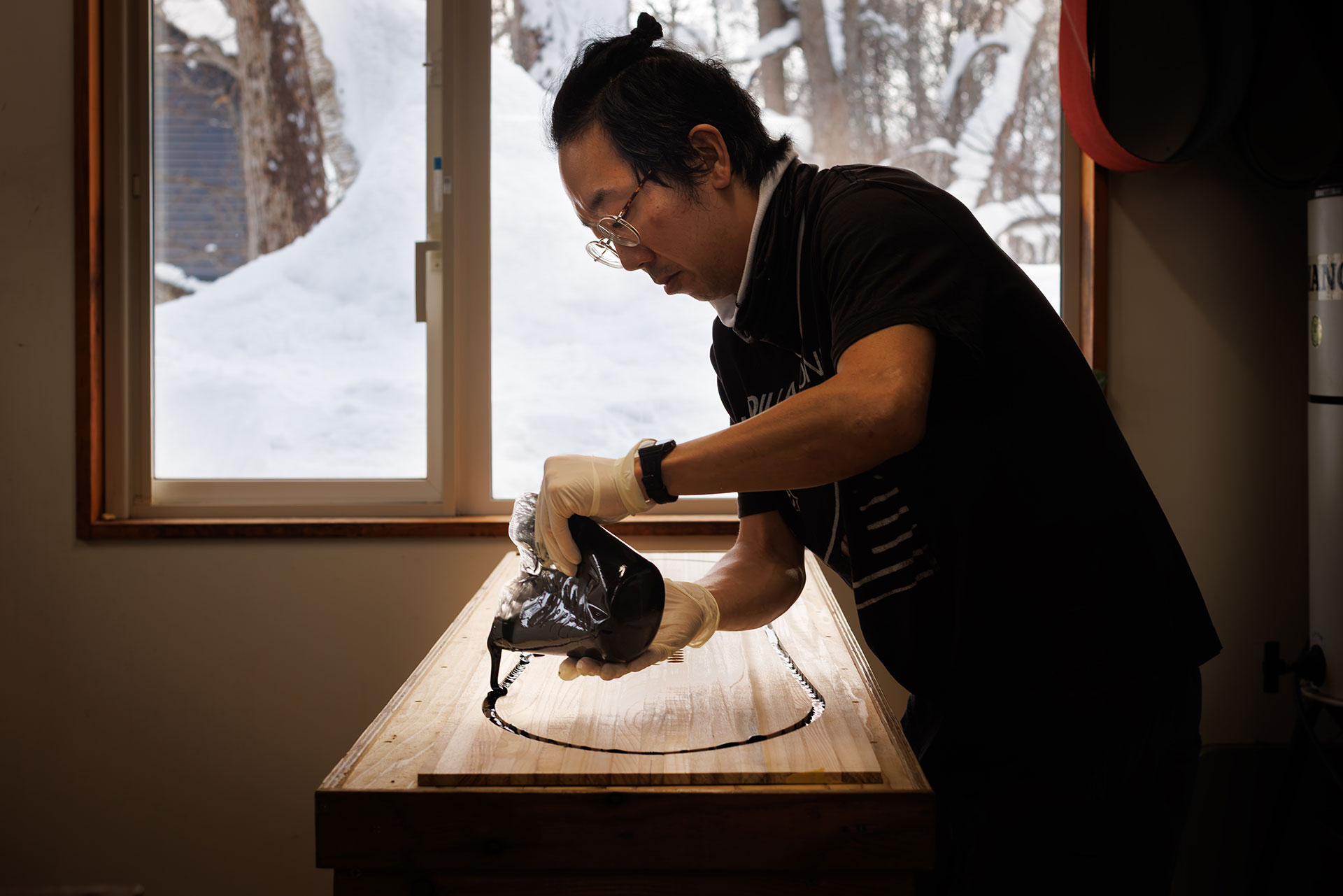
The base is coated in a low-viscosity Japanese resin. Fibreglass follows, then the core, then more glass.
Carbon and flax pins and carbon cords go in where a board needs strength or pop.
The whole stack is sandwiched between two sheets of aluminium, ready for the press.
05 / The press
The press.
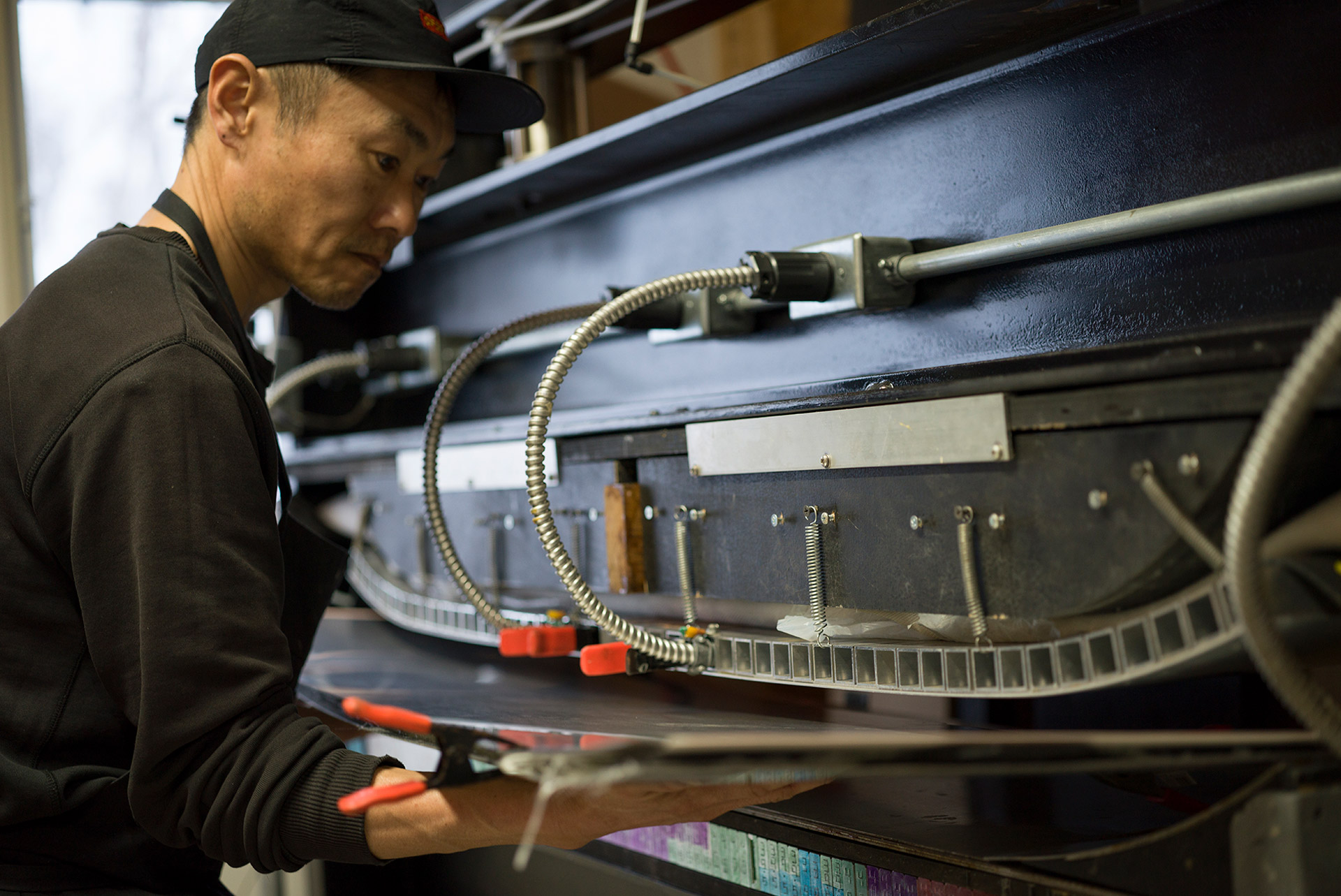
The sandwich goes into the heated pneumatic press for twenty to thirty minutes, the camber profile set with blocks.
Heat cures the resin. The stack becomes a board.
Then it rests for 24 hours.
There is no shortcut for a cure.
06 / The trim
The trim.
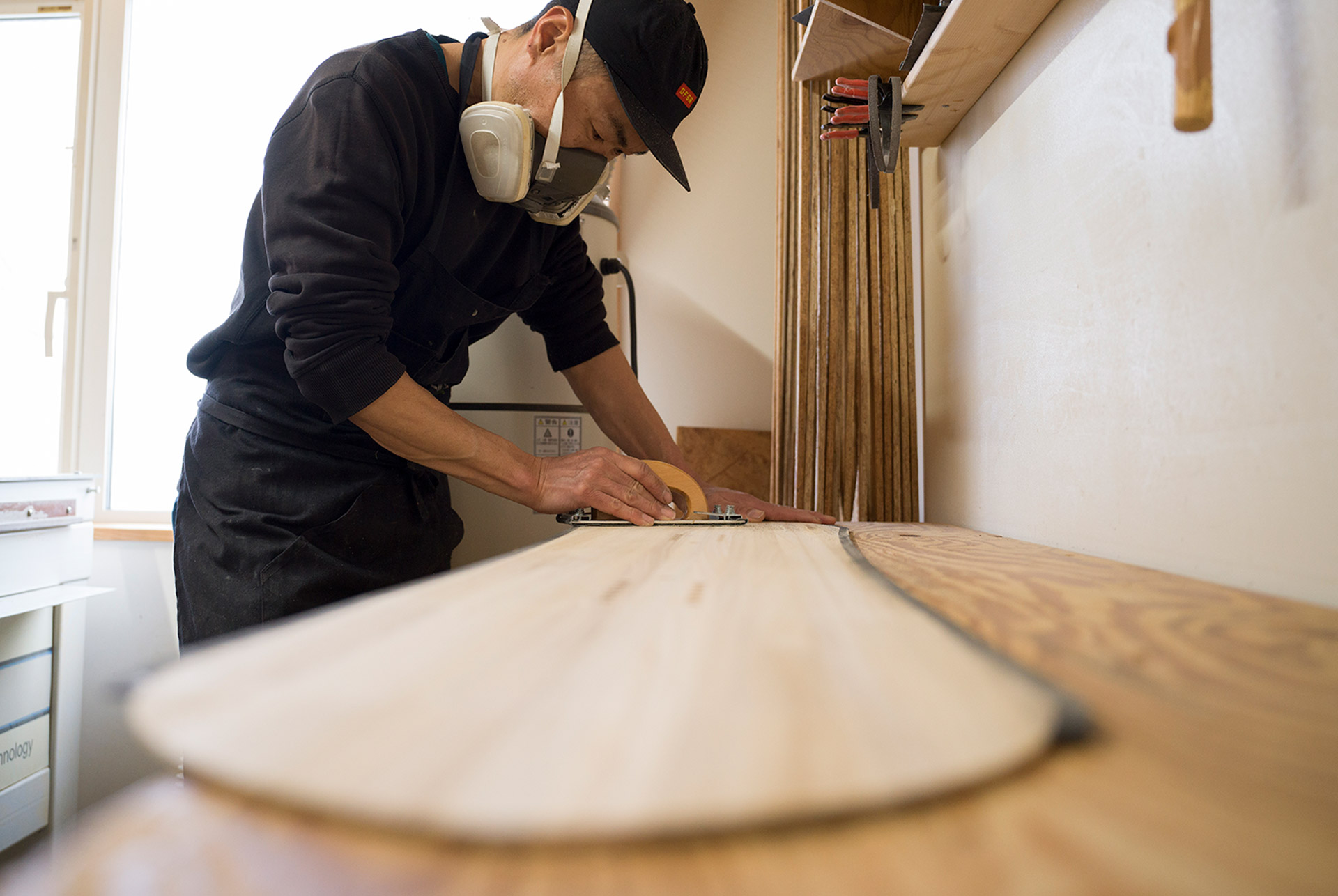
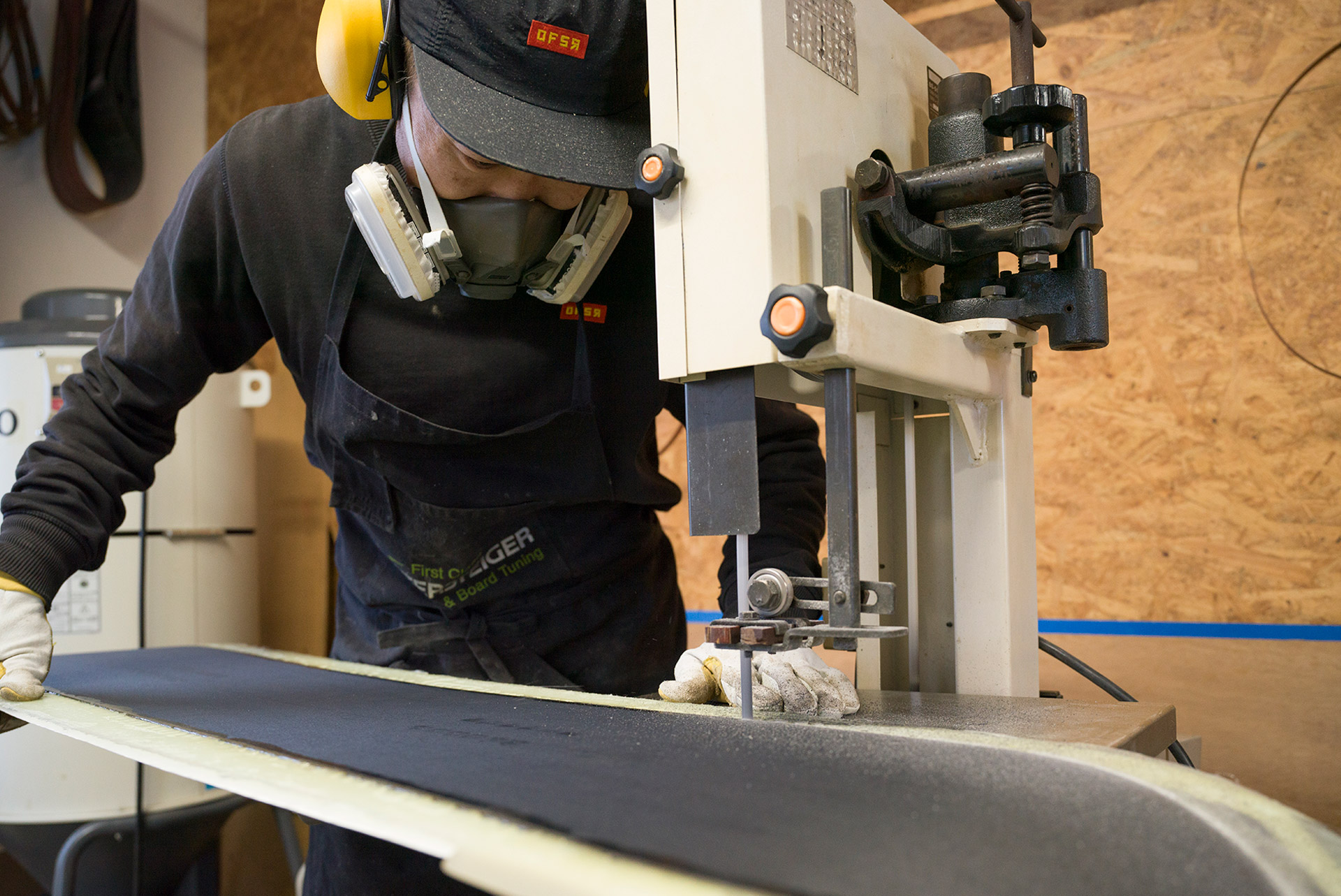
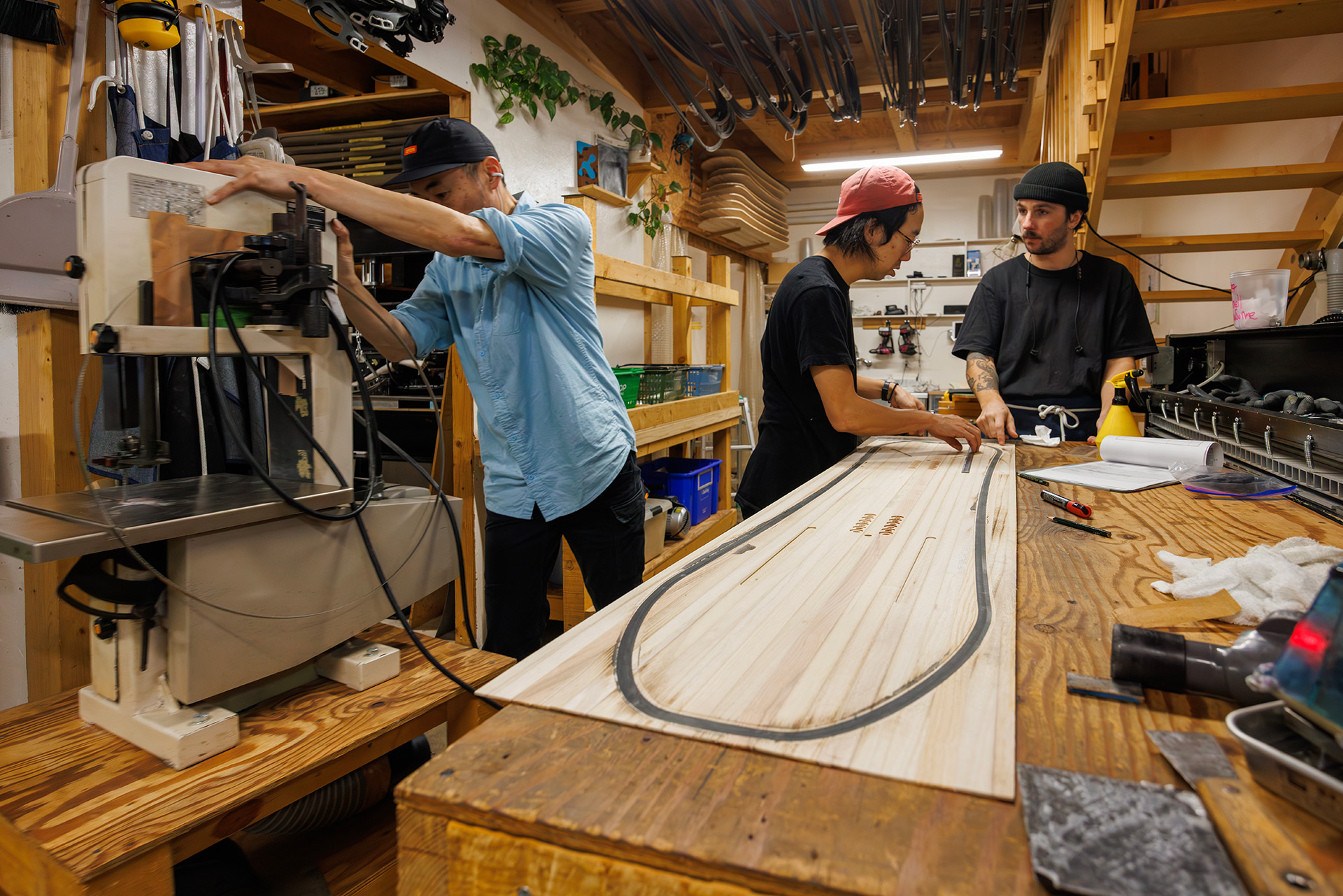
Out of the press, the blank still carries everything that squeezed out sideways.
The steel edge becomes the guide. The bandsaw follows it around the outline, trimming the excess away.
We call it flash-cutting.
The board appears out of the rectangle.
07 / The grind
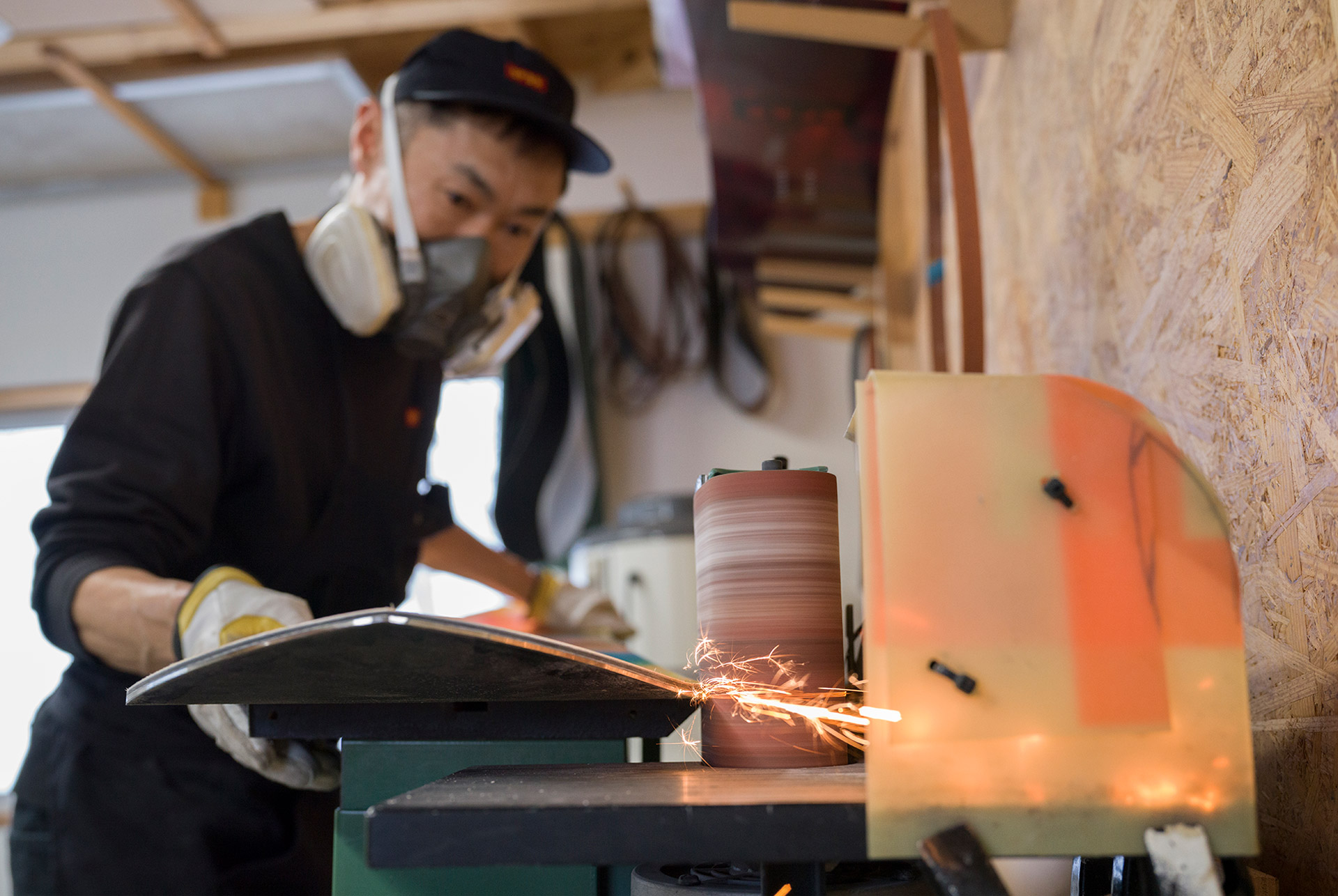
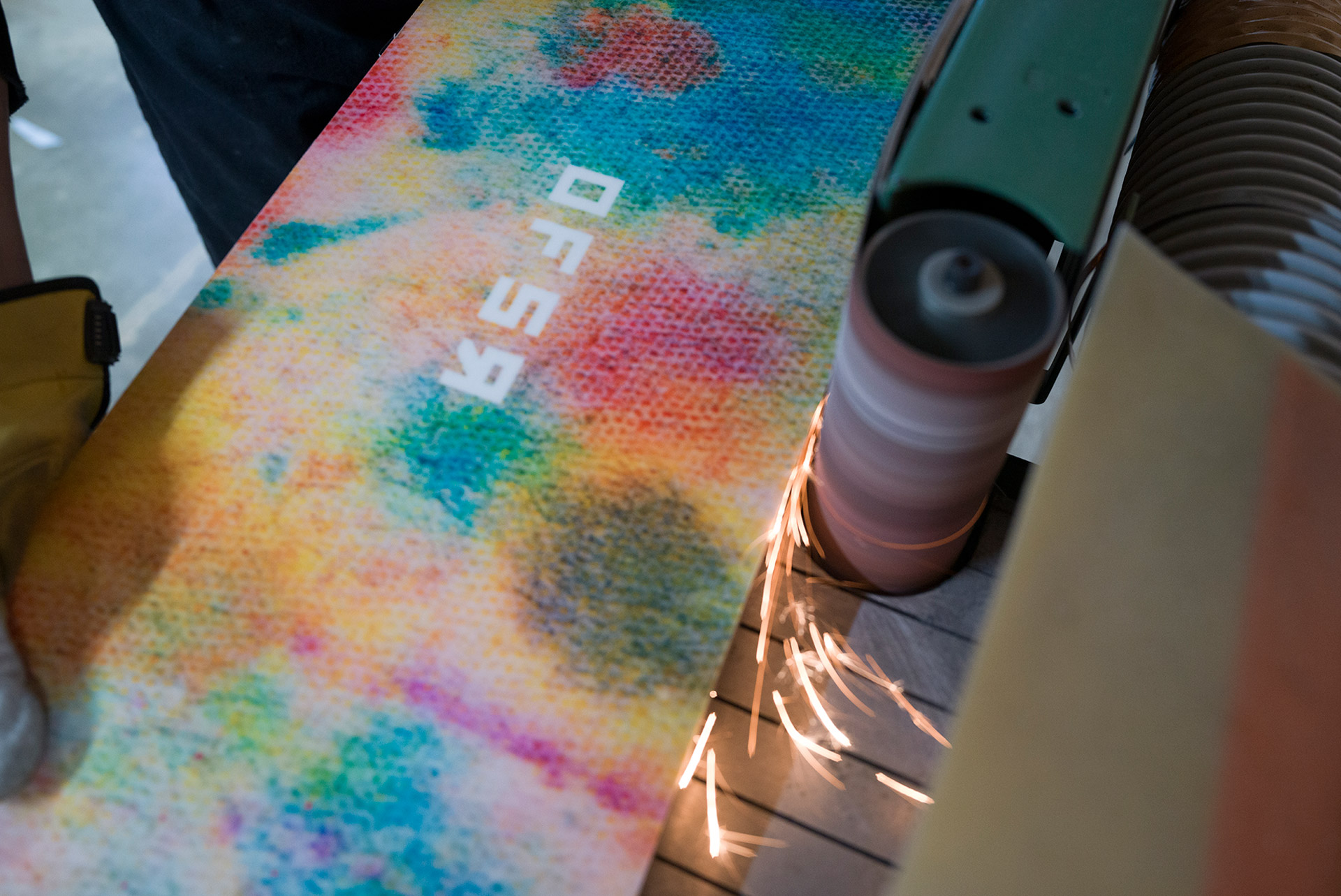
The grind.
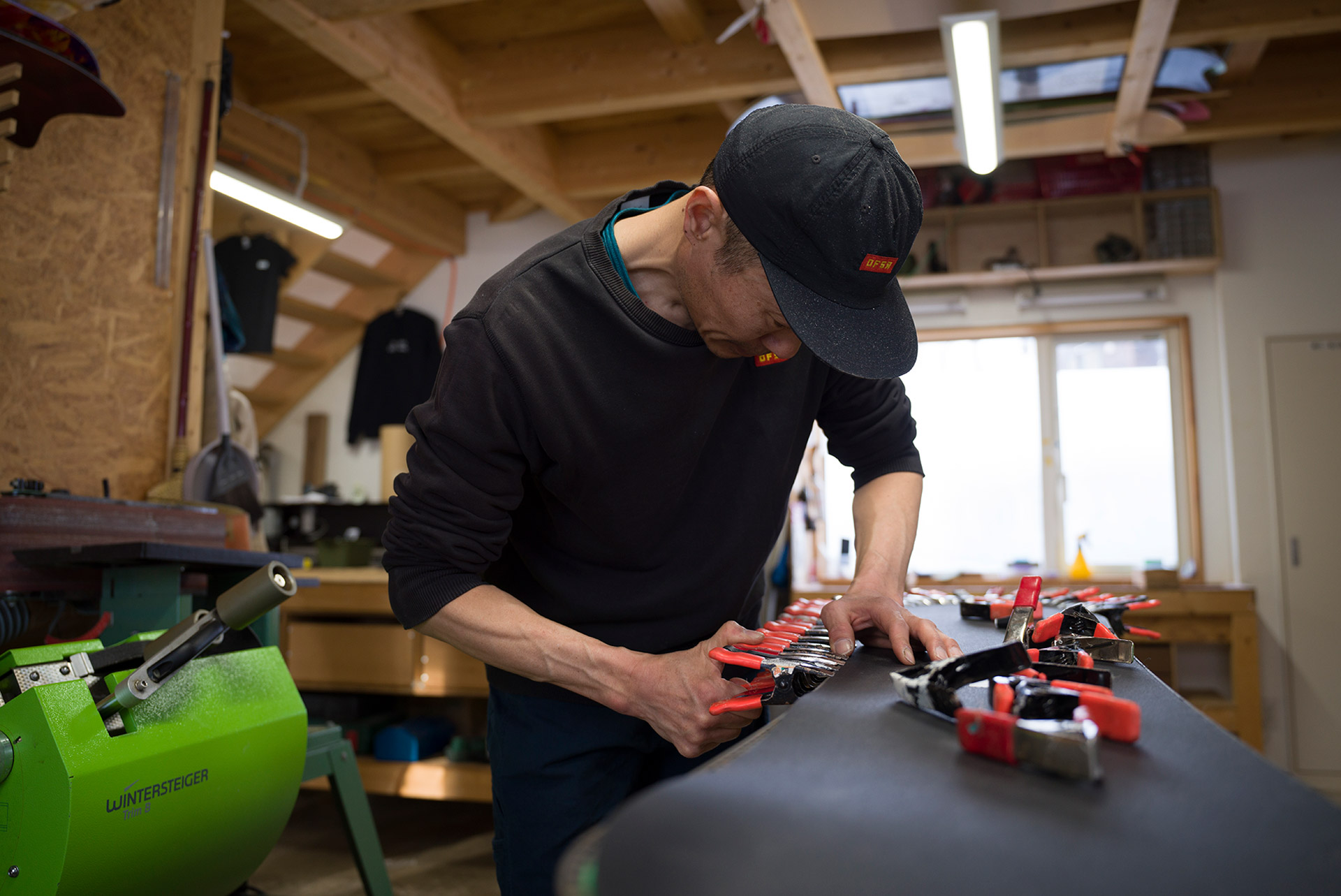
The base goes through the Wintersteiger sander. A coarse belt first, then finer and finer.
It comes out glassy.
Slick is not a look. It is speed.
08 / The inserts
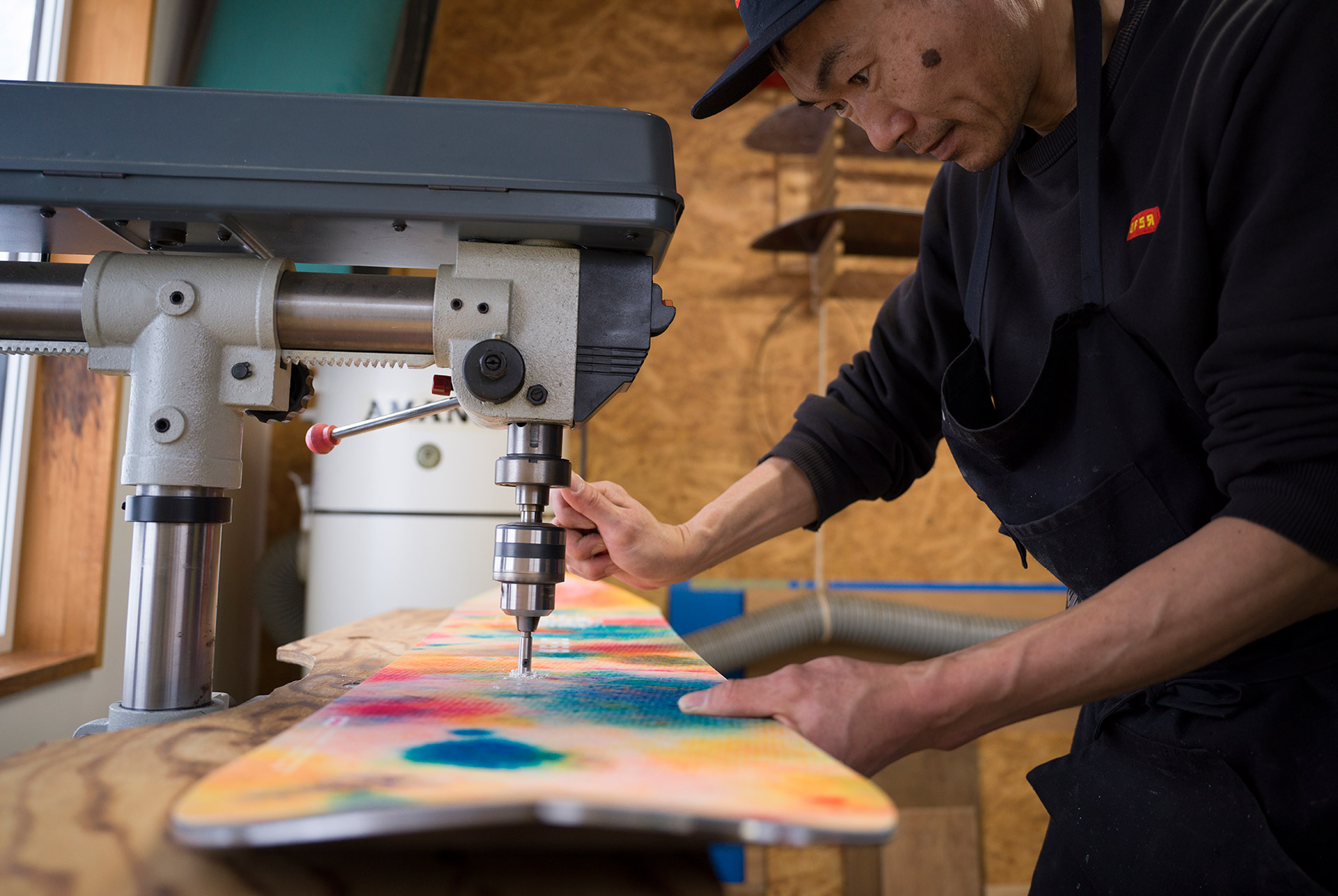
The inserts.
The binding inserts have been there since the layup, hidden under the graphic.
A drill press opens them up. A sanding tool finishes each one flush.
Now it can hold a binding.
Now it is nearly a snowboard.
09 / The finish
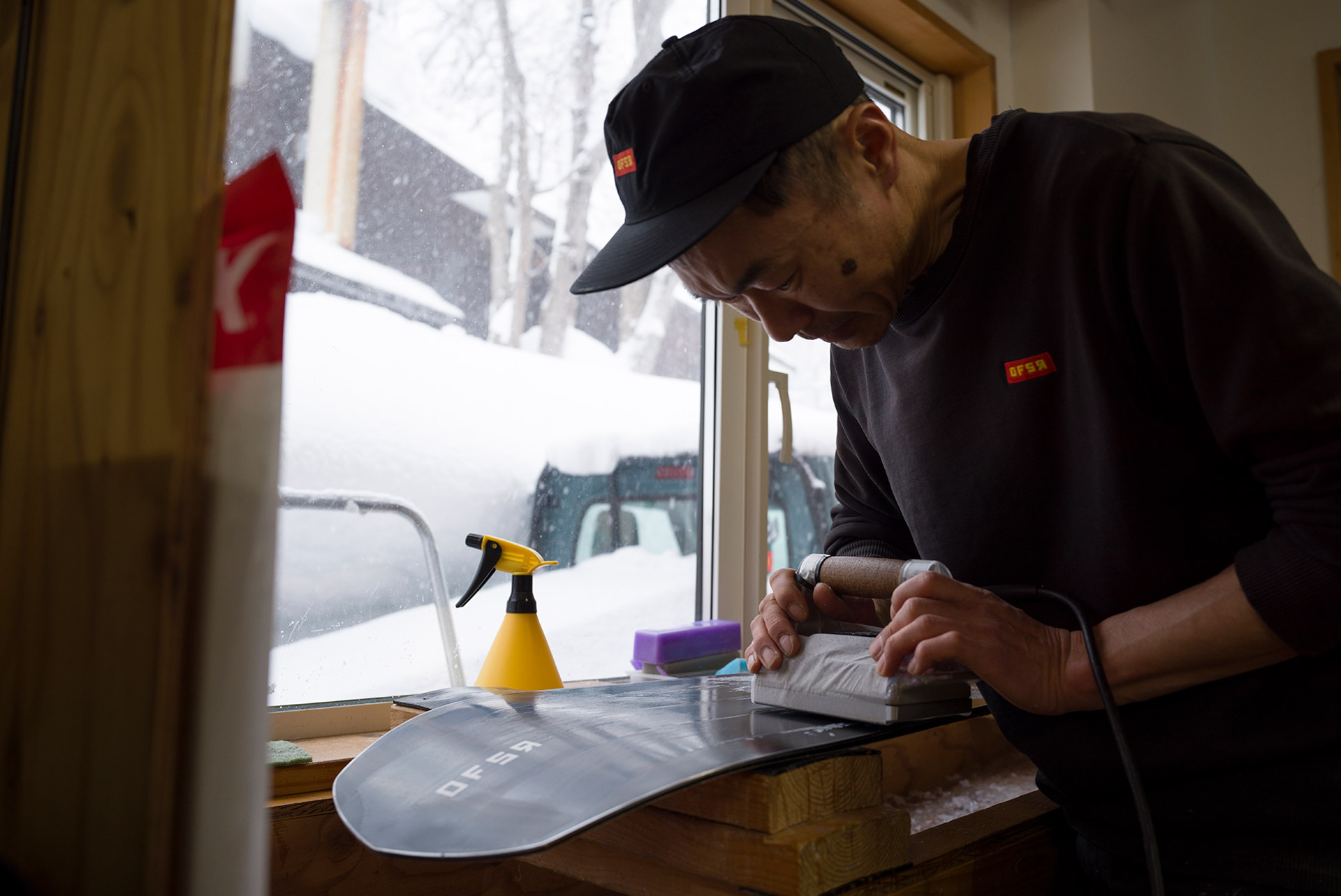
The finish.
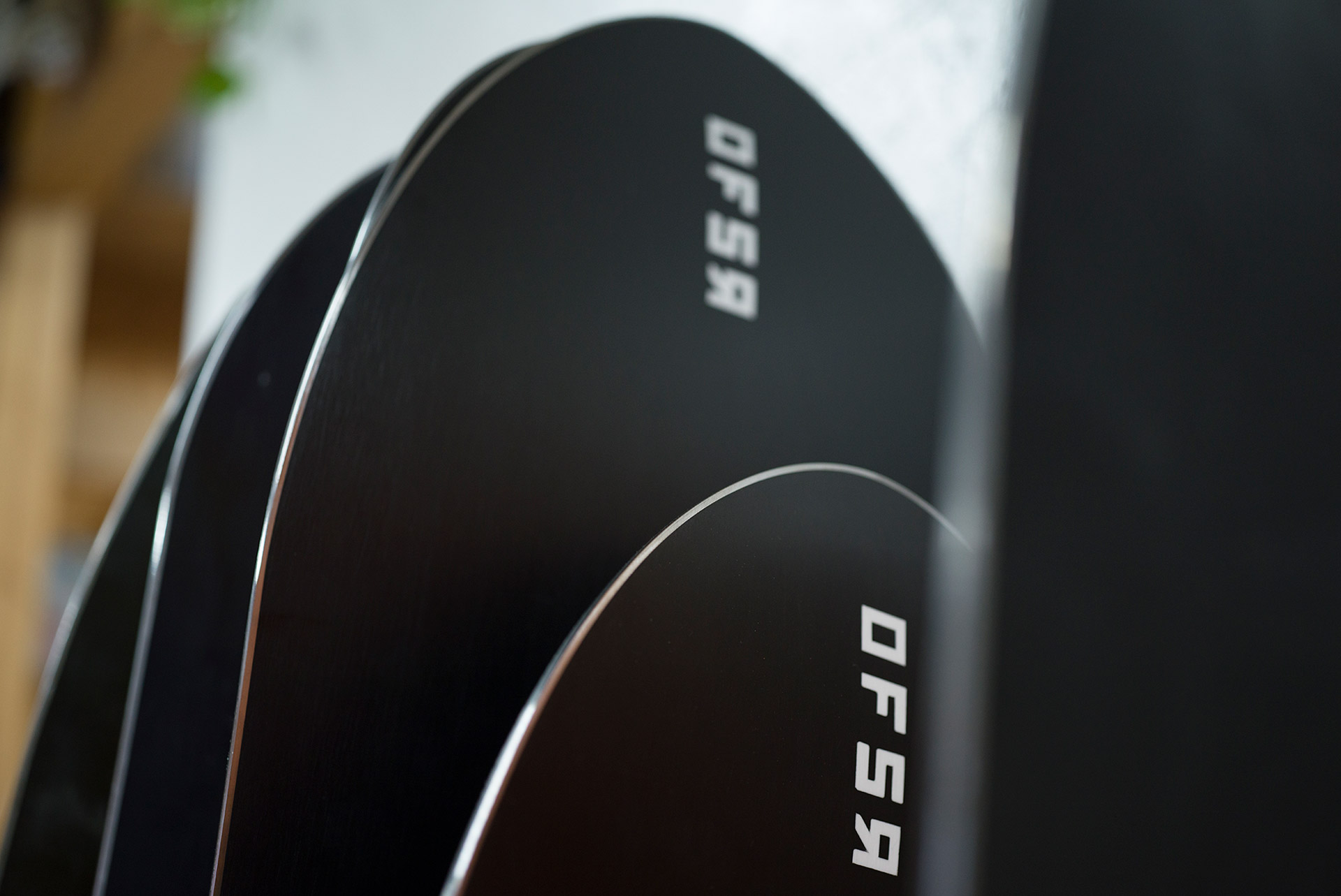
Edges are tuned to fractions of a degree. Sidewalls are bevelled. The base is flooded with Japanese wax, then scraped and brushed again and again to a mirror.
“The finish we put on them is pretty much unlike anything else in the world,” Josh told Robb Report.
Everyone has an opinion about how our boards look.
Nobody says they are not fast.
10 / Nine steps. No shortcuts.
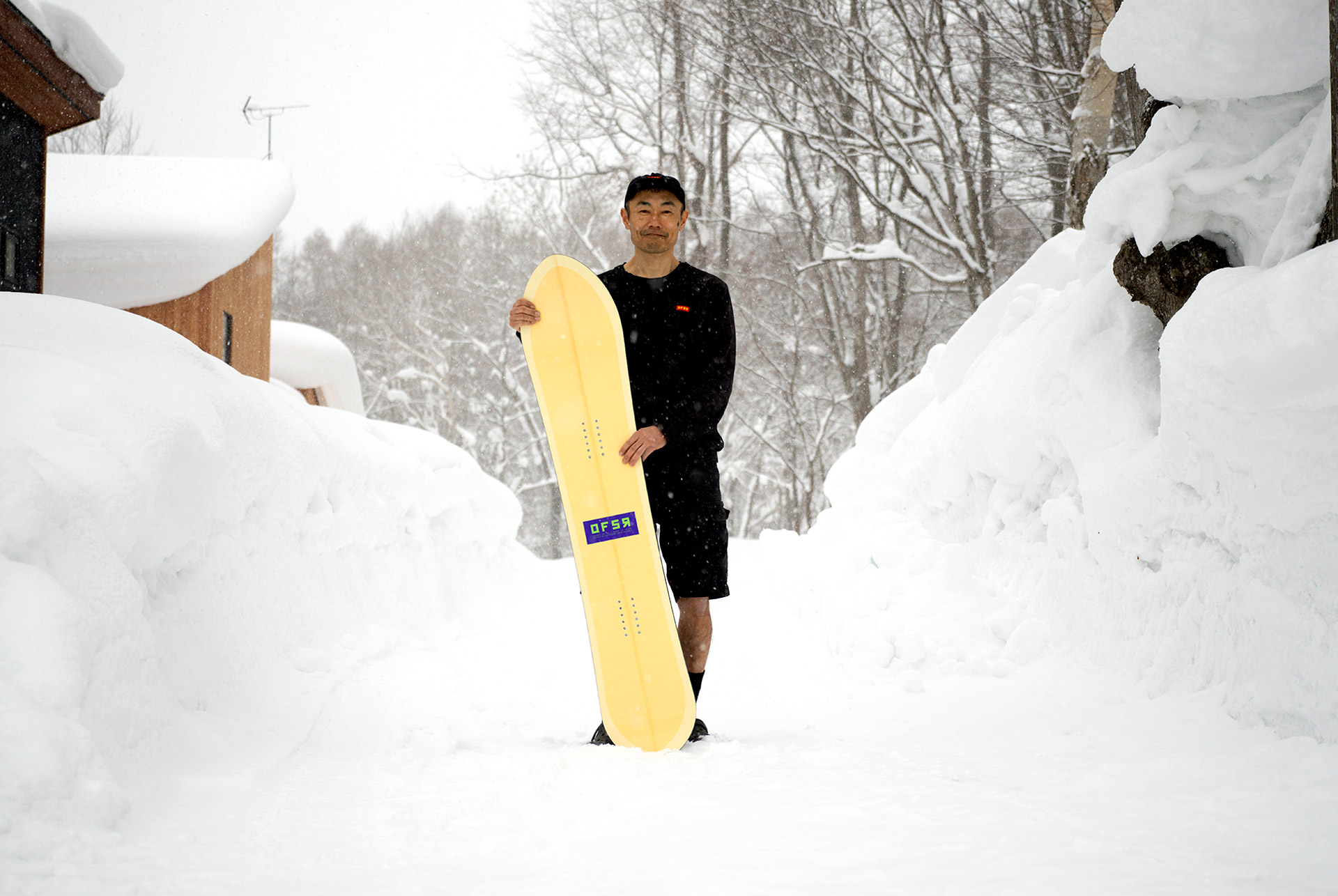
Robb Report called them some of the world’s best snowboards.
We just call it the way a board should be made.
Nine steps, in the same small Kōjō, by the same few hands.
Every board we make,
Built here. One at a time.
More from the Journal
View all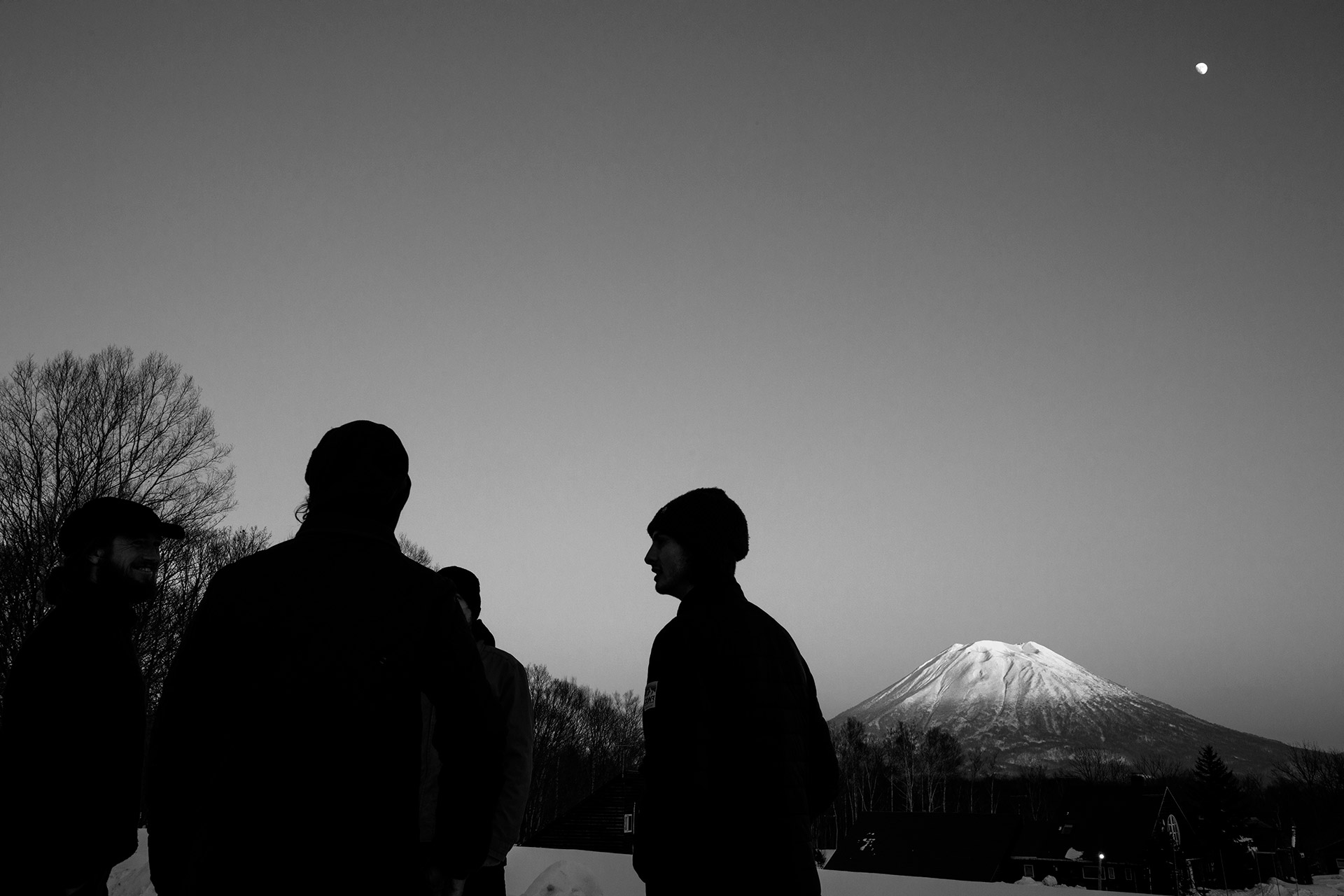
More entries
01
05