OFSR/Journal
Entry 03
Why we pour
our sidewalls.
Introduction
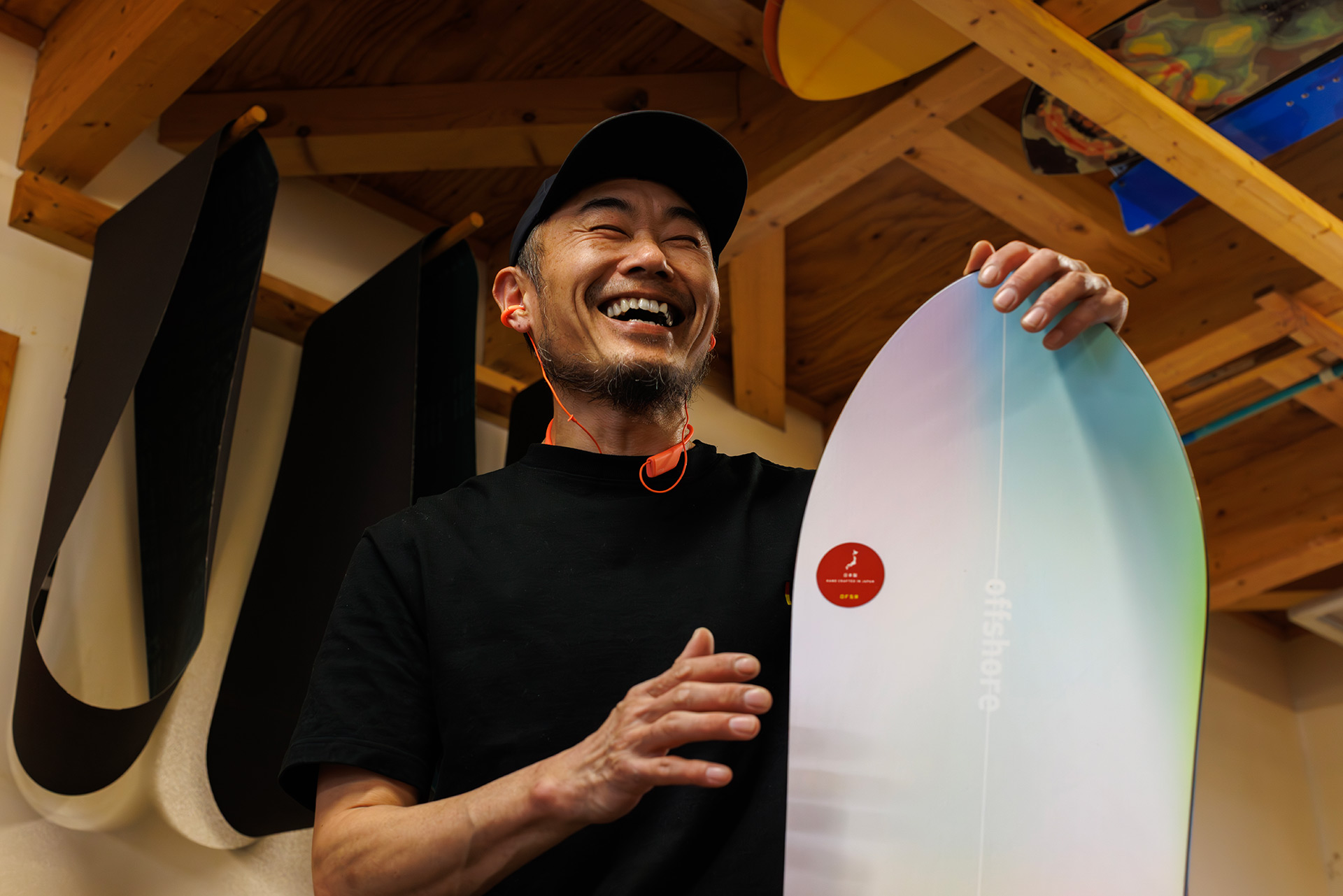
Most factories glue in an ABS strip. We pour ours in liquid. It takes longer. It is worth it.
We pour our sidewalls because we think they make a better snowboard.
Poured urethane is strong, resilient and naturally good at absorbing shock and vibration. It forms directly into the wooden core, creates a stronger connection through the construction and gives us greater freedom to fine-tune the flex of every shape, right to the tips.
And because we pour the material directly where it is needed, there is less sidewall waste during production.
More work.
Better result.
01 / The hardest working part
A small part that takes a beating.
A sidewall is a small part of a snowboard.
It is also one of the hardest working.
It runs around the wooden core, directly above the steel edge. Every hard turn loads it. Every landing asks it to flex. Every rock, rail, frozen rut and careless rider tries to damage it.
It has to protect the core while moving with a board designed to bend, twist and recover thousands of times.
We ask a lot of it.
That is why we pour ours from urethane.
02 / Poured, not glued
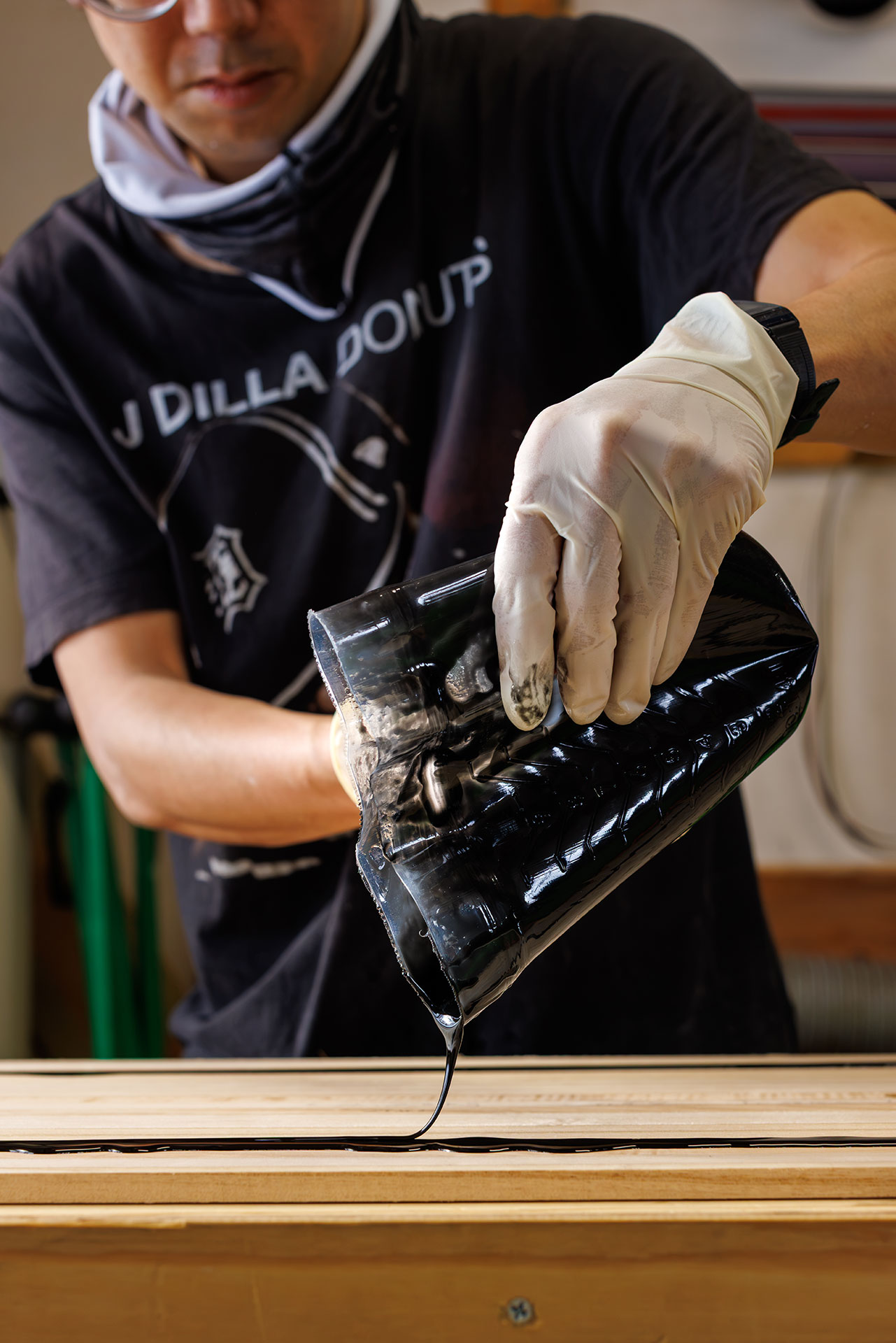
No strip. No glue line.
Most snowboard sidewalls begin as pre-made strips of ABS plastic.
ABS works. It is strong, rigid and consistent. The strip is cut, bent around the wooden core and bonded into place.
Our process starts differently.
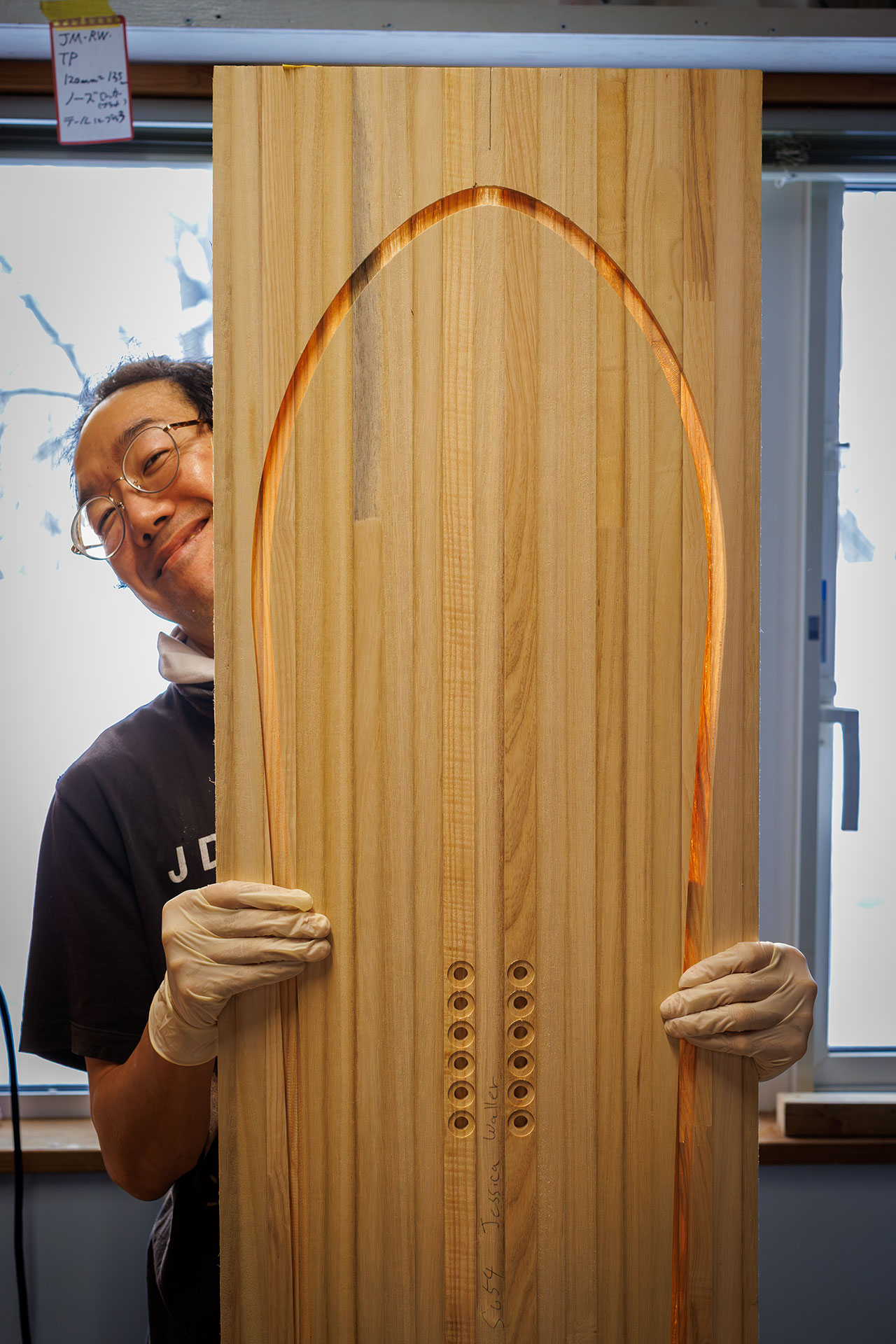
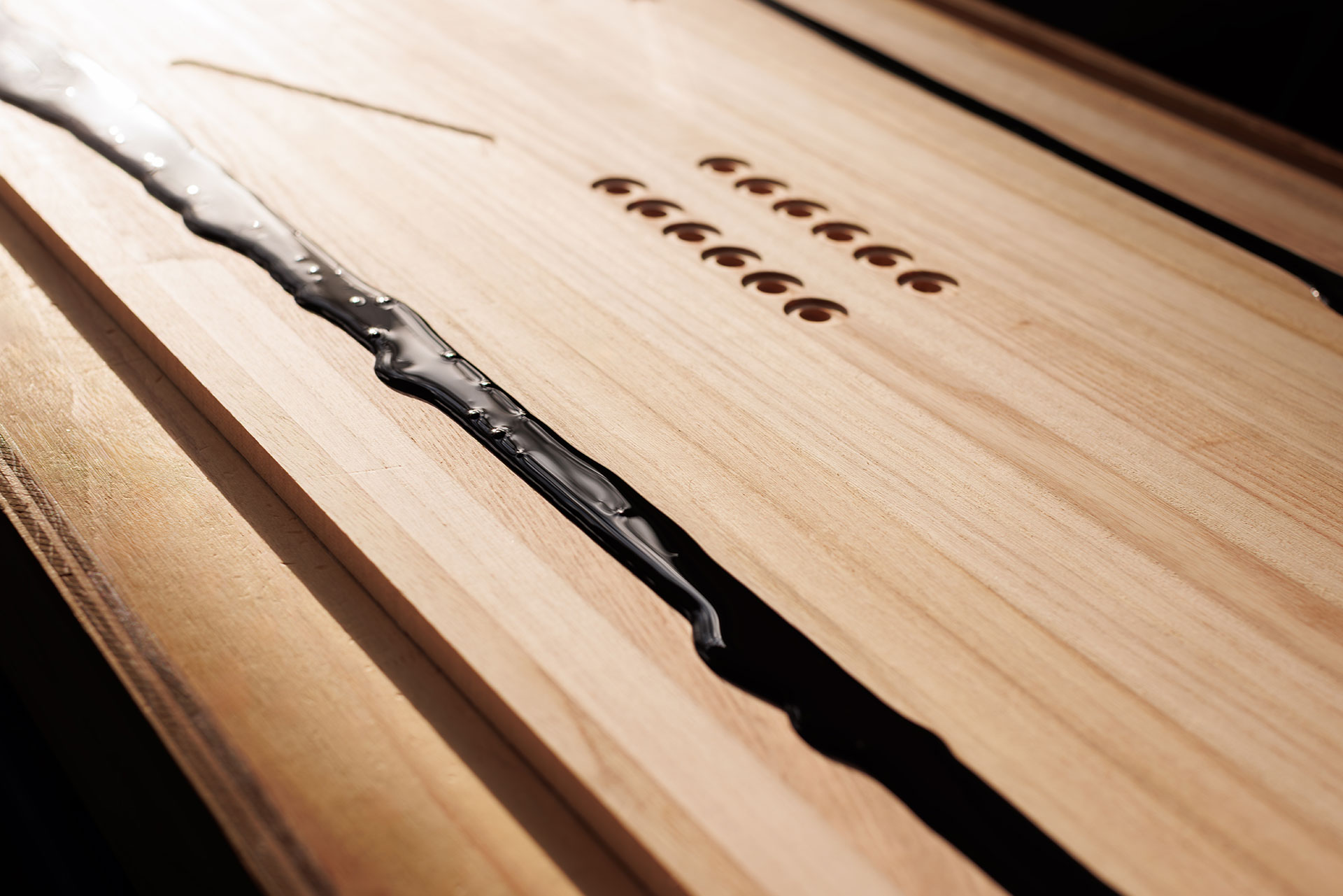
Before the core receives its final profile, we route channels around the perimeter of the timber. These channels follow the exact outline of that particular shape.
The urethane begins as a liquid.
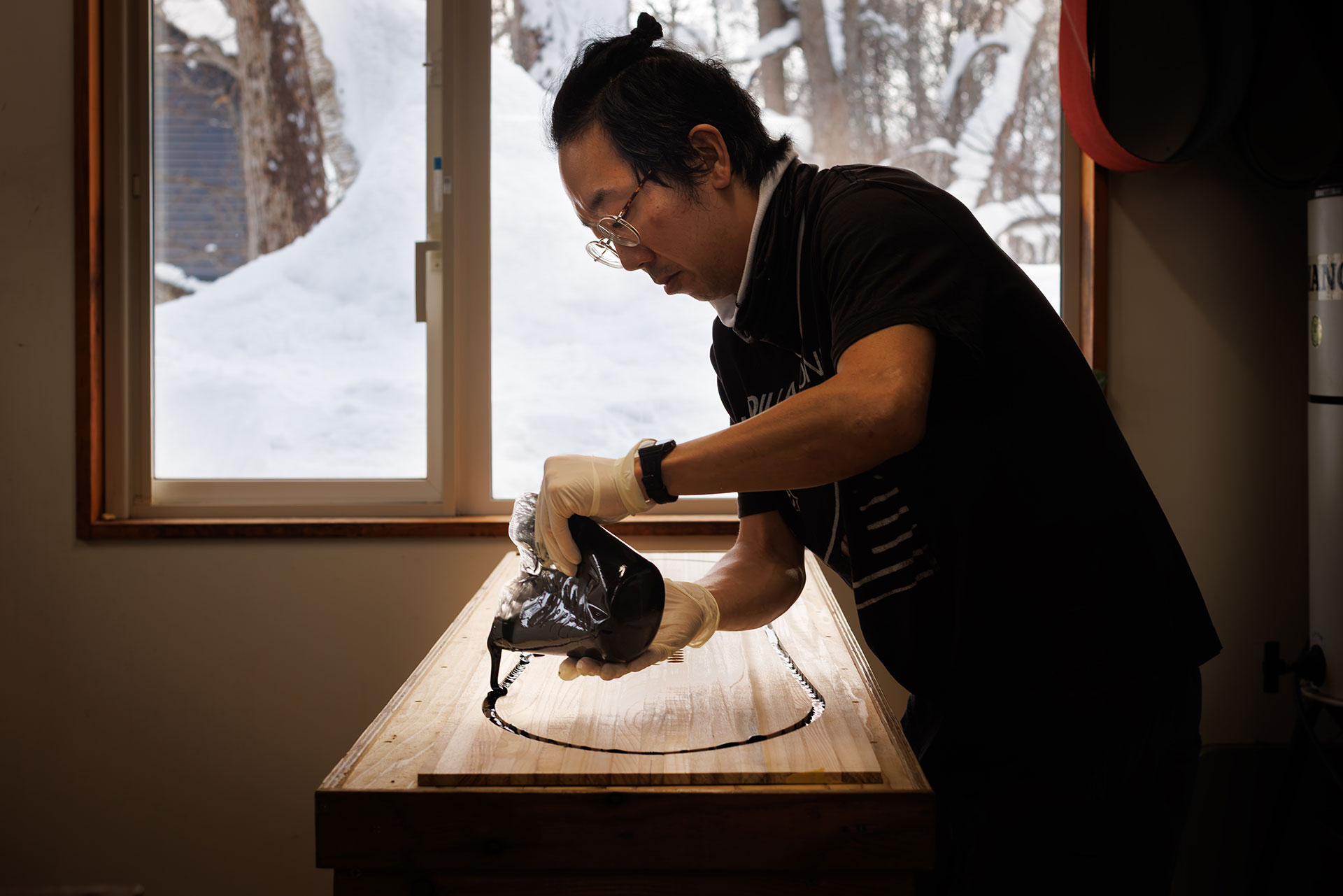
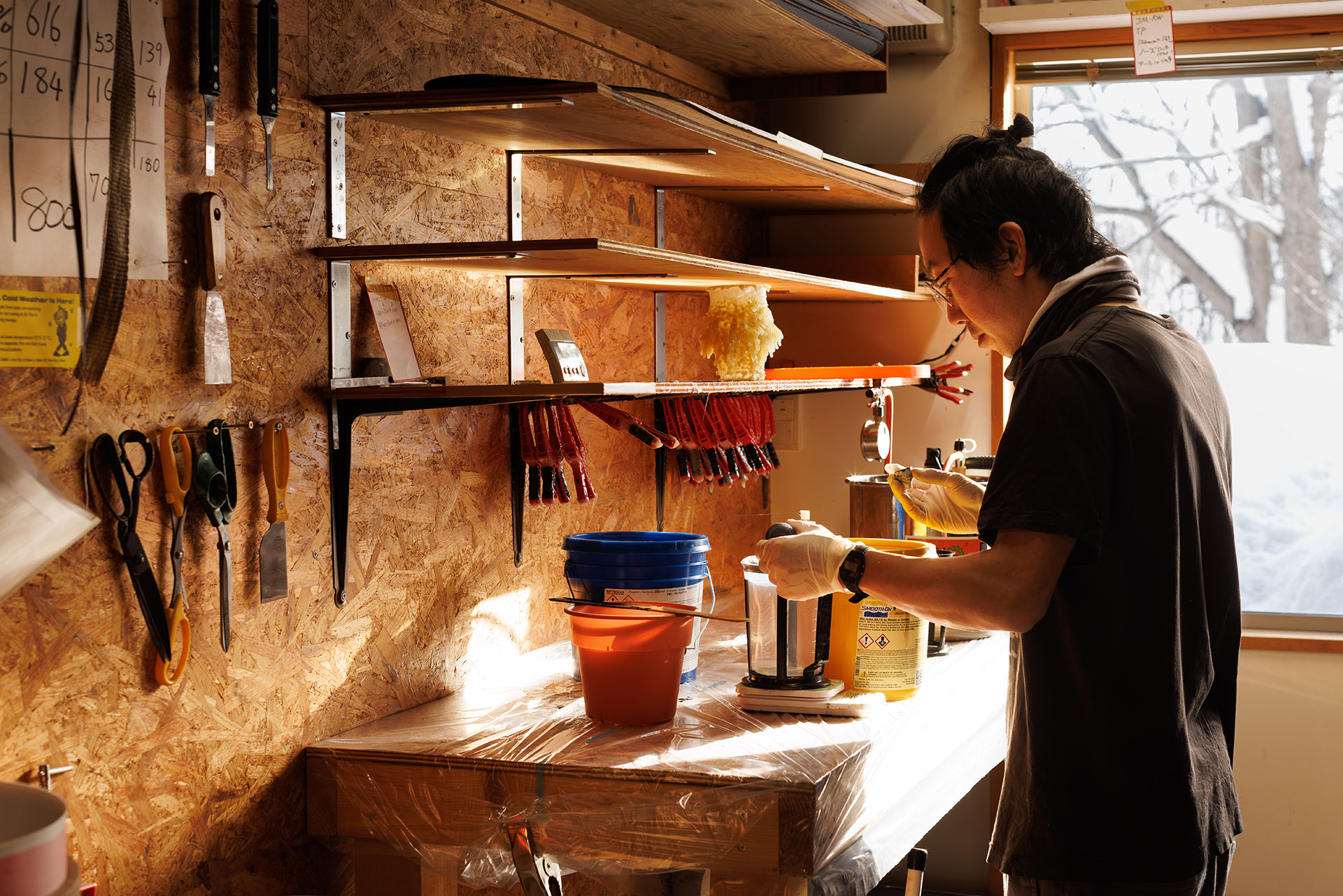
It is measured, mixed and poured directly into the routed channels, filling the space and following every curve of the sidecut, nose and tail.
Then it cures in place.
There is no separate plastic strip attached to the timber and no additional glue line between the sidewall and the core.
The urethane forms directly inside the wood.
One continuous sidewall.
One fewer interface.
One fewer place for separation to begin.

03 / Resilience
Tough, with some give.
ABS is rigid.
Urethane is resilient.
It offers strong resistance to abrasion and impact, while retaining enough elasticity to move and recover with the board.
That difference matters.
A snowboard is never still. It flexes through turns, ollies, jump turns and landings. The sidewall has to protect the core without fighting the way it moves.
Urethane absorbs and disperses some of the shock and vibration entering through the steel edge rather than passing all of it directly through the board.
For us, that means less chatter through hard or broken snow.
Less harshness beneath your feet.
A smoother, quieter and more composed ride.
Tough where it needs to be.
Enough give where it matters.
04 / Designing the flex
Flex, right to the tips.
The freedom of poured urethane goes beyond durability.
It changes what we can do with the core.
A conventional sidewall strip comes with its own dimensions and limitations. Poured urethane lets us design the timber and sidewall together.
Once the urethane has cured, the wood and sidewall are profiled as one.
That gives us more freedom to control core thickness and carry the flex profile further into the nose and tail.
Right to the tips.
A softer nose can rise and move more naturally through deep snow. More support through the tail can create a stronger finish to the turn. Small changes affect how the board loads, releases and recovers beneath the rider.
Every Offshore shape asks for something different.
Poured urethane lets us build that difference into the whole core.
05 / The connection
Wood. Urethane. Steel.
During layup, the finished urethane sidewall sits directly above the prepared steel edge.
That connection takes a lot of force.
Every carved turn loads the edge. Every impact tries to push it away from the materials around it.
In our construction, urethane gives us a stronger interface with the steel edge than a traditional ABS sidewall, while already being formed directly into the wooden core.
The result is a more integrated connection through the edge of the board.
Wood.
Urethane.
Steel.
Each material connected to the next.
Built to flex together.
Built to take a hit together.
06 / The whole picture
Less waste. Better where it matters.
A pre-made sidewall strip has to be cut and shaped before it can become part of a snowboard. Material is removed along the way.
Our urethane starts as a liquid.
We route the space we need and pour the material directly into it.
Less excess material.
Less sidewall waste.
It is one more reason the process makes sense to us.
No single component makes a great snowboard. Shape, core, laminates, resin, base, edges and press cycle all have to work together.
Poured urethane is one decision among many.
But it gives us a stronger, more resilient sidewall.
Better shock absorption.
Less chatter.
A stronger connection through the core and steel edge.
Greater freedom to tune the flex right to the tips.
And less unnecessary material left behind in the process.

07 / The result
Most riders will never see the routed channels or the liquid pour.
They will feel the result.
A board that stays composed when the snow gets rough.
A board that flexes the way we designed it to.
A board whose materials were chosen for how they ride.
We route it.
We pour it.
We build around it.
It takes longer.
It is worth it.
More from the Journal
View all

More entries
01
05