Checked 13 November 2026
What makes a good Japanese powder board?
See also
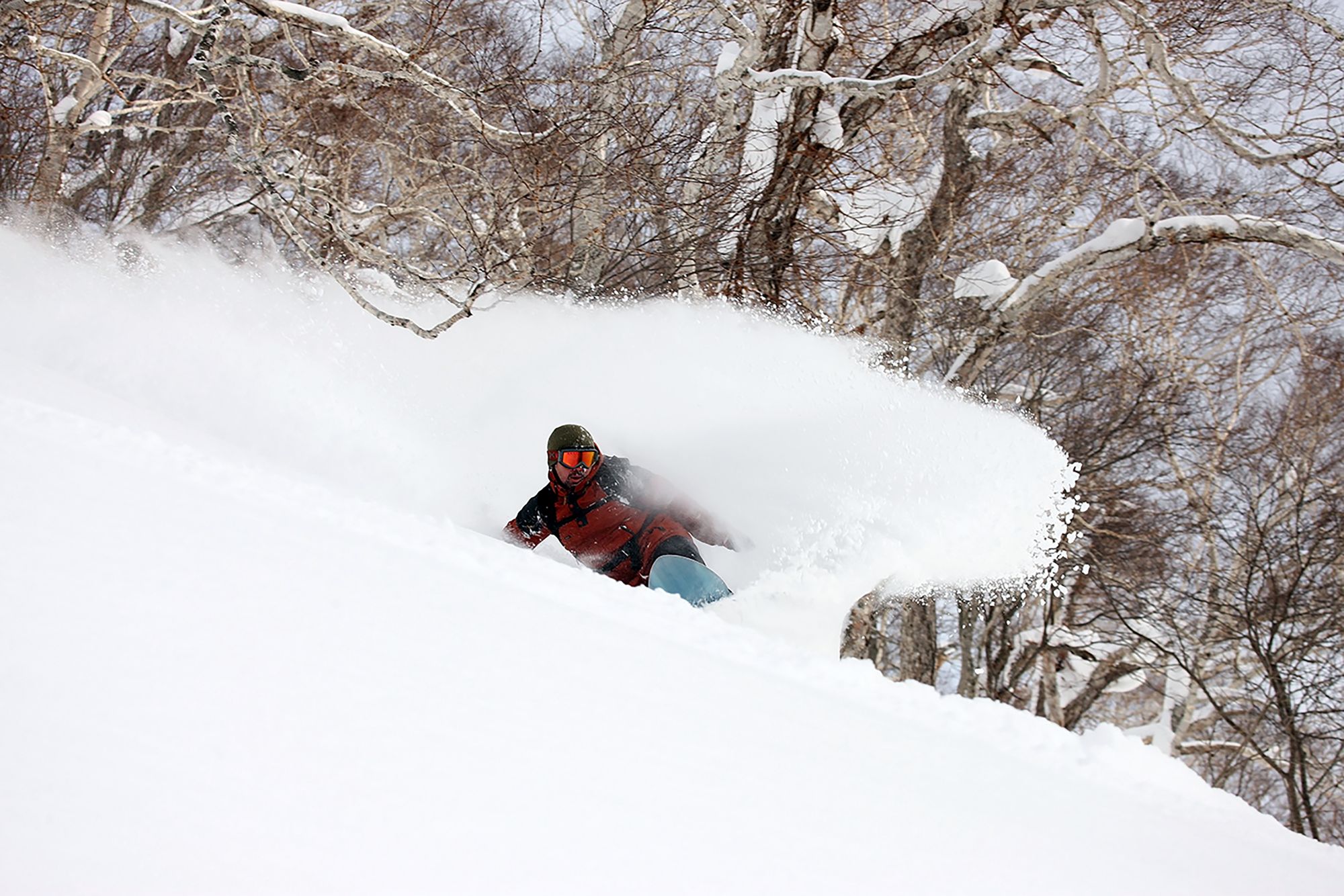
Introduction
Powder boards come in a lot of different shapes.
Some are long and narrow. Some are short and wide. Some use heavy taper and setback. Others get their float from width, rocker or simply putting more board in front of the rider.
They are all trying to solve the same problem: how to make a snowboard float, turn and carry speed in deep snow.
A powder board has a different problem to solve from a board on firm snow.
There is no hard surface underneath you. The board has to make its own support as it moves through the snow. How well it does that depends on the snow, your speed, your weight, the slope, how much surface area is underneath you and where that area sits in relation to your feet.
Then there is the other half of it: how you want the board to feel.
Some riders want to sink the tail and draw a long turn. Some want a short board that can pivot between trees. Some want enough support to charge an open face. Some want something that still drives hard on a groomer when the powder is gone.
That is why there is no single powder-board formula.
Taper, setback, width, nose, tail and camber are tools. Different shapers combine them differently depending on the snow they ride, the terrain around them and what they think a good turn should feel like.
01 / The short answer
The short answer
| What you see | What it does |
|---|---|
| Nose wider than the tail | More surface in front, less behind. Helps the nose rise and the tail settle. |
| Stance set back | Moves the rider’s weight behind the middle of the board. |
| Long, raised nose | Helps the front of the board plane through deep snow, especially at low speed. |
| Short or cut-away tail | Removes surface area behind the rider and helps the tail sink and release. |
| Camber under the feet | Gives grip, energy and drive when the snow firms up. |
| Extra width | Adds surface area, allowing some powder boards to be ridden much shorter. |
No single one of those makes a powder board.
It is the mix.
02 / Snow is not one material
Snow is not one material
“Powder” makes soft snow sound more consistent than it is.
Fresh snow can be cold and light, warm and cohesive, wind-packed, settled, deep, shallow or sitting on top of something completely different. Change the temperature, wind, elevation, storm track or the number of hours since it fell and you change what the board is moving through.
That matters to shape.
Niseko is a useful example because its snowfall comes from an unusual combination. The moisture comes from the sea. The cold comes from Siberia.
In winter, cold northwesterly air moves out from Siberia and crosses the comparatively warm Sea of Japan. It gains heat and moisture over the water, then rises as it reaches the mountains of western Hokkaido, cools and produces snow.
That pattern can repeat again and again through winter, which is why the surface here can be refreshed so often.
You could think of Niseko as coastal in its moisture source but continental in its cold.
That distinction matters.
A place like Mount Baker or Whistler is also fed by an ocean, but Pacific storms generally arrive into a much milder maritime climate. Niseko gets its moisture from an adjacent sea while winter temperatures remain low enough for fresh snow to commonly fall and remain at low density.
For a snowboarder, density is more useful than simply calling the snow “dry”.
In common midwinter Hokkaido conditions, fresh snow can stack loosely with a great deal of air through it. At a given depth there is less snow mass supporting the board, so surface area and nose lift become especially useful when you are moving slowly.
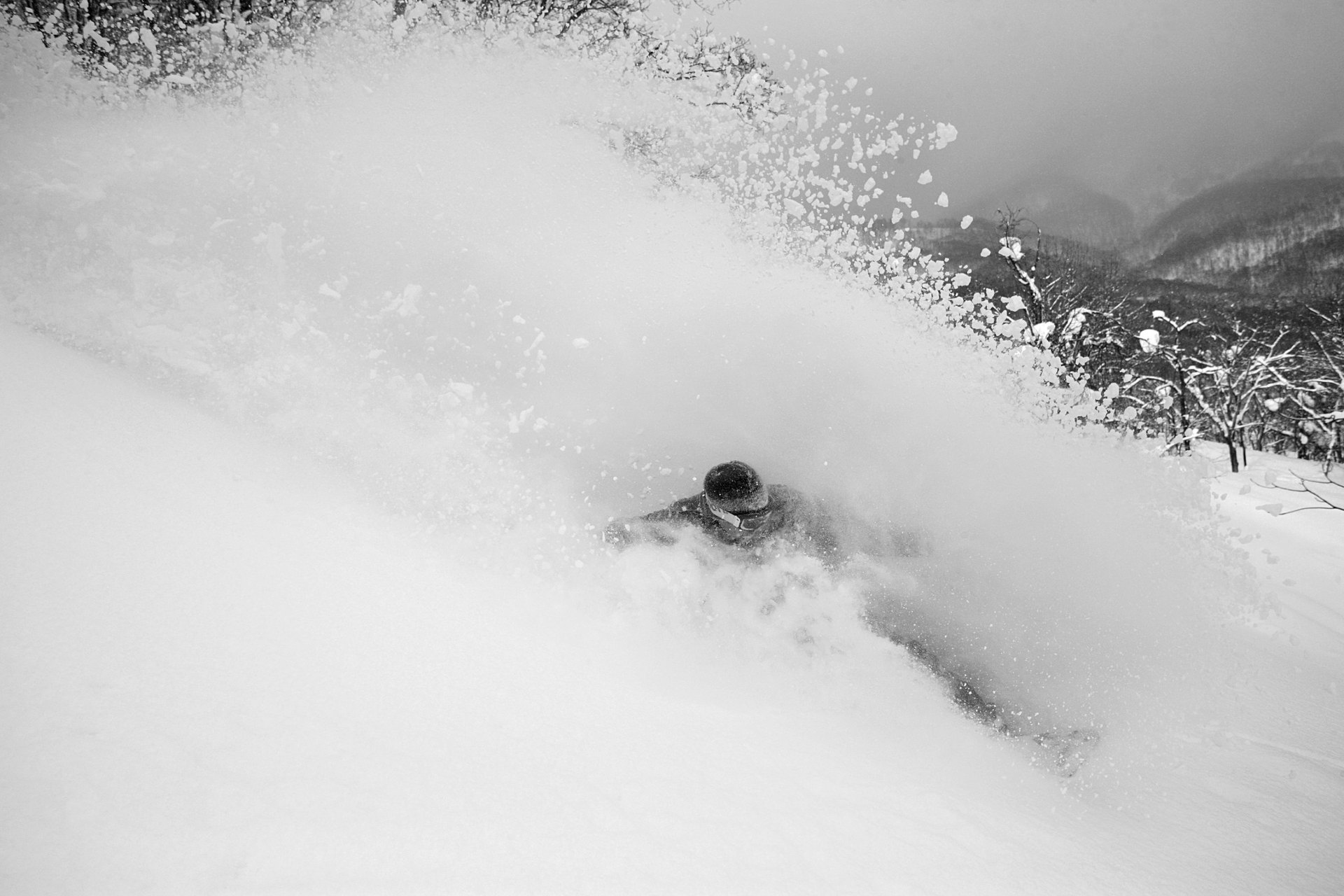
And Hokkaido itself is not one snow climate.
Niseko sits directly in the western Sea-of-Japan snowfall belt. Move inland towards Asahidake and the Daisetsuzan range and winters become colder again, while elevation, wind and a different exposure to incoming weather change both the snowfall and what happens to it after it lands.
Go south to Myoko or Hakuba and the equation changes again. Huge snowfall, but generally warmer storms, much greater elevation ranges and more variation within a single mountain.
Go to Utah and change it again.
Go to the Pacific Northwest and change it again.
They are all powder.
They are not the same material.
Which is one reason there is no single correct powder board.
03 / Terrain changes the answer too
Terrain changes the answer too
A board does not only respond to snow.
It responds to where you ride it.
Much of the powder riding around Niseko happens in trees and on moderate terrain. You are turning often, sometimes at surprisingly low speed, and eventually you are going to encounter a flatter section or a run-out.
A board that only starts floating once it is moving fast can be hard work here.
The Japanese Alps are different. There is serious steep terrain on Honshu, bigger vertical and more room in places to let a board run.
Neither demands the same thing.
A short, wide board that is brilliant between Hokkaido trees may not be the board you choose for a fast alpine face. A long, stiff freeride board built for speed may be much less enjoyable when you are trying to turn between birches and carry momentum through a flat exit.
Then there is the rider.
Someone who grew up surfing may look at a powder field and see a wave.
A skateboarder may see features, transitions and places to move the board underneath them.
A racer may see an edge and a line.
Someone who grew up in the mountains may not see an analogy to anything else at all.
Snowboarding has always contained all of them.
That matters because the shape of the equipment followed.
04 / How we got here
How we got here
There is a temptation to turn snowboard history into a family tree.
One inventor. One breakthrough. One idea handed to the next person.
It was never that tidy.
People had been standing sideways on improvised sleds and boards long before modern snowboarding had a name, but Sherman Poppen’s Snurfer was one of the moments when the idea reached a much bigger audience.
In 1965 Poppen fastened two skis together for his daughters and added a rope at the front. Brunswick licensed the result as the Snurfer, and hundreds of thousands were sold over the following two decades.
It was simple, but it put the idea of standing sideways and sliding down a snowy hill underneath a lot of people’s feet.
What came next depended on who picked that idea up.
Tom Sims came from skateboarding and surfing. He later recalled building what he called a “skiboard” in a school woodshop in 1963 because snow-covered streets stopped him skateboarding.
His solution was essentially to make a skateboard for snow.
Sims went on to become a major figure in both skateboarding and snowboarding, and his influence helped push snowboarding towards tricks, halfpipes and the freestyle culture that would become central to the sport.

Credit: Bud Fawcett
Jake Burton Carpenter came through the Snurfer.
As a teenager he wanted a surfboard, bought a Snurfer instead, and spent years riding it. By 1977 he had left his job in New York and moved to Vermont because he believed surfing on snow could become a sport.
He began building and testing boards, experimenting with everything from furniture-making techniques to fibreglass and surfboard construction. In 1978 he was making prototypes at John Mel’s Freeline Design surfboard factory in Santa Cruz. They made surfboards during the day and Burton moved in at night.
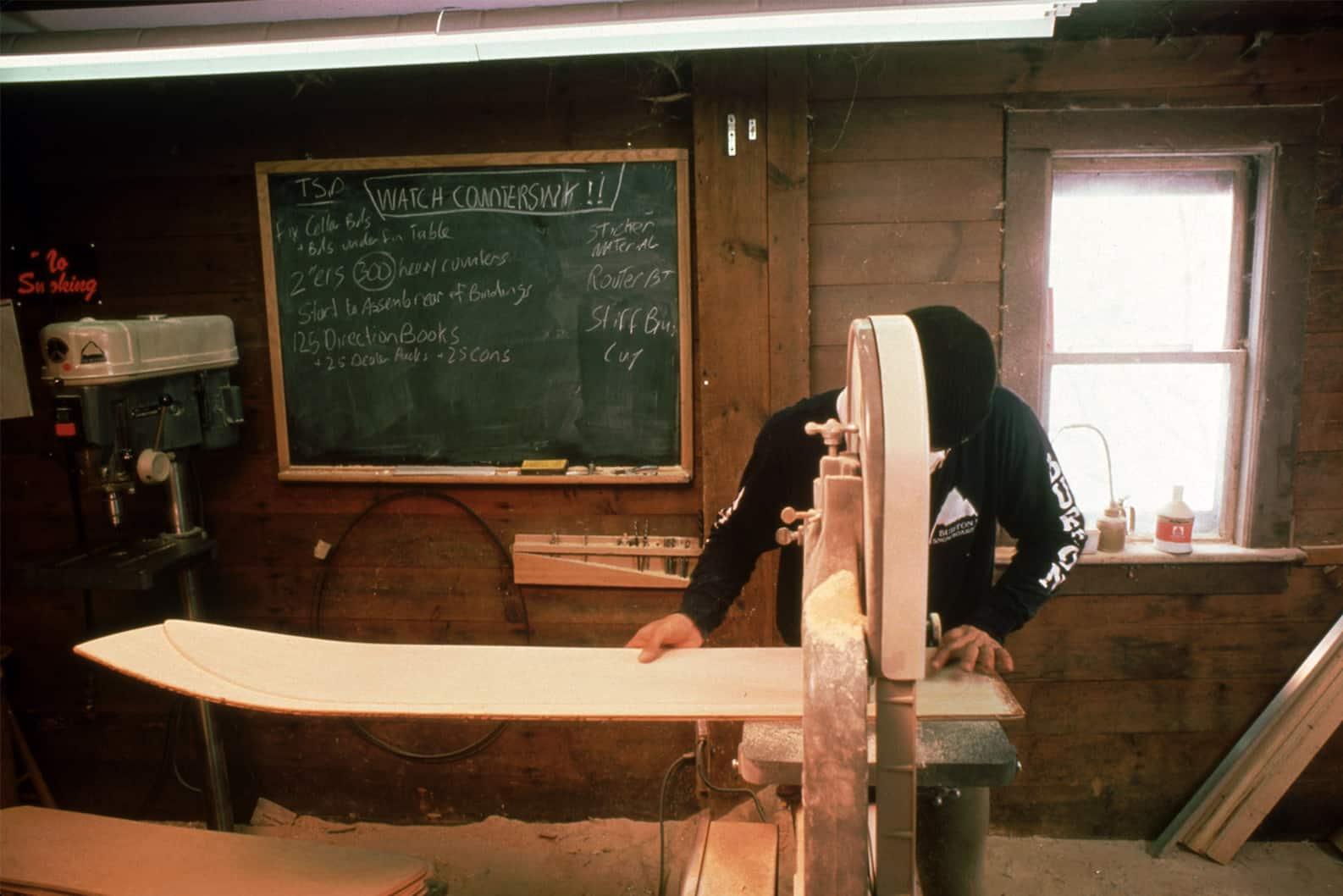
Credit: Burton
Burton’s importance was not simply one shape.
It was helping turn the sideways sliding idea into equipment that could function across a mountain, then spending years pushing ski resorts to let people ride it there.
At almost the same time, other people were asking a more specific question.
How do you make this thing work in deep snow?
In the United States, Dimitrije Milovich and Wayne Stoveken were developing what became Winterstick.
The company dates its first snowboard patent to 1972, and Milovich tested prototypes in the powder at Powder Mountain, Utah. Winterstick was explicitly trying to surf snow, and its directional boards and swallowtails were built around that purpose.
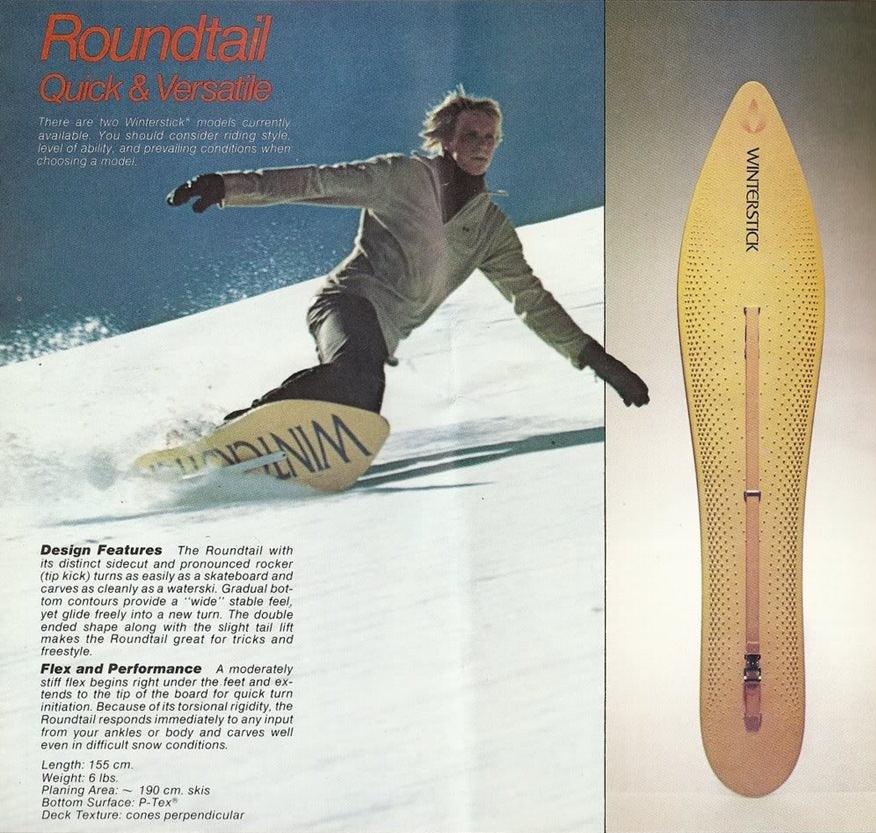
Credit: Winterstick.
Across the Pacific, Shinzo Tanuma was working from a remarkably similar instinct.
Tanuma was a surfer and surfboard shaper from Shonan Kamakura. In 1971 he built the first Moss Snowstick prototype from urethane foam and fibreglass, the same materials he used for surfboards.
It was 130cm long and 25cm wide, with ski edges and a 5mm fin underneath.
He took it to Akakura Onsen in Niigata to see whether the feeling he knew from the ocean could work on snow.
The first Moss Snowsticks went on sale in 1979. In 1982 Moss established the Japan Snow Surfing Association, and Taro Tamai was among the riders it later nurtured.
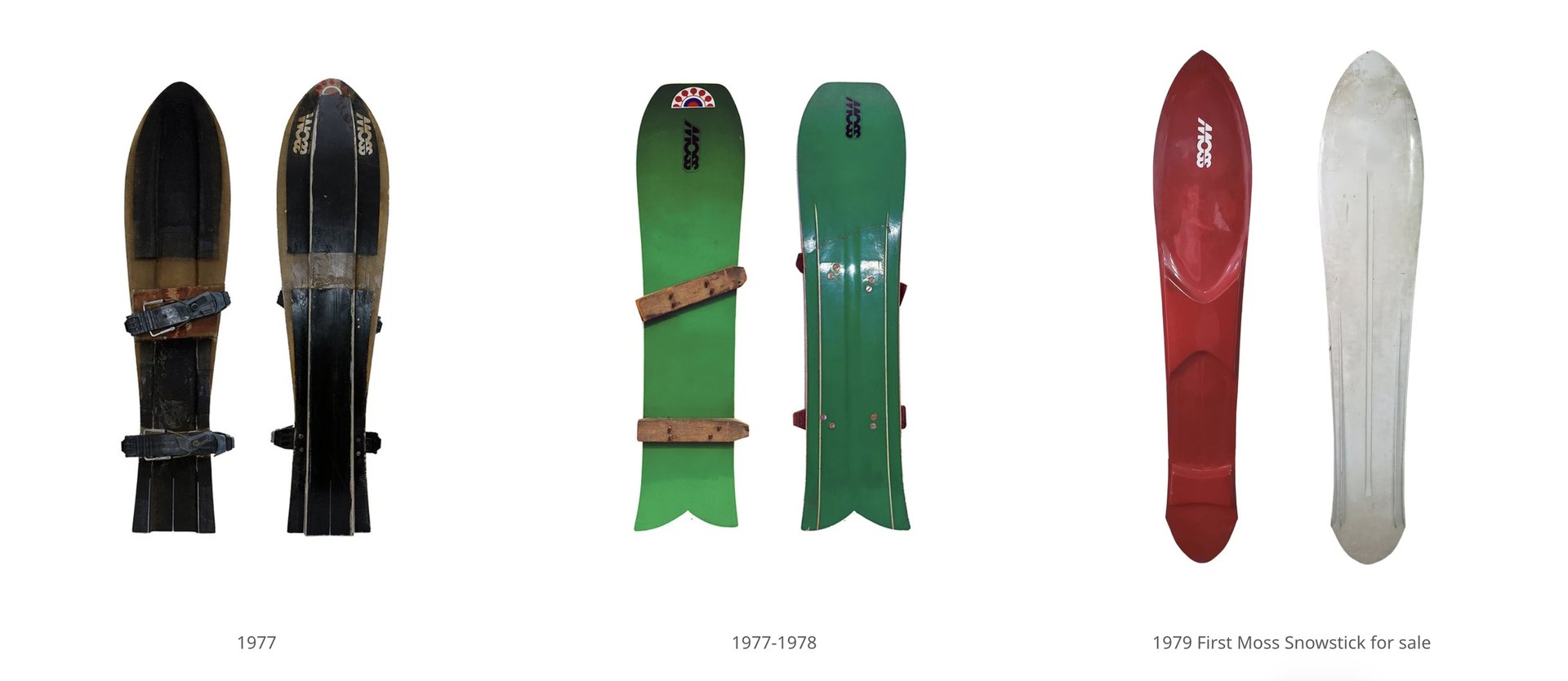
Credit: Moss Snowstick
There is no evidence in either company’s published history that Tanuma and Milovich knew what the other was doing when those early experiments began.
The surf answer had simply turned up in more than one place.
It kept doing that.
In Sydney in 1978, surfers George Watt and Geoff St. George built a board they called the Snowf.
Watt later explained that he struggled to get his weight forward on skis and wanted something he could stand on like a surfboard.
By his own account he did not know whether he was breaking new ground. But the motivation is revealing: two surfers encountered snow and immediately wanted to ride it in a language they already understood.
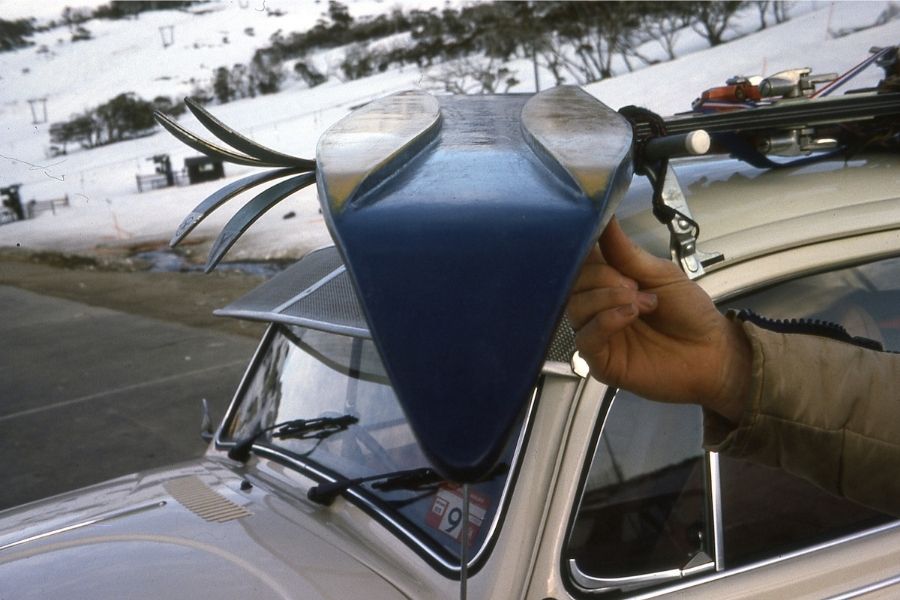
Credit: George Watt / Transfer Magazine
Europe grew its own branches.
In France, Régis Rolland first saw snowboarding in January 1982, when the Winterstick team came to Les Arcs to help open and promote the resort. He bought one of their boards, a swallowtail, and rode it until he broke it. In his own words, “I busted my Winterstick board.”
From 1983 he started developing boards of his own. He was a cabinetmaker by trade, and his childhood friend Bernard Gervasoni, in Villard-de-Lans, built him a screw press. Rolland used it to make his first swallowtails. In 1986 the two of them set up a workshop there, and the first production Apocalypse Surf board came out that December.
It is a good example of how these ideas travelled. An American powder shape arrived in the French Alps, a local rider broke it, rebuilt the idea for himself, and another branch grew from there.
Other European shapers followed their own routes through racing, carving, surfing and alpine design.
None of these lines produced the one true snowboard.
They produced branches.
05 / Then the centre moved
Then the centre moved
Through the 1980s and 1990s, freestyle became the centre of mainstream snowboarding.
Skateboarding’s influence grew. Riding switch mattered. Tricks mattered. Halfpipes and later terrain parks mattered.
The twin shape made more sense for what a growing number of snowboarders wanted to do.
That did not mean directional or surf-influenced boards vanished.
They just became less visible at the centre of the industry.
People kept building swallowtails, pintails, powder guns and strange one-offs in workshops all over the place.
Some were reviving old ideas. Some were blending them with new construction. Some were looking directly at surfboards. Some were coming from racing and carving. Some were probably building things that never appeared in a magazine and no longer exist.
That last part matters.
History is much better at recording companies than ideas.
There was almost certainly someone in a shed somewhere in Canada, Japan, Europe, Australia or the United States making a strange board because it felt right to them, with no particular interest in what anyone would eventually call the way they rode it.
06 / The shapes come back
The shapes come back
By the 2000s, experimental shapes were becoming visible again in a lot of places at once.
The Austrian Aesthetiker crew developed ASMO around snowsurfing and the idea that, like surfboards, different snow conditions could justify different shapes.
In the United States, Grassroots Powdersurfing and Corey Smith’s Spring Break project were exploring their own directions.
Japanese makers were doing theirs.
When Whitelines looked at the explosion of unusual snowboard shapes in 2013, it described something that had already been simmering underground for years. Its examples came from Austria, the United States, California and Japan.
There was no single modern origin to point to.
That is the important part.
The modern shape revival was not exported from one country.
But ideas were certainly moving between them.
KORUA is a good example of how tangled those lines can be.
Nicholas Wolken had years of experience riding the boards of Swiss shaper Jerry Niedermeier, and credits those boards for the way he came to think about board design.
Later KORUA shapes such as the Noserider drew directly from longboard surfing.
Swiss shaping and Californian surf thinking, in one Swiss brand.
That is much closer to how board design actually moves.
Ideas cross oceans.
Someone sees something, rides something, remembers something old, changes it, combines it with something else and makes another version.
Surfboard shapers have done the same thing for generations.
07 / Why Japan became so visible
Why Japan became so visible
Japan did not invent surfing on snow.
It did not keep it alive by itself.
What changed in the 2000s was the size of the stage.
As Niseko became an international powder destination, riders from Australia, Europe and North America arrived in Hokkaido in growing numbers and encountered deep snow, unfamiliar boards and a riding culture many had not seen before.
Japanese makers suddenly had a much larger international audience.
For plenty of riders outside Japan, this was their first close look at boards with long noses, heavy taper, swallowtails and stances that seemed a long way back compared with the freestyle boards they were used to.
The snow was only part of why it landed.
Niseko put a lot of things in one place at one time: consistent powder, unfamiliar shapes, Japanese craft culture, distinctive aesthetics, strong characters and a way of presenting riding that many Western snowboarders found easy to fall for.
That last part is a reading rather than something you can prove from a specification sheet.
But it matters.
Japan did not start the wider shape revival.
It gave one particular expression of it a very good stage.
And that is part of why the phrase Japanese powder board means something today even though the ideas inside one are not exclusively Japanese at all.
08 / The shape, one part at a time
The shape, one part at a time
Once you strip the mythology away, the interesting part is the shape itself.
Taper
Taper is the difference in width between the nose and the tail.
A true twin has none. Many powder boards have some.
The wider nose carries more surface area in front of the rider. The narrower tail carries less behind.
In soft snow that helps the front rise while the rear settles.
More taper generally helps the tail sink and release more easily.
Less taper leaves more board behind you, which can give the tail a more supported feel once the snow firms up.
But taper is not destiny.
Sidecut, effective edge, flex, setback, profile and the actual outline of the tail all change what you feel.
Our powder shapes run from 5mm to 20mm of taper.
Setback
Setback is how far behind the middle of the board you stand.
It helps the same cause from another direction. Move the rider rearward and there is more board in front of their weight, which helps the nose rise.
Too little float and your body starts compensating.
If you spend a deep day leaning back just to keep the nose above the snow, the board may be too small, too narrow, have too little surface area in front of you, or simply not be shaped for what you are asking it to do.
There is another complication.
Setback can be measured in two different ways.
One is from the centre of the entire board, tip to tail.
The other is from the centre of the running length, the part of the edge that actually works against the snow.
Those numbers can be very different on a board with a long nose.
We publish both as Setback overall and Setback from edge.
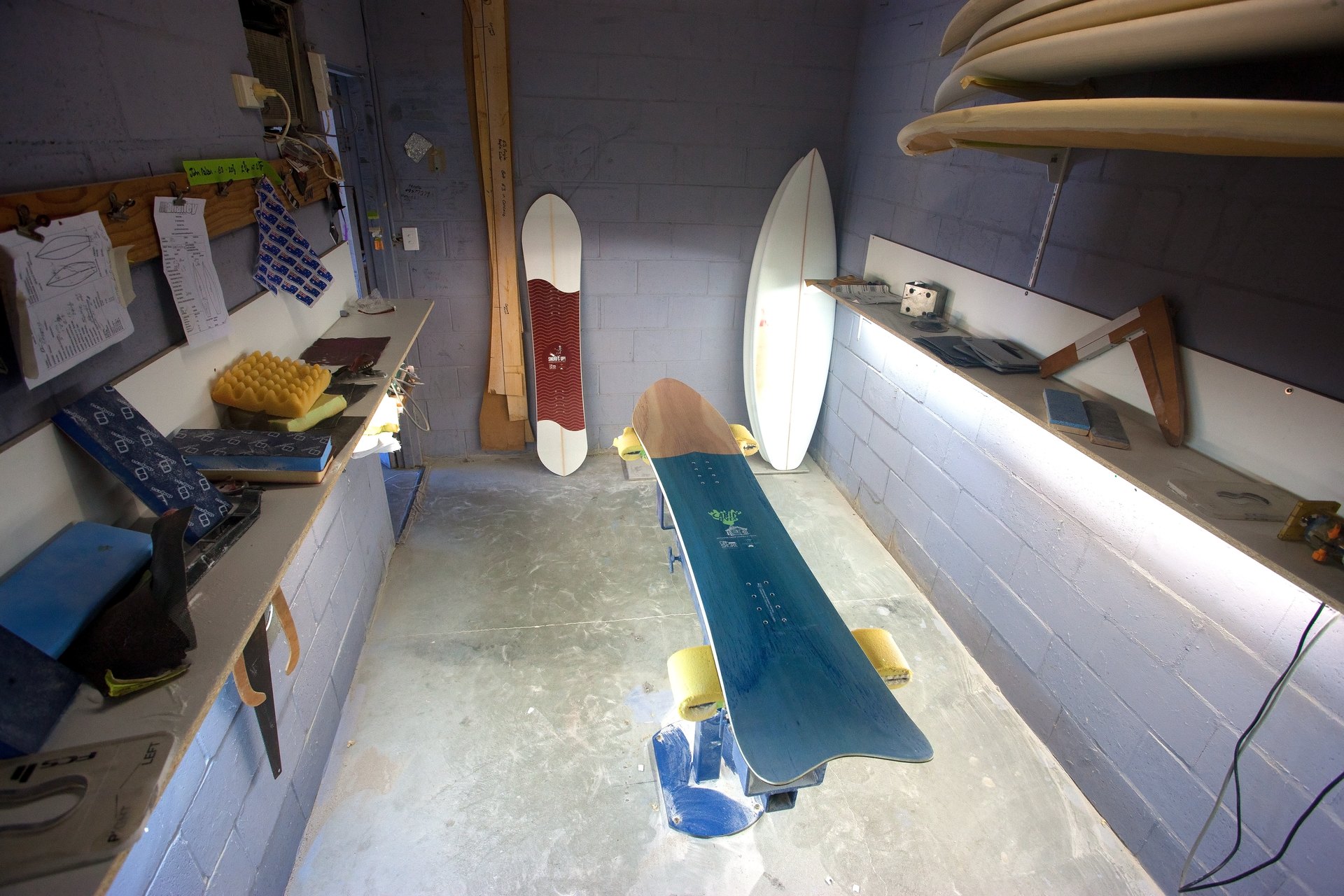
Take our Snurfs Up.
Measured from the centre of the full board, depending on size, the rider stands 44 to 52mm back.
Measured from the centre of its running edge, the rider is centred.
Both measurements are correct.
The board floats nose-first not because we have pushed the bindings dramatically backwards on the working edge, but because there is much more board in front of the rider than behind.
That second number is worth looking at when comparing shapes.
A small figure means you ride close to centred on the working edge, so the board feels more balanced underfoot, with more of the float coming from the shape of the nose and tail rather than from standing further back.
The figures in the eight-board table below use Setback overall, measured from the centre of the full board.
Where you can actually mount it
A recommended stance is a recommendation, not a fixed position.
Our product pages show two different things:
Recommended Stance is where we designed the board to be ridden and where the published setback measurements are taken.
Stance Range tells you how wide or narrow the bindings can actually be mounted.
That matters on a powder board because moving both feet towards the tail gives you another way to change the balance on a particularly deep day.
It also means the setback printed in a specification table is not necessarily the only position you can ride.
Nose
A powder nose is usually longer, wider or both.
It also often begins to rise earlier.
Its job is not simply to look surfy.
It puts surface area where you need it and gives the board a shape that can climb towards the surface rather than drive underneath it.
That becomes especially important when speed is low.
You can make a board float with speed.
Making it float while barely moving is harder.
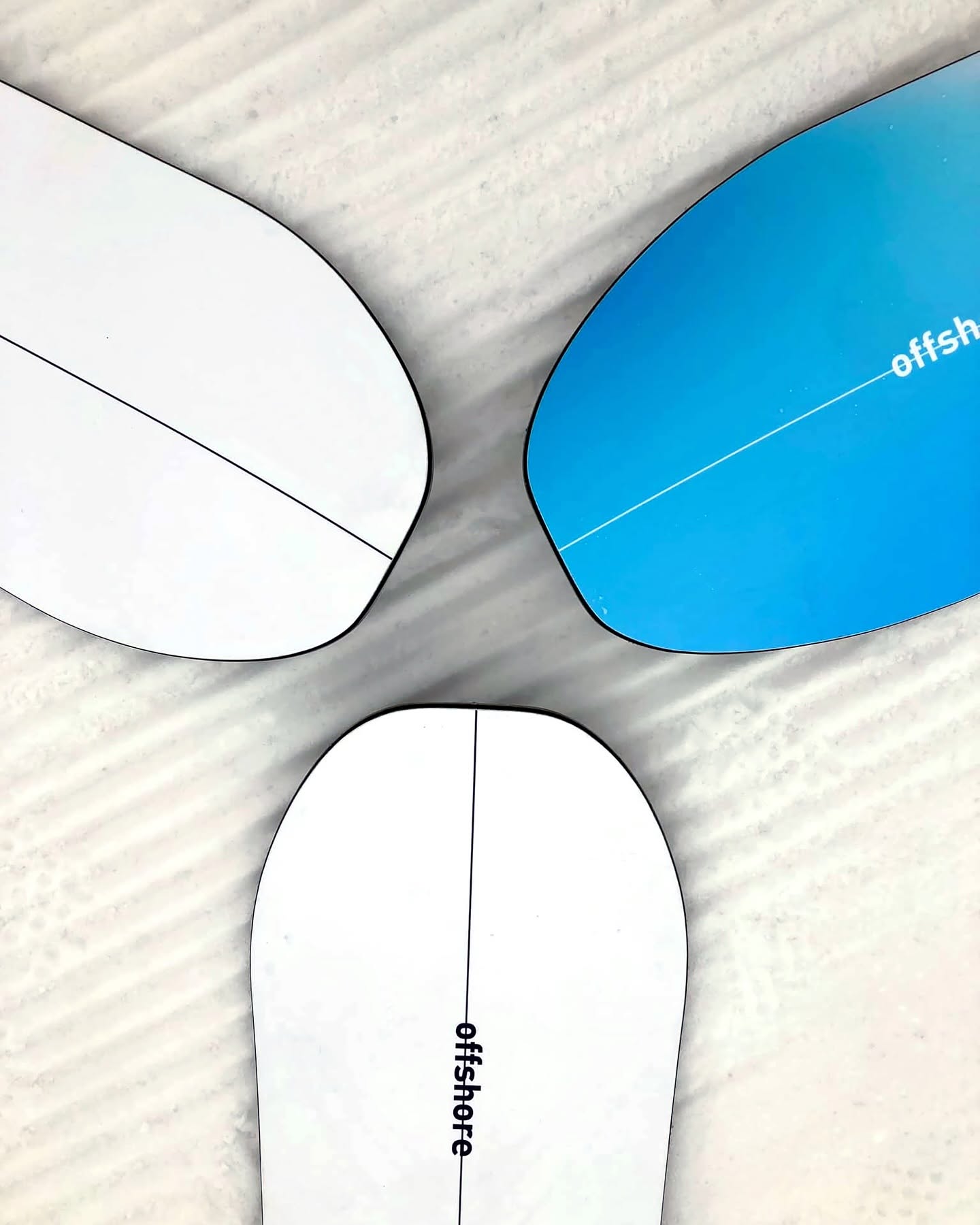
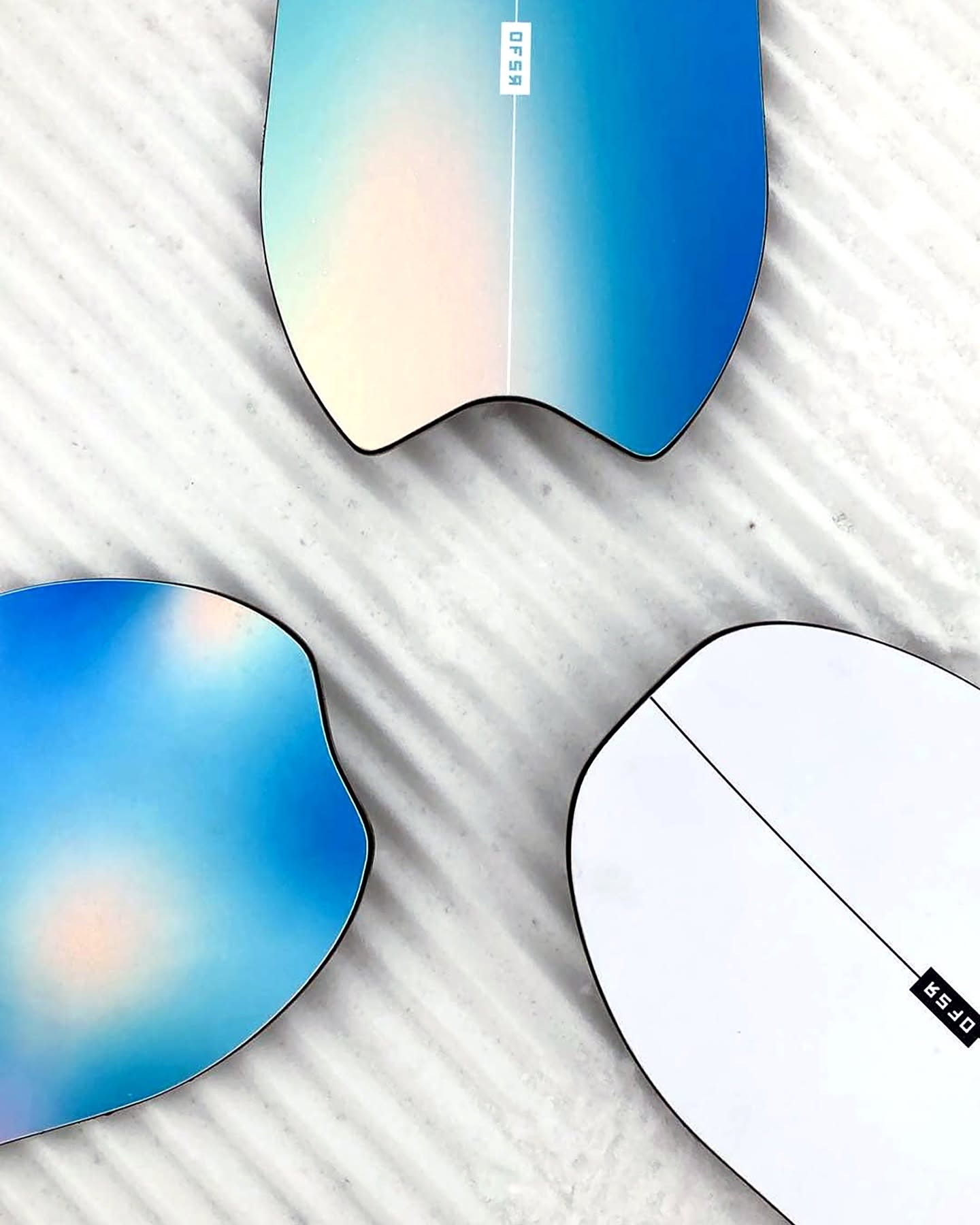
Tail
This is where powder boards tend to reveal the shaper’s intent most clearly.
Swallowtail. Remove material from the centre of the tail and there is less surface area holding up the back of the board. The tail settles more readily while the two outer points preserve length along the edge.
Pintail. Narrow the tail progressively and you achieve a similar shift in surface area without cutting a notch from it. Pintails tend to release easily and suit long, smooth turns.
Diamond tail. Narrow the tail through straighter lines towards a point. It removes area while retaining a different edge shape at the rear.
Short square or rounded tail. Less dramatic. More surface and edge remain behind the rider, which can suit a board intended to spend more time on firm snow.
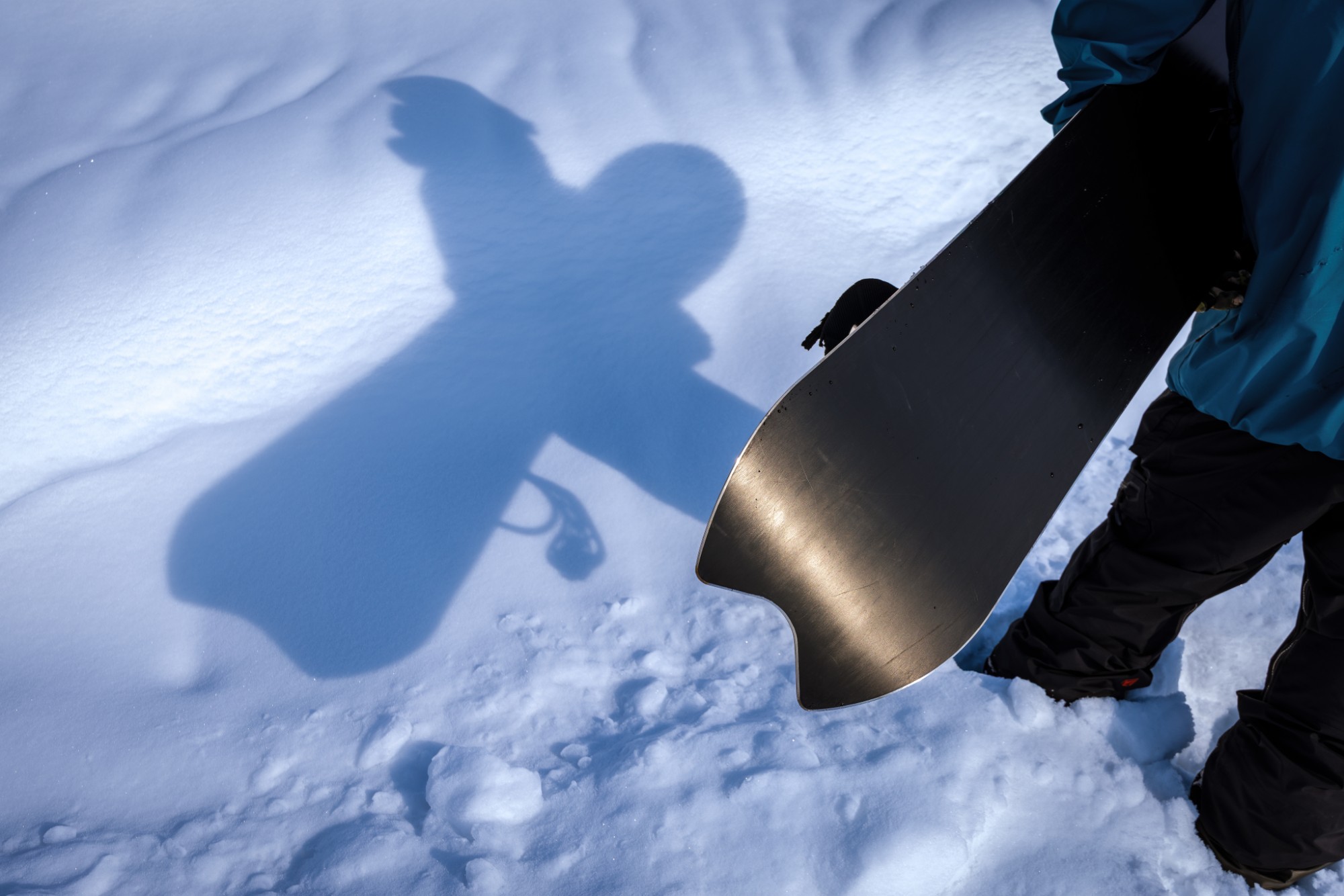
None is automatically better.
They are different ways of deciding how much board you want behind your feet and what you want that part of the board to do.
Camber
Camber is the longitudinal bend built into the board.
Many powder boards use flat sections or substantial rocker because those profiles can make the board easy to pivot and help the extremities rise in soft snow.
We take a different approach.
Every Offshore board has camber under the feet.
On our powder shapes the nose rises early and the tail lifts too, but the arch between the feet remains.
That gives the board something to load when you put it on edge, so you keep grip and drive through a turn without giving up the early rise that helps in soft snow.

That matters in Japan because a powder run rarely exists in isolation.
Sooner or later you are usually back on a groomed section, a cat track or a run-out to the lift.
Width and length
Width is surface area.
Add enough of it and a shorter board can displace as much snow as a longer, narrower one.
That is why some powder boards are ridden well below a rider’s normal length.
Short and wide can be very effective in tight trees because there is less board to swing around.
Longer shapes can offer more running surface, stability and glide, which may suit more open terrain or higher speeds.
This is why choosing a powder board by length alone does not work particularly well.
A 150 can be a very small snowboard or an enormous one depending on what else is happening in the outline.
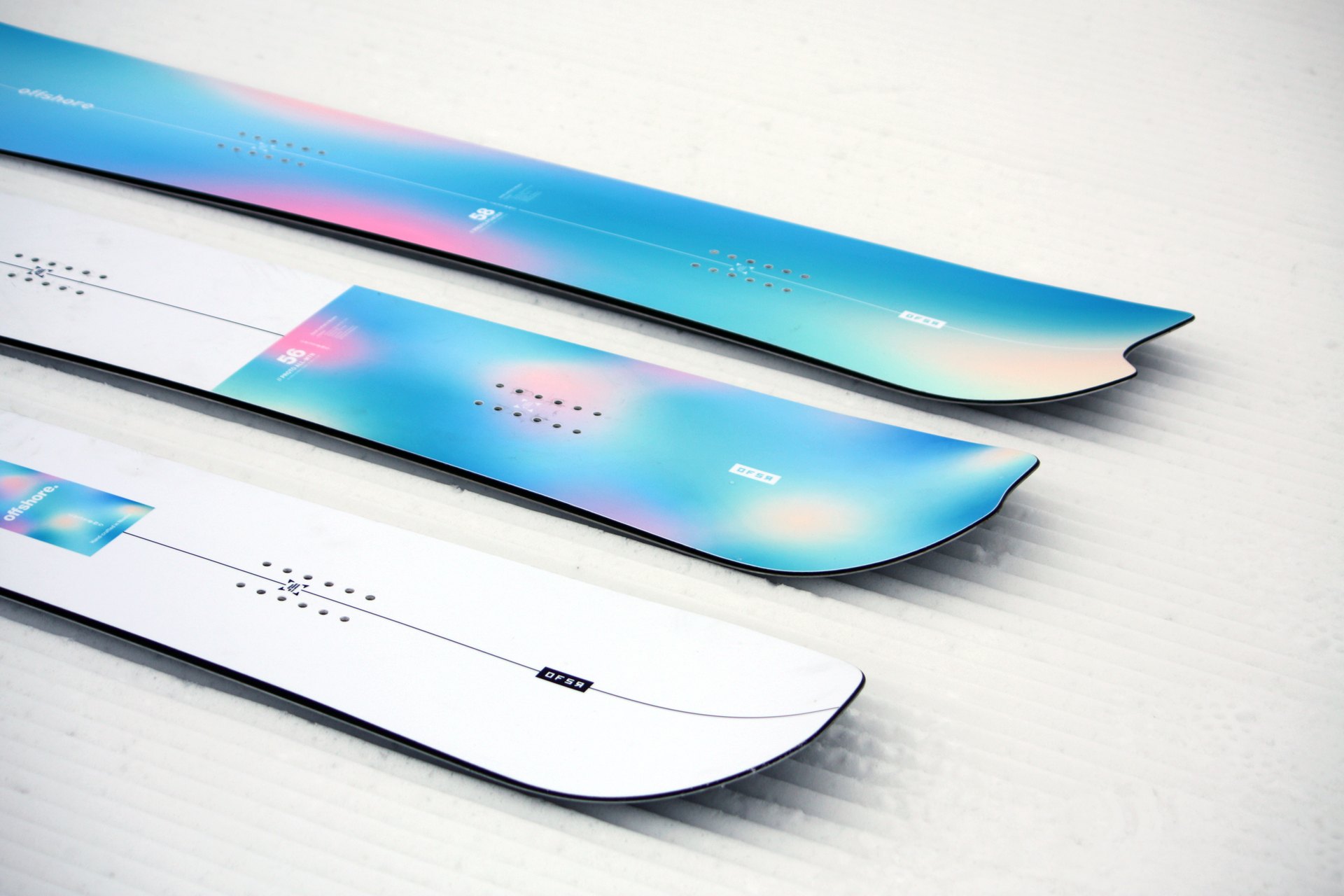
09 / Real numbers from eight boards
Real numbers from eight boards
These are the eight powder shapes we make.
Every one is shaped, pressed and finished by hand in Niseko, and the dimensions below come from the files we actually cut them from.
| Board | Shape in a line | Taper | Setback overall | Waist width | Sizes |
|---|---|---|---|---|---|
| Snurfs Up | Surfy all-mountain pintail | 20mm | 44 to 52mm | 235 to 272mm | 141 to 166 |
| Yamazaki | Blunt nose pintail, built by Yama | 20mm | 86 to 96mm | 243 to 271mm | 140 to 156 |
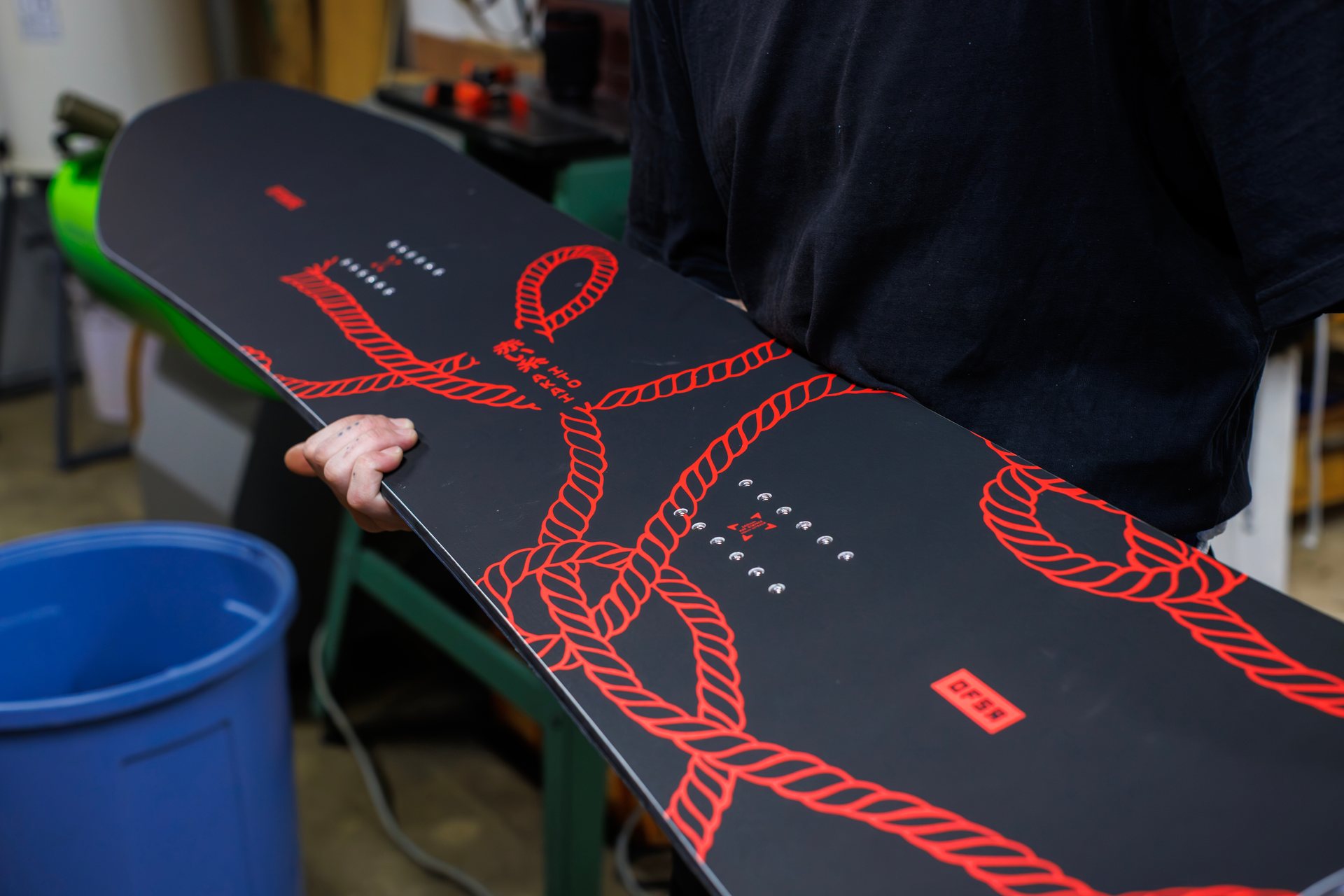
| Happy Turn | Diamond tail powder | 20mm | 64 to 71mm | 239 to 273mm | 140 to 160 |
| Joy Craft | Swallowtail powder | 15mm | 57 to 64mm | 237 to 278mm | 142 to 166 |
| Sea Biscuit | Short wide powder | 15mm | 32 to 35mm | 252 to 272mm | 137 to 150 |
| Cabin Fever | Directional freeride carver | 10mm | 88 to 103mm | 235 to 266mm | 142 to 166 |
| Tipi | Directional rounded tail | 10mm | 20mm | 241 to 264mm | 146 to 162 |
| Fugu | Volume-shifted swallowtail | 5mm | 61 to 66mm | 253 to 275mm | 143 to 156 |
Waist widths above are for the standard versions. Snurfs Up, Cabin Fever and Tipi are also available in Wide, 10mm wider at each length.
Read down the taper column and you can see how many different answers there are inside one small range of boards.
Snurfs Up, Yamazaki and Happy Turn have the most taper, so their tails are narrow relative to their noses.
Fugu has the least. Despite the swallowtail, considerably more width remains through its tail than its outline might make you expect.
Sea Biscuit and Fugu put a lot of surface area into shorter lengths.
Tipi sits closer to the freestyle end of the range, with much less overall setback because it still needs to feel comfortable riding switch off a side hit as well as pointed down a powder field.
All eight have camber under the feet, early rise in the nose and some lift in the tail.
They are not eight variations of one Japanese powder-board formula.
They are eight different compromises.
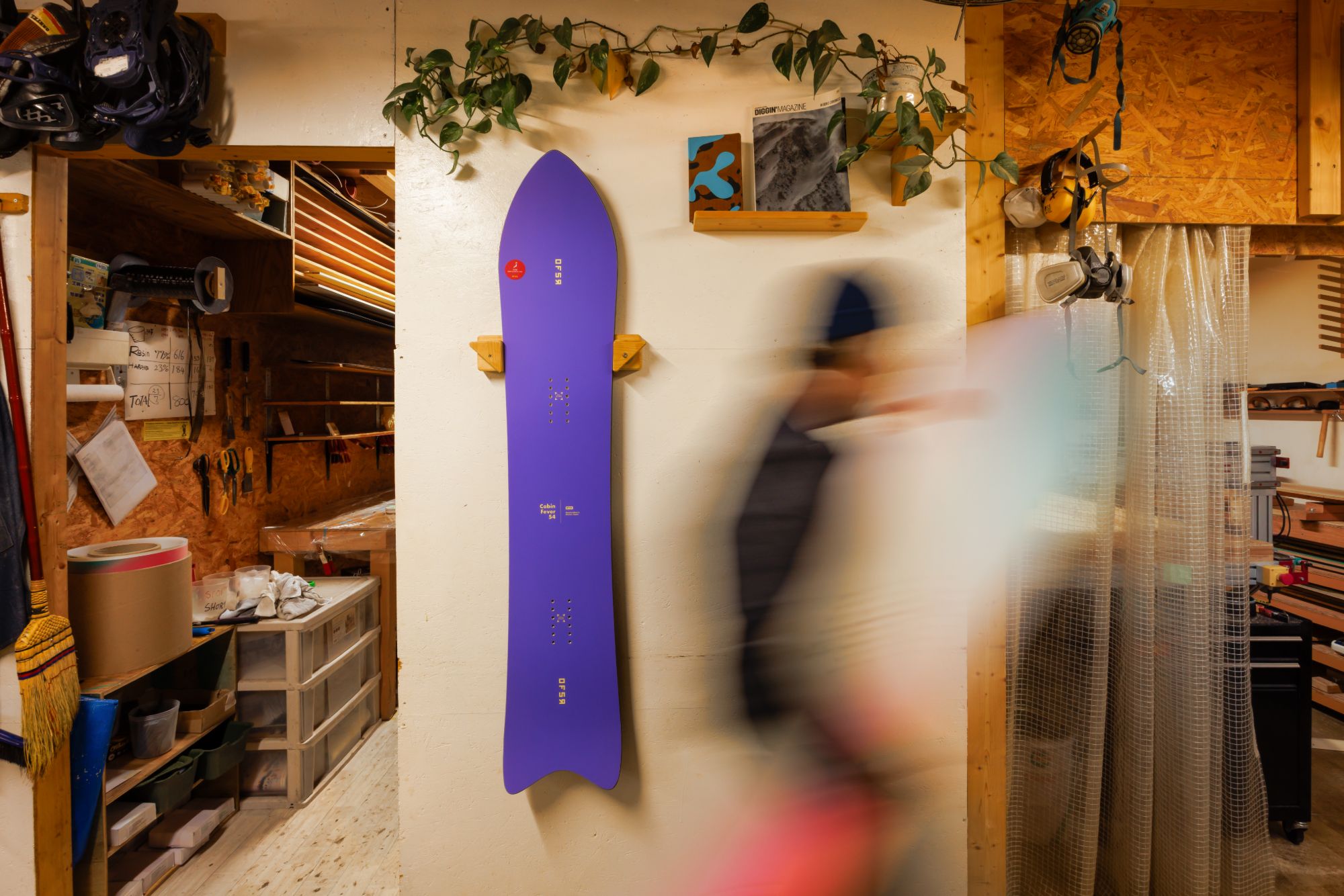
10 / Do you need one for Japan?
Do you need one for Japan?
Yes and no.
No, if most of your trip will be on marked runs and you want one board to do everything.
A normal directional all-mountain board works perfectly well in Japan. If it snows, move the bindings back a little and ride it.
Yes, if deep days and trees are the reason you are coming.
That is when a powder-specific shape stops feeling like a novelty.
The board floats without needing as much help from you. You spend less time leaning backwards. Your legs last longer. Tight turns become easier. Flat sections become less threatening because the board carries speed rather than ploughing through the snow.
The simplest test is your back leg.
If you spend a powder day constantly leaning back just to keep the nose above the surface, your board may be too small, too narrow or simply not carrying enough surface area in the right place for you.
That is work the shape can do instead.
11 / How to choose one
How to choose one
Four questions get you most of the way.
- Trees or open terrain?
Tight trees generally suit shapes that turn easily at low speed. Open terrain gives you more room to use length and stability. - Powder only, or everything?
If the board still has to carve groomers properly, look at the amount of taper, how much tail is left behind you, the effective edge and what is happening underfoot. - How do you want a turn to feel?
Loose and surfy often points towards more taper, less tail area and shapes such as pintails and swallowtails. More supported and driving often means retaining more tail behind the rider. - What size?
Do not begin with your normal snowboard length. Begin with the shape. A short, wide board and a long, narrow board may carry similar useful surface area while riding completely differently.
Flex matters too, but usually less in bottomless snow than it does when the board comes back onto firm ground.
12 / So what makes it Japanese?
So what makes it Japanese?
Sometimes simply the fact that it comes from a Japanese company.
Sometimes people use the phrase for a directional, surf-influenced style now strongly associated with Japanese powder riding: long noses, taper, short tails and shapes built around a turn rather than switch riding or park performance.
Those are not uniquely Japanese ideas.
Surf-inspired snowboards were being developed in Japan and the United States at almost the same time in the early 1970s. Surf and skate culture fed early snowboarding elsewhere too.
The modern return to experimental shapes was happening in Europe, North America and Japan at the same time.
What Japan developed was its own interpretation.
What Niseko later supplied was an audience.
That distinction is worth keeping.
13 / Common questions
Common questions
What does “powder snowboard” mean?
A snowboard shaped specifically to make riding soft, deep snow easier. Most move surface area towards the nose and reduce the amount of board or rider weight towards the tail, but there are many ways to achieve it.
What makes a good Japanese powder board?
The same things that make any powder board work well: enough surface area, the right balance of nose and tail, suitable setback, a profile that works at the speeds you ride, and a shape suited to the snow and terrain.
What makes it Japanese is usually where it was made, who shaped it, or the particular style of directional powder riding that developed around Japanese brands and snow culture.
What makes a powder snowboard “Japanese”?
Either it comes from a Japanese maker, or the phrase is being used for the directional, surf-influenced style now closely associated with Japanese powder boards.
The features themselves are not exclusively Japanese.
Did Japan invent the powder snowboard?
No.
Surf-inspired snowboards appeared in Japan and the United States at almost the same time in the early 1970s, and other riders were experimenting elsewhere too.
Japan developed its own important branch of that history.
Why are Japanese powder boards so directional?
Many are designed around deep snow, lower-speed float, trees and the feeling of drawing a turn rather than riding switch.
Moving more surface area towards the nose and less towards the tail helps with those priorities.
Is a powder snowboard worth it?
If you regularly ride deep snow, yes.
The right shape makes flotation easier and reduces the amount of work your body has to do.
If you see one powder day a year, a good all-mountain board with the bindings moved back may be all you need.
Do I need a powder board for Japan?
No.
You can ride Japan perfectly well on a normal snowboard.
But if deep snow and trees are the reason for your trip, a powder-specific shape can make a significant difference.
Can I ride a powder board on groomed snow?
Most of them, yes.
How well depends on the design. Camber, effective edge, flex, taper and the amount of tail behind you all influence how a powder shape behaves once the snow firms up.
What size powder snowboard should I get?
It depends on the shape.
Some short, wide boards are designed to be ridden much shorter than your normal snowboard. Longer, narrower powder shapes may be ridden at your usual length or longer.
Use the maker’s sizing guidance rather than comparing length alone.
What is a swallowtail for?
The cut-out removes surface area from the tail.
In soft snow that allows the rear to settle more easily while preserving two longer outer points and edge length.
What is setback?
It is how far behind the centre of the board, or behind the centre of its running edge, the rider stands.
The two measurements are different, which is why we publish both.
What is snowsurfing?
Broadly, riding snow with an approach influenced by surfing, particularly through the shape of the board and the way the rider draws turns.
There is no single board or technique that owns the term.
What is the best Japanese snowboard brand?
There is no useful single answer.
What matters is the snow you ride, the kind of turn you like and what you want the board to do.
Ride one before you buy if you can.
Are powder boards only for experts?
No.
In deep snow, the right powder shape can actually make snowboarding easier because the board is doing more of the work of keeping itself afloat.
14 / Made in Niseko
Made in Niseko
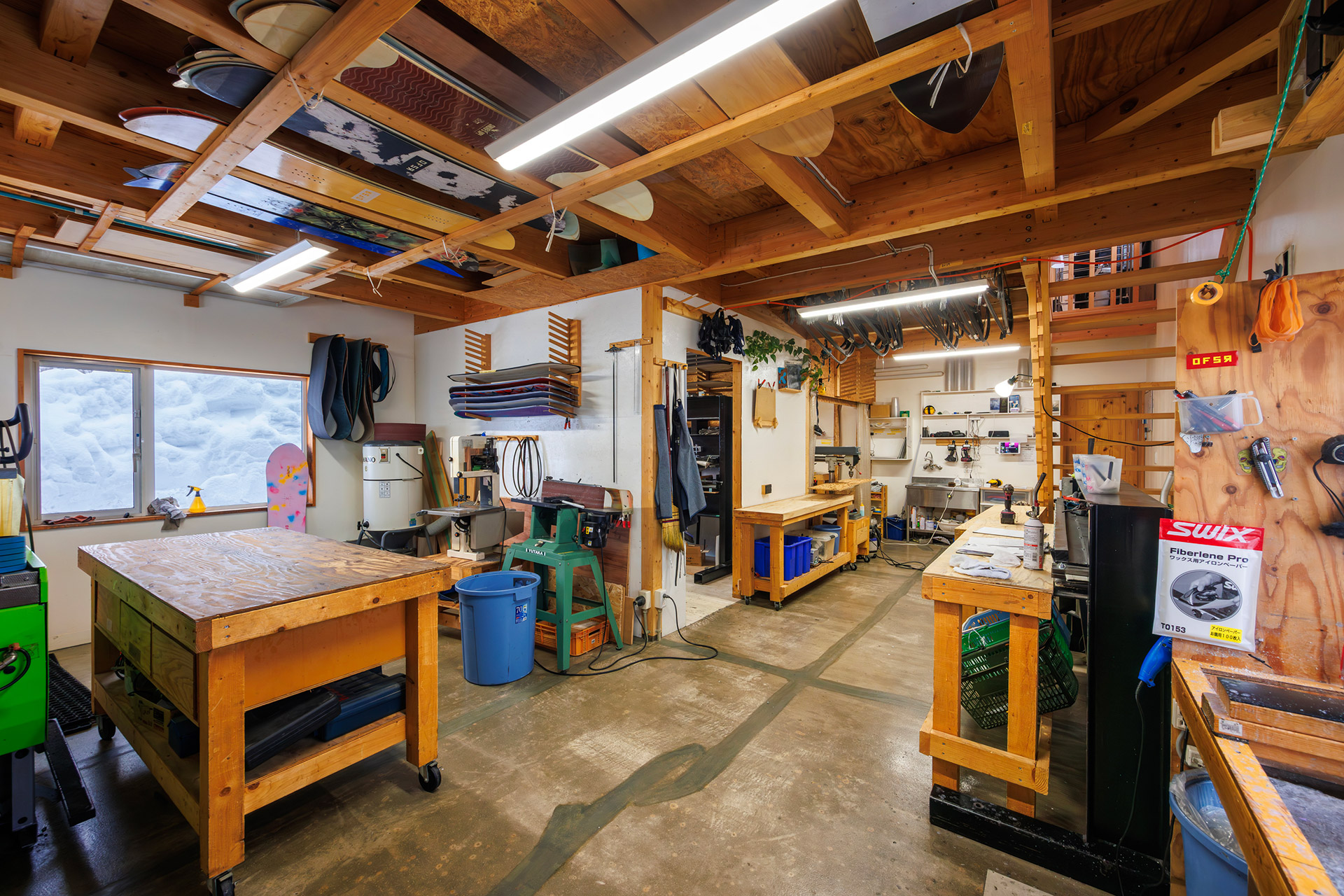
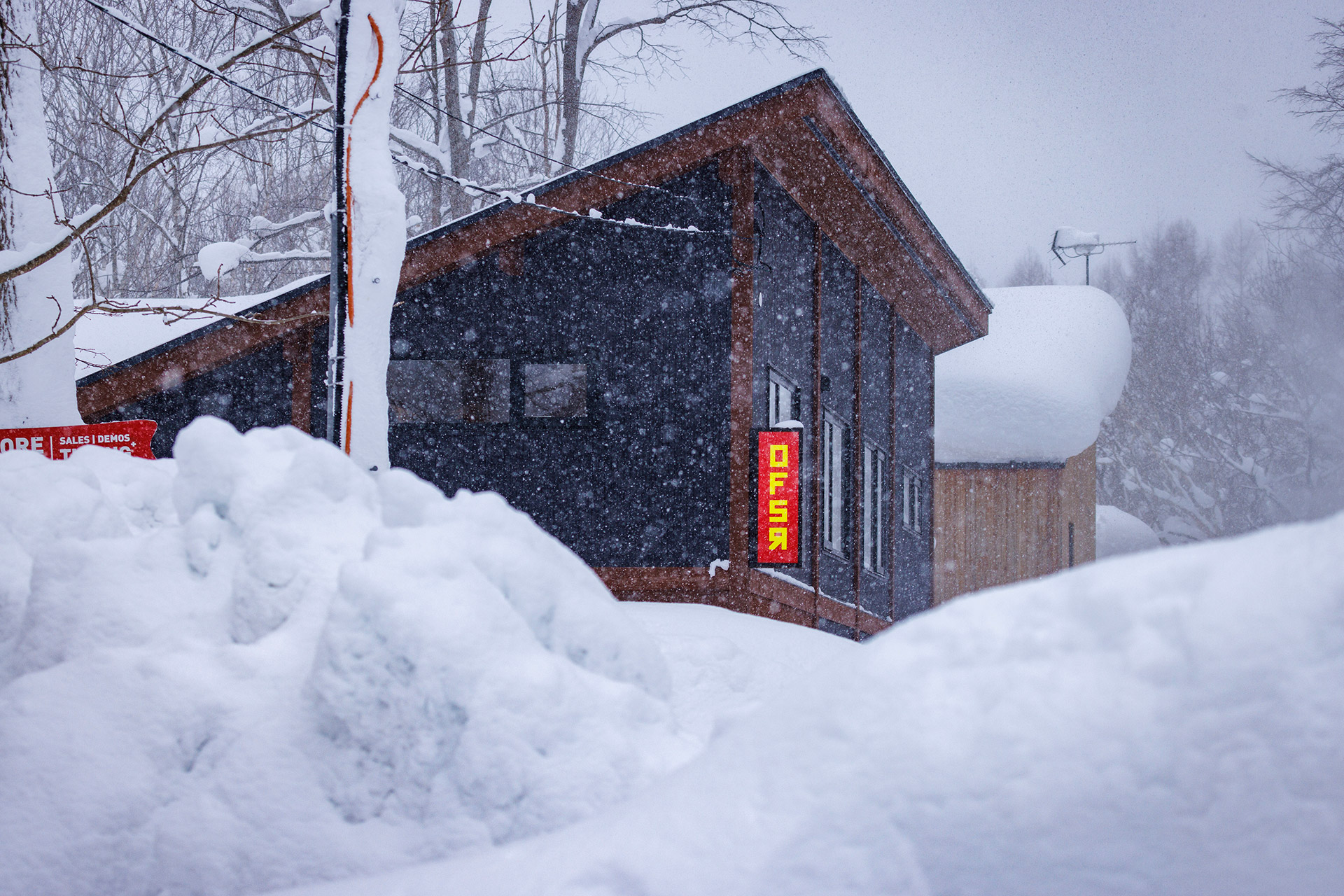
Every Offshore board is shaped, pressed and finished by hand in our Kōjō at the foot of Moiwa in Niseko.
The eight shapes above are made there, to order, one at a time.
If you are in Niseko, come and see where they are made.
If the press is running, you can watch.
15 / Sources
Sources
The Snurfer, Sims and Burton
- Skiing History, Sherman Poppen: https://www.skiinghistory.org/lives/sherman-poppen (the 1965 invention, the Brunswick licence, “over the next two decades some 750,000 Snurfers were sold by Brunswick and Jem Corp.”)
- Los Angeles Times, “Tom Sims dies at 61; snowboard pioneer”, 15 September 2012: https://www.latimes.com/local/obituaries/la-xpm-2012-sep-15-la-me-tom-sims-20120915-story.html (“In 1963, Sims built his first crude snowboard in his junior high school wood-shop class. He called it a ‘skiboard.'” Also Sims telling NPR in 1998 that he could not skateboard on snow-covered New Jersey streets in winter, and that the simplest solution was to make a skateboard for the snow)
- SIMS, History: https://www.simscollective.com/history (the 7th-grade woodshop board in Haddonfield, New Jersey, 1963 as the founding of the SIMS brand, and Sims’ roots: “Not skiing but surfing and skateboarding”)
- Burton, Remembering Jake Burton Carpenter: https://www.burton.com/en-us/blogs/the-burton-blog/remembering-jake-burton-carpenter (the dated 1978 entry naming “Peter Mel’s dad’s (John Mel) factory, Freeline Design”, and “They made surfboards during the day, and I moved in and made snowboards all night”)
- Burton, The First Burton Snowboard Prototypes: https://www.burton.com/en-us/blogs/the-burton-blog/first-burton-snowboard-prototypes (December 1977, the barn in Londonderry, Vermont, and the range of constructions tried)
Winterstick
- Winterstick, About Us: https://www.winterstick.com/pages/about-us/ (“Back in 1972, Dimitrije Milovich and Wayne Stoveken engineered a board made to surf the snow”)
- Winterstick, 50th anniversary: https://www.winterstick.com/pages/50th-anniversary (the first snowboard patent, Milovich testing prototypes at Powder Mountain, the original company 1972 to 1988)
- Skiing History, snowboard: https://www.skiinghistory.org/category/snowboard (Stoveken writing to Surfing magazine about snow surfing in 1970, Milovich borrowing one of his boards, Stoveken teaching him to build them)
Moss and Japan
- Moss Snowstick, Our Story: https://mosssnowstick.com/pages/story (Shinzo Tanuma, the 1971 prototype and its dimensions, the 5mm fin, the 1979 first boards, the Japan Snow Surfing Association in 1982, Taro Tamai)
France
- APO, Historique: https://apo-snow.com/fr/content/20-historique (the Winterstick team at Les Arcs in January 1982, Rolland buying one of their boards, “j’ai pété ma planche Winterstick”, his first boards from 1983, Bernard Gervasoni and the screw press, Rolland as a trained cabinetmaker making his first swallowtails, the 1986 workshop in Villard-de-Lans and the first production Apocalypse Surf board in December 1986)
- The Snow Pros, Great Moments in Snowboarding History, Part 2: https://thesnowpros.org/2024/09/from-the-archives-great-moments-in-snowboarding-history-part-2/ (the Winterstick team demonstration, and the board Rolland took up identified as a Swallowtail)
The shape revival
- Whitelines, “Unusual Snowboard Shapes, What’s the Deal?”, 28 November 2013: https://whitelines.com/snowboard-gear/news-previews/unusual-snowboard-shapes-whats-the-deal.html (the trend simmering underground, no identifiable modern origin, ASMO and the Aesthetiker crew from 2006, Grassroots Powdersurfing, Spring Break)
- Whitelines, “Turn For The Better”, 11 January 2022: https://whitelines.com/snowboard-culture/turn-for-the-better-the-korua-shapes-interview.html (KORUA launched 2014 in Switzerland, the Noserider from longboard surfing)
- Boardsport Source, KORUA founders interview: https://www.boardsportsource.com/bigwig-korua-snowboards-an-interview-with-founders-nicholas-wolken-jerry-niedermeier/ (Wolken crediting Jerry Niedermeier’s boards for his view of board design)
Snow and Hokkaido
- Japan Meteorological Agency, Climate of Hokkaido district: https://www.data.jma.go.jp/cpd/longfcst/en/tourist/file/Hokkaido.html (“Prevailing northwesterly winds cause the advection of cold air from Siberia to Hokkaido and bring heavy snowfall to the Sea of Japan side of Hokkaido (upstream of mountainous land) and sunny weather to the Pacific side”, and “Temperatures as low as -20°C are frequently observed in inland areas”)
- Niseko United, “Why does it snow so much in Niseko?”: https://www.niseko.ne.jp/en/news/why-does-it-snow-so-much-in-niseko/ (cold dry air masses crossing the relatively warmer Sea of Japan and absorbing moisture, then ascending the mountains, cooling and condensing)
Related
More from Reference
View all