OFSR/Journal
Entry 09
The Loro
Piana board.
Filed under
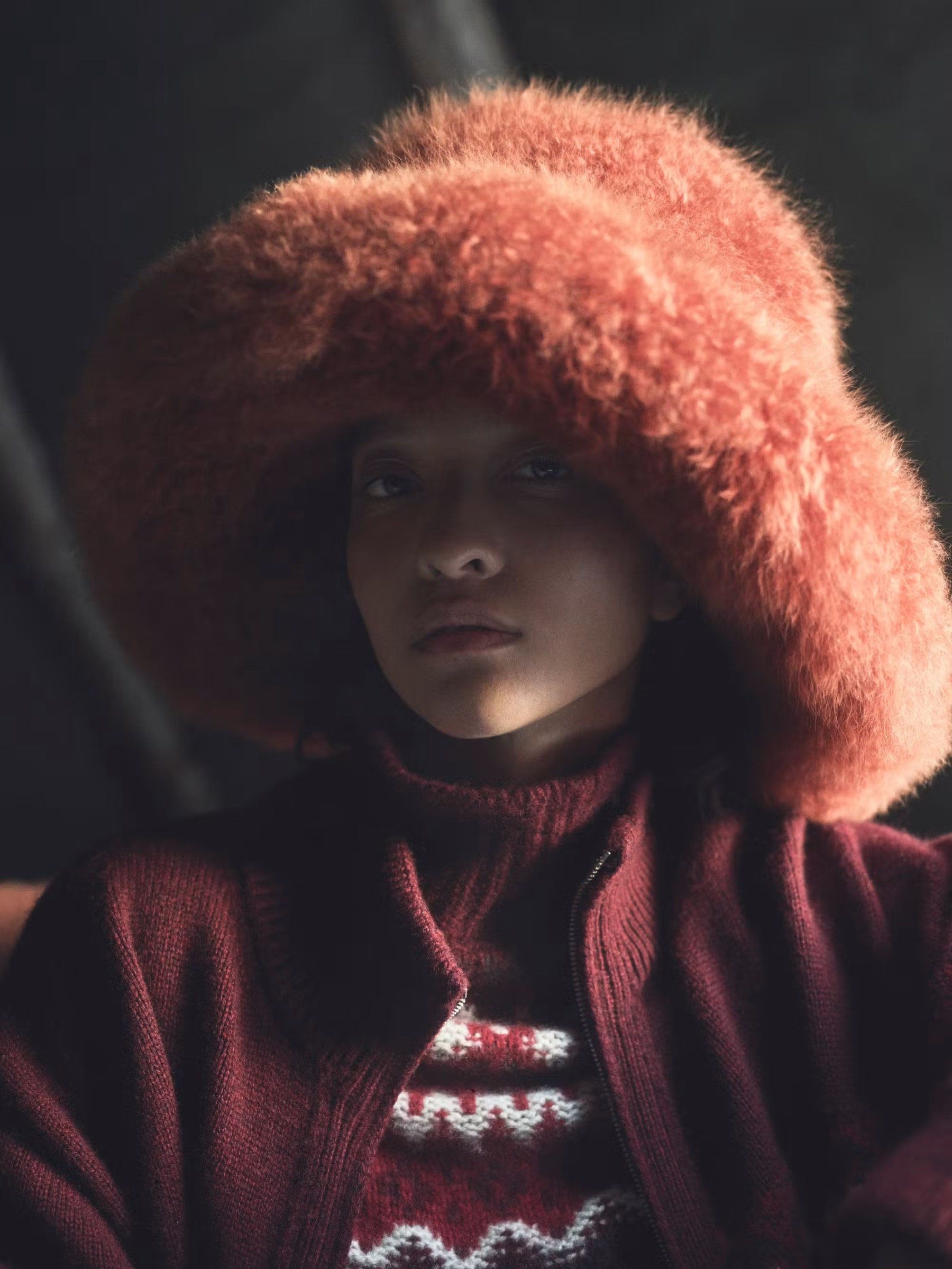
A snowboard for a house that has spent a century thinking about materials.
Introduction
A snowboard for a house that has spent a century thinking about materials.
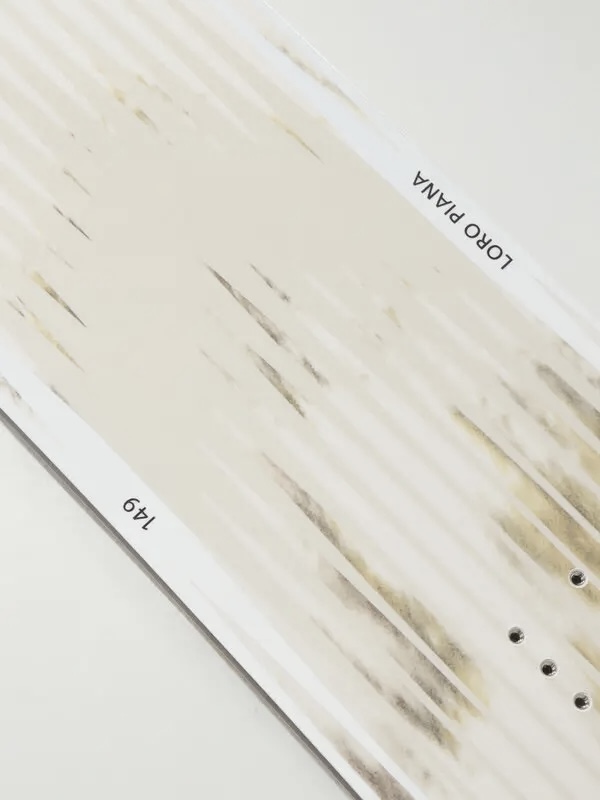
Loro Piana wrote to us in August 2023.
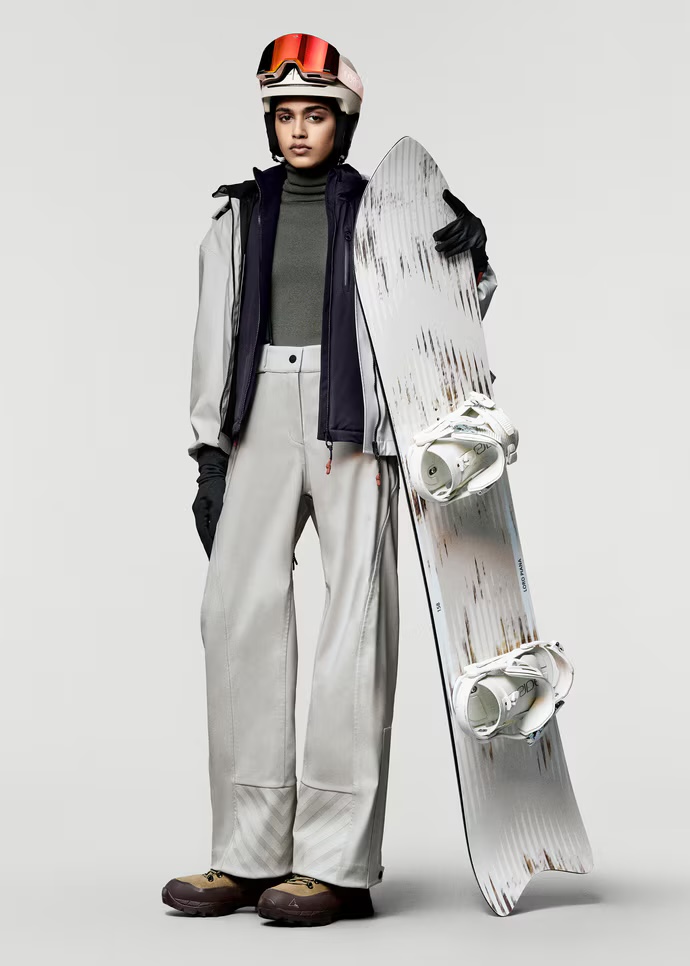
They were putting a winter collection together and wanted a snowboard in it. Not a board with their name on it. A board that thought the way they do.
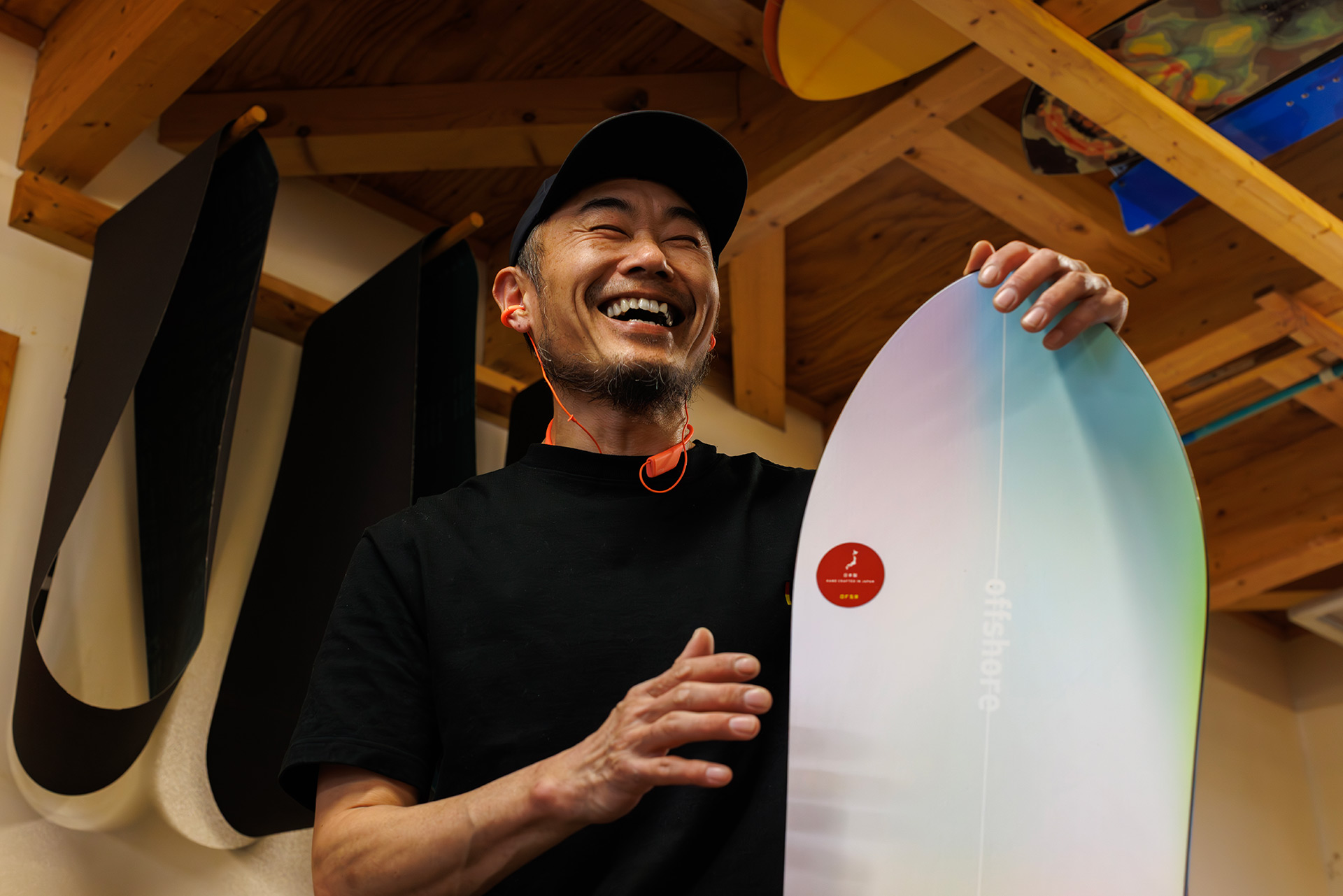
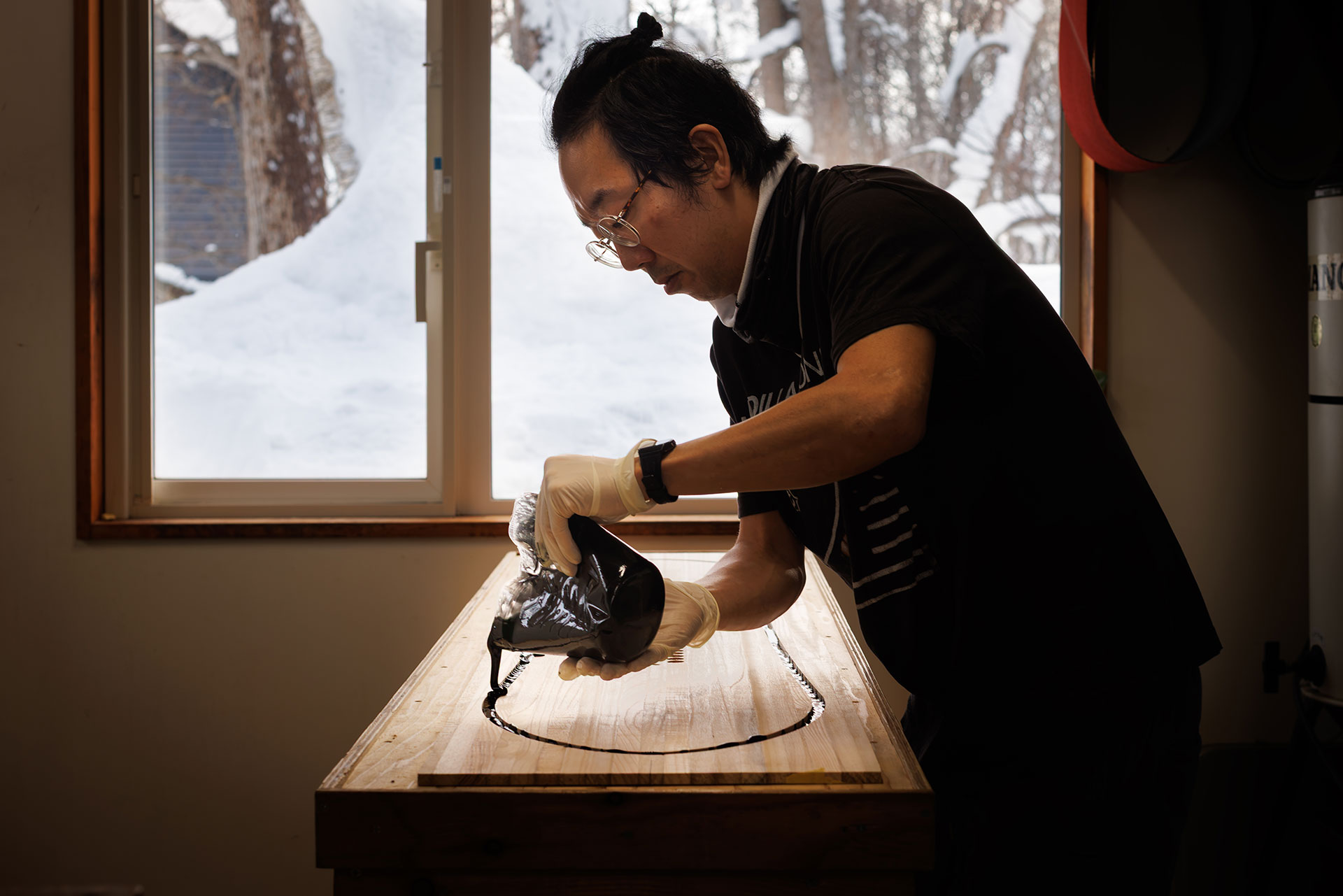
The boards were built here in the Kōjō at the foot of Moiwa. Every one by Yama-san.
01 / What they were after.
The board went on sale two winters later. Most of the time in between was samples. Built, looked at, sent, built again. It was a project rather than an order, and it took the time it took.
Loro Piana have been at this since 1924. They started as wool merchants in Piedmont and they are still, underneath everything, in the business of fibre.
Their whole company runs on one idea: find the best material in the world, then get out of its way. Vicuña from the Andes. Baby cashmere from Mongolian goats. Merino from Tasmania. They go and find the fibre first, and the garment follows from it.
The branding stays quiet. Nothing loud. You are meant to recognise it by the weight of the cloth in your hand, or not recognise it at all.
We had heard that idea before. It is roughly what we have been saying here for years, in a different material.
Sintered Austrian base. German steel, bent by hand. Paulownia and mountain ash. Low-viscosity Japanese resin, Australian glass, carbon and flax. None of that is chosen because it is close by or easy to get. It is chosen because it is the right one, and then we try not to get in the way.
One house works in fibre. The other works in wood.
02 / Why the Cabin Fever.
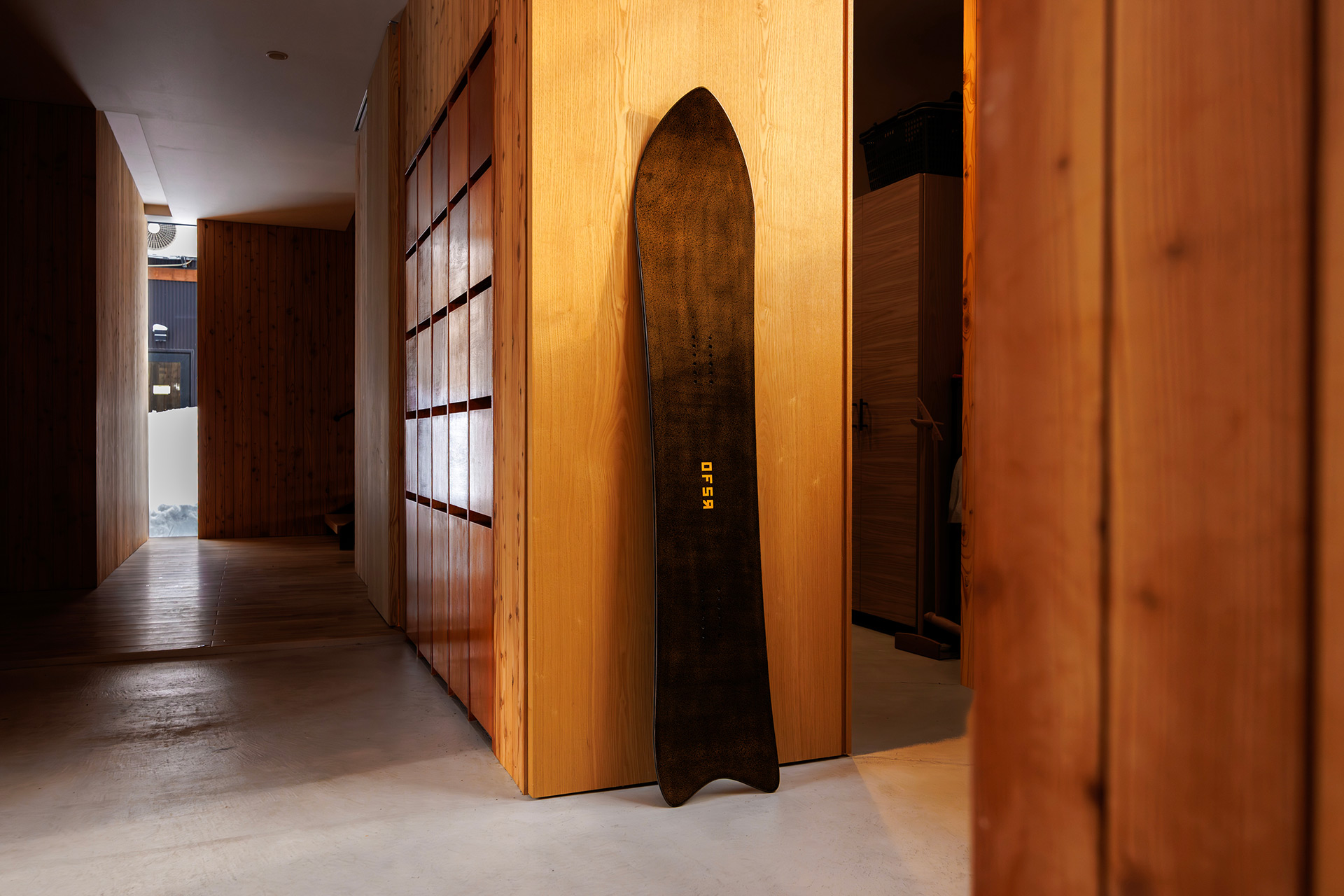
We gave them the Cabin Fever.
It is the shape this place is known for, and the one we would show someone if they only had time to look at one. Directional. Early rise in the nose, camber between the feet, a long effective edge running right through the swallowtail. It carves a groomer in the morning and surfs a bowl in the afternoon, and it does not make a fuss about either.
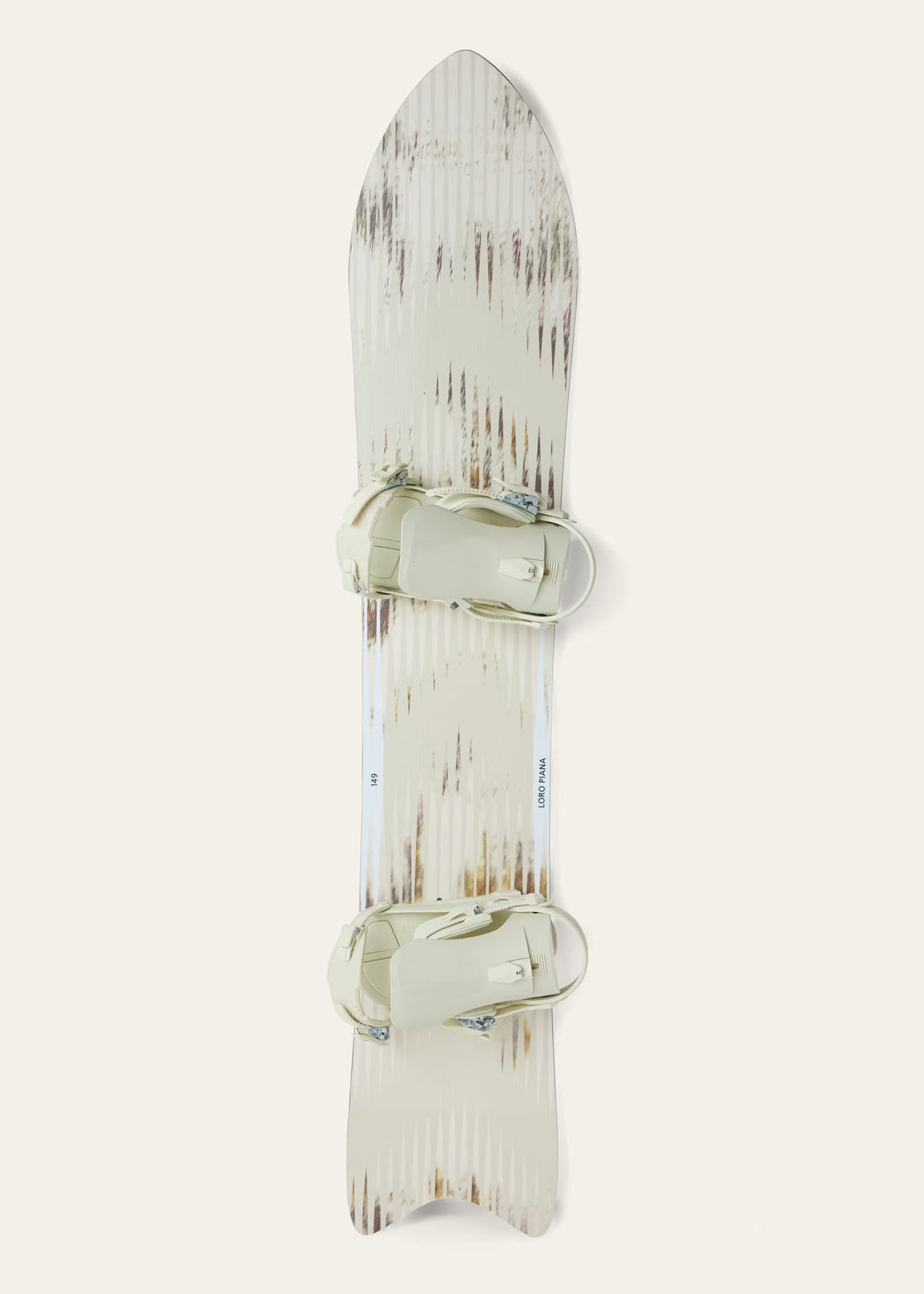
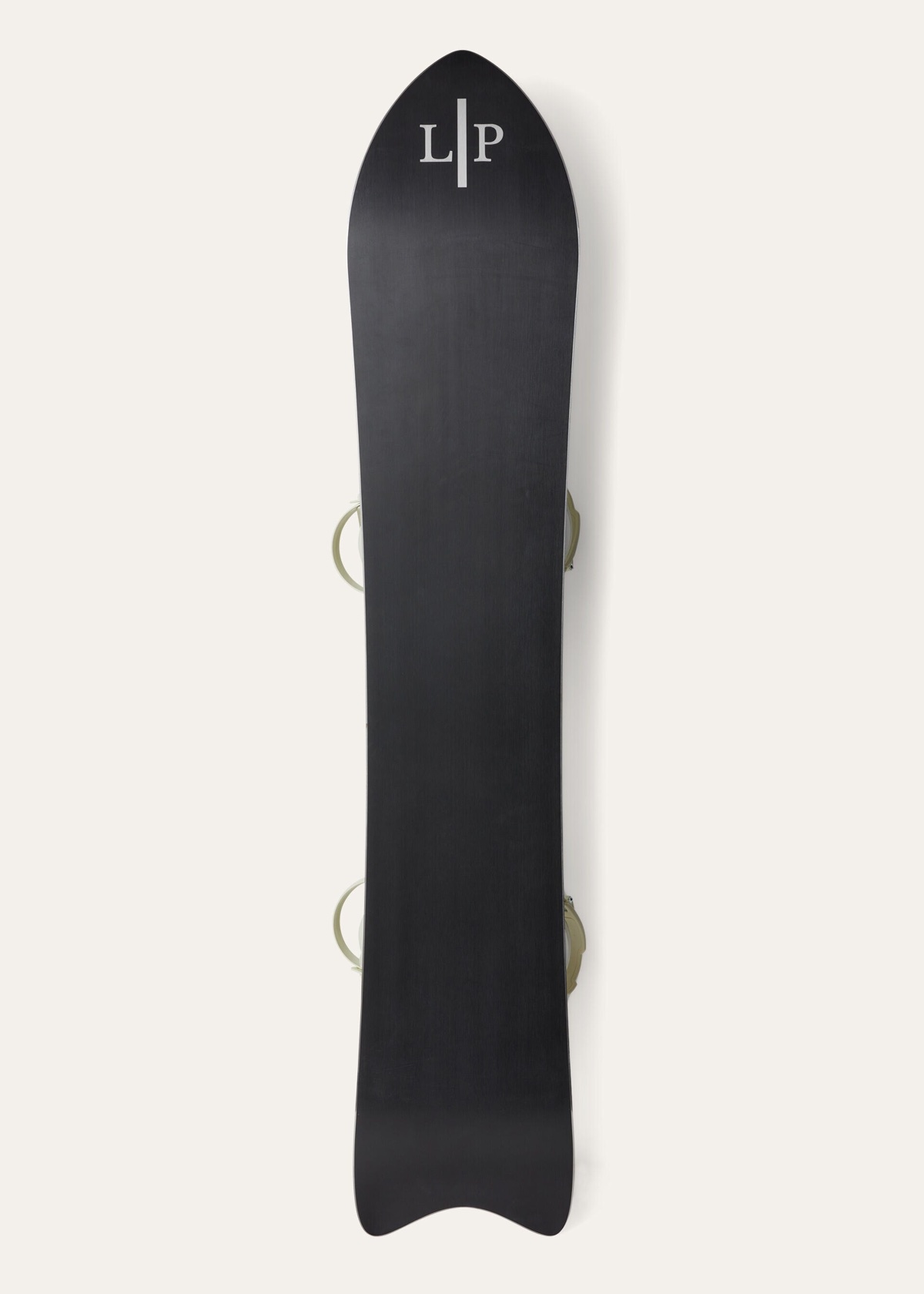
There was no reason to design something new. The shape was already right. Reaching for a special version would have been the loud move, and nobody involved wanted a loud move.
03 / The graphic.
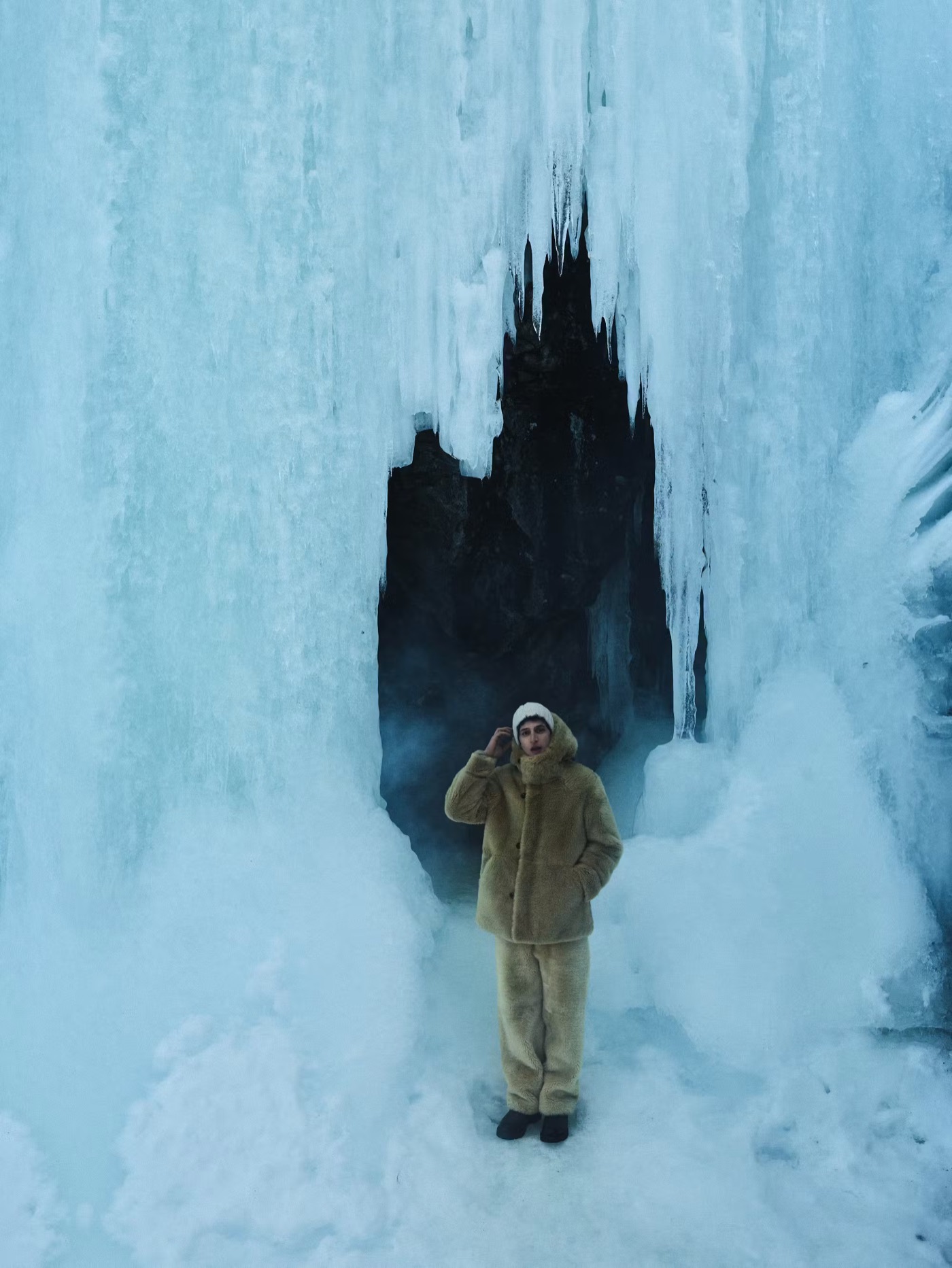
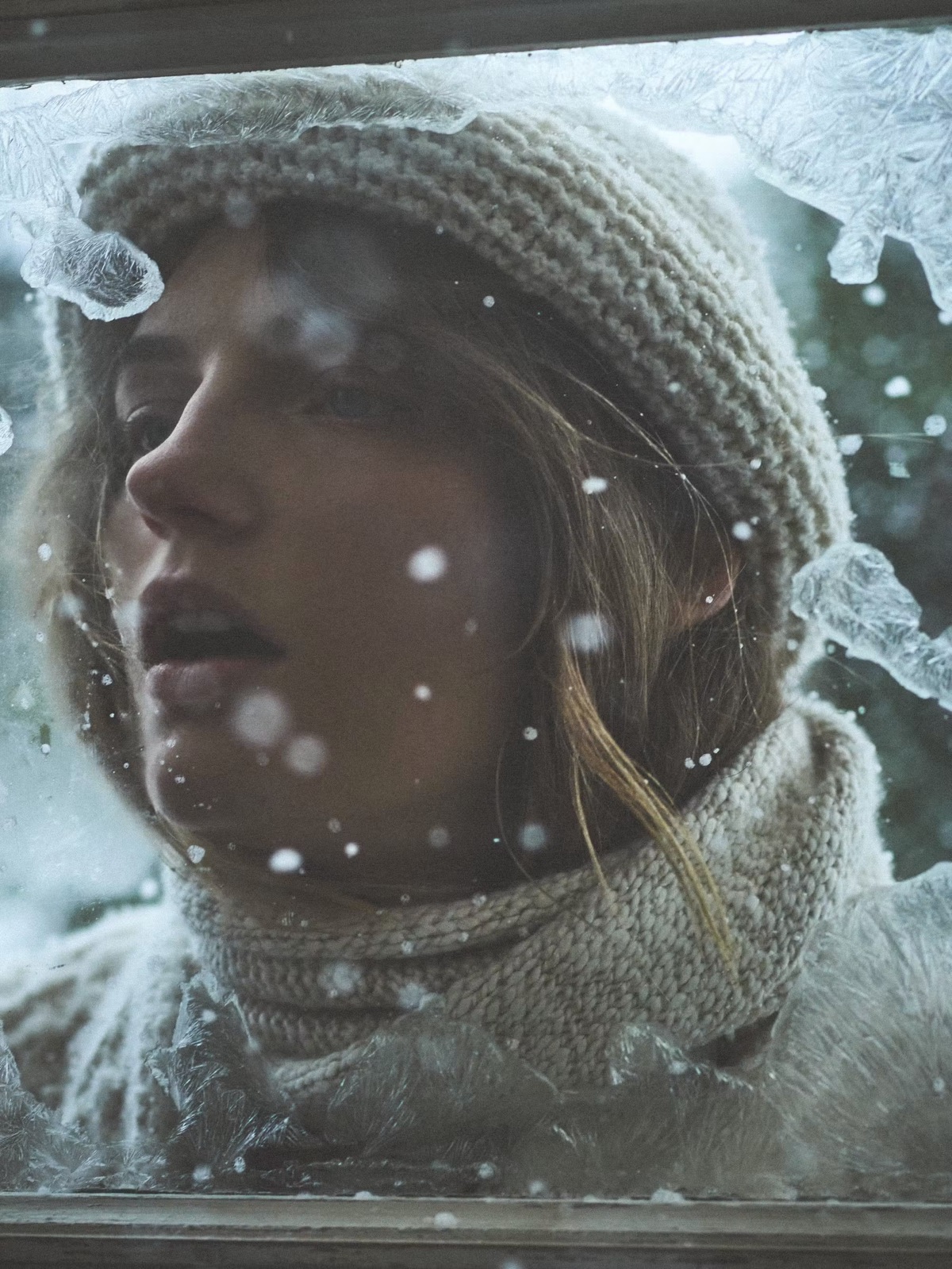
Desert Dunes was drawn around the capsule rather than dropped onto it, and it went through more versions than anything we have printed.
Our graphics are sublimated into a nylon-polyamide topsheet under heat and pressure. The ink does not sit on the surface. It becomes part of the material. That is why the colour lasts. It is also why you cannot really preview it. A screen will lie to you. You print the thing, you look at it in daylight, and then you know.
So it was printed, and looked at, and printed again.
04 / Built by Yama-san.
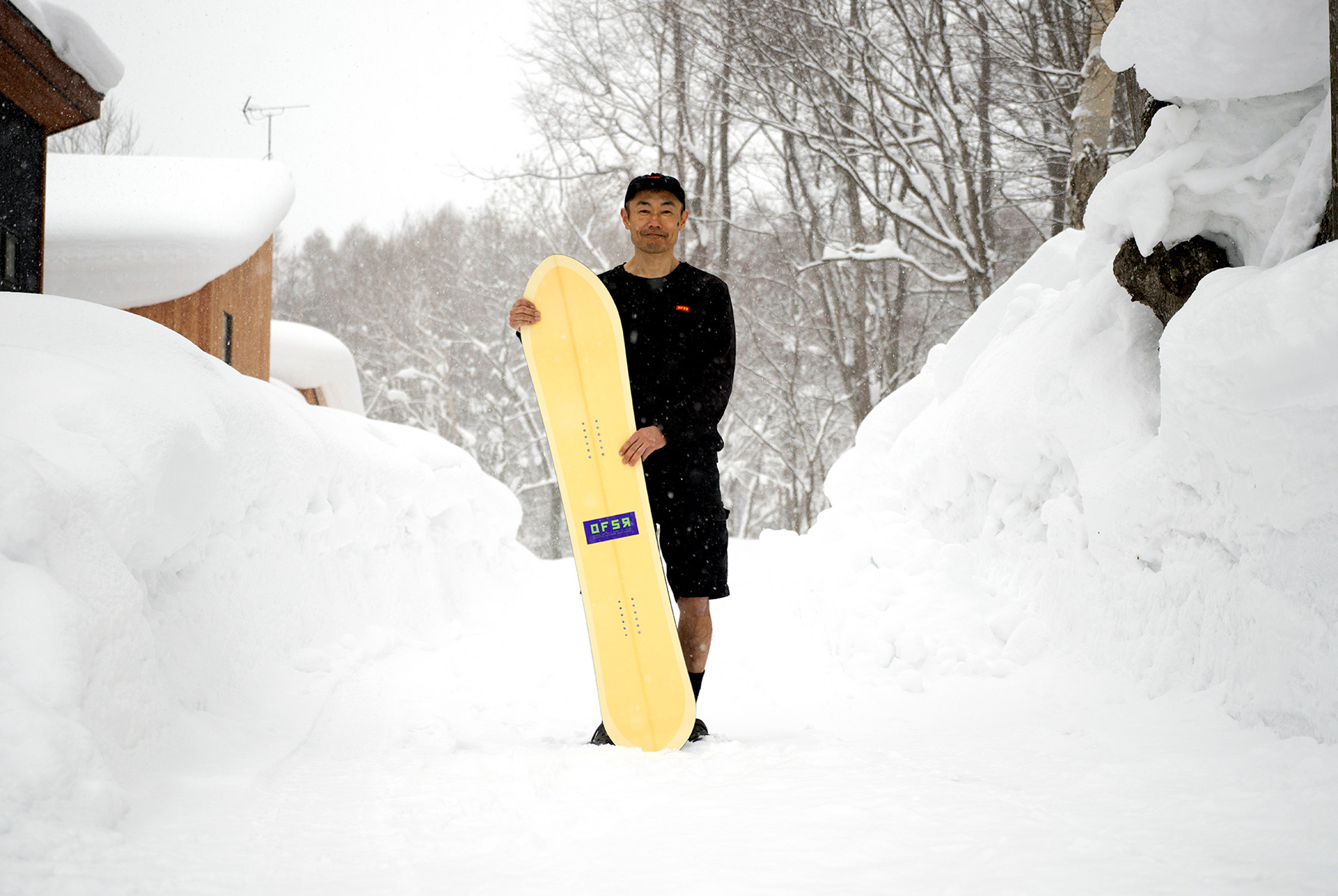
Yama built the entire run.
There was no separate production line for the name on the board. The same press, the same tools and the same standards as every other board we make, on the same floor where we build one for someone who walks in off the road.
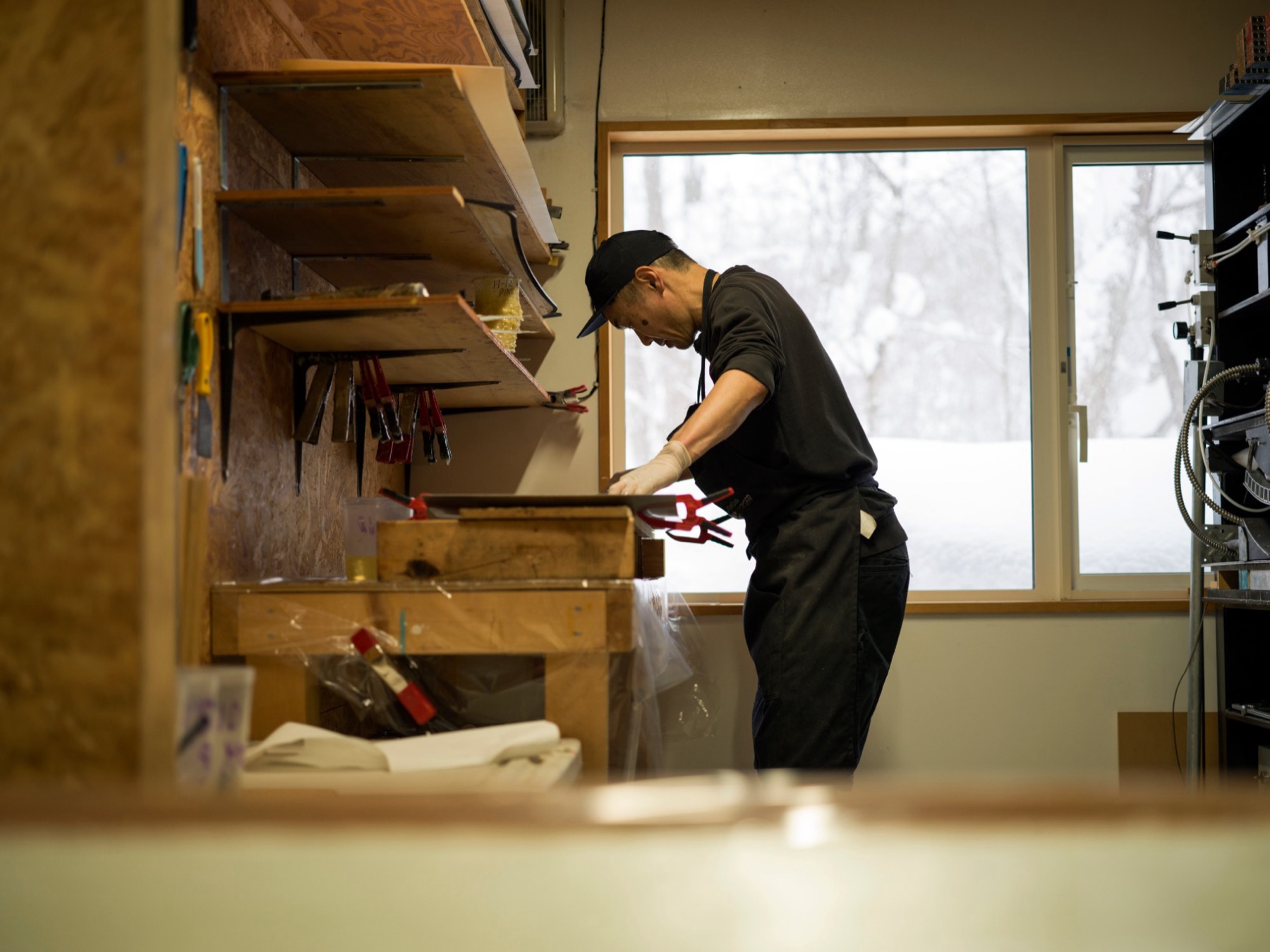
Building a snowboard from start to finish gives me a special bond with it. The snowboard becomes a piece of art, something with soul.
Tomohito Yamazaki · OFSR Master Craftsman
05 / From Moiwa.
Years ago an interviewer asked why we did not make the boards somewhere cheaper. We could have them made for far less elsewhere, and we said we were not going to.
We still make them here for the same reasons.
They left the same small Kōjō at the bottom of Moiwa where every Offshore board is made.
Somewhere a long way from Niseko, one of them now sits among the collection it was made for.
They work in fibre.
We work in wood.
Different materials.
The same devotion to the craft.
More from the Journal
View all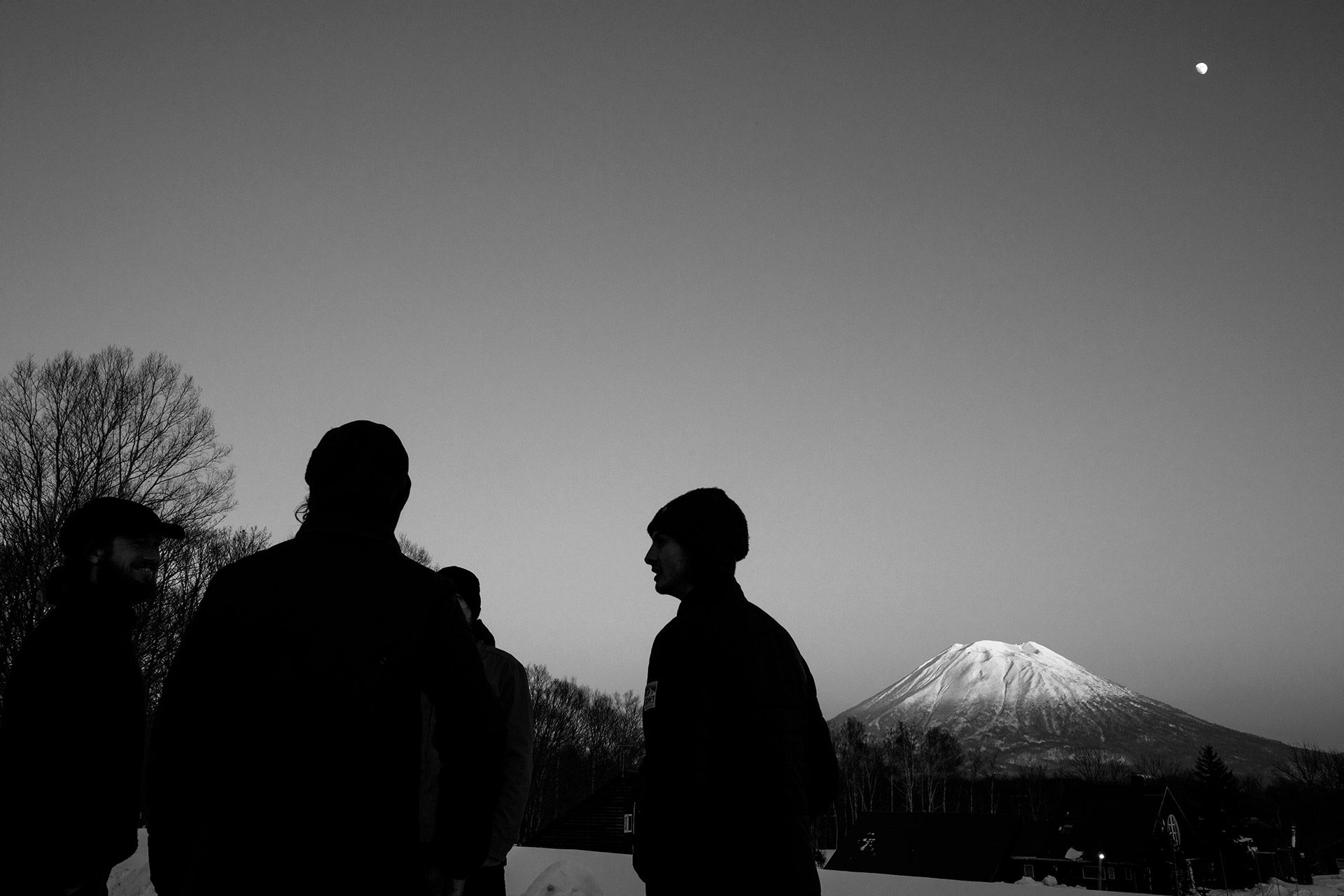
More entries
01
05